Sometimes Naseer Paktyawal awakens at four o’clock in the morning.
The two-story house creaks in the silence. Brown roof, brown brick, just like the houses next door and across the street. It sits fifty-one miles north of Dallas in the town of Princeton, and thirty-five miles from Richardson, where he had rented a two-bedroom apartment in the same complex as his now dead brother, Nazeer. The AC hums. The August heat already rising. Temperatures have reached above one hundred degrees. June was hotter.
Naseer tells me that at the early hour, before dawn, he often lies awake in bed facing the ceiling. His mind inevitably turns to Nazeer, who died in ICE custody in March, just five months ago. Forty-one years old, gone. Six children, three boys and three girls between the ages of fourteen and three, without a father. Now Naseer must take his place, just as Nazeer took their father’s place when he died of cancer in 2010. The responsibility weighs on him. Before Nazeer died, Nasser didn’t think much about expenses. Now he must. He wonders how he will support his brother’s widow, Ziba, and their children, alongside his own wife and four boys. The oldest is ten; the youngest is almost three.
He hopes his family will forgive him. He voted for this president. He thought Donald Trump would be good for the economy. He never expected the ICE sweeps. He believes his vote contributed to his brother’s death and cannot forgive himself. He hopes that when the children are grown, they will understand he did not want any of this to happen, but he will always carry his sense of guilt.
He sighs, slumps his shoulders. Sometimes the burden feels too much.
In the days after his brother’s death, reporters kept calling Naseer, asking about Nazeer. He would show them pictures on his phone:
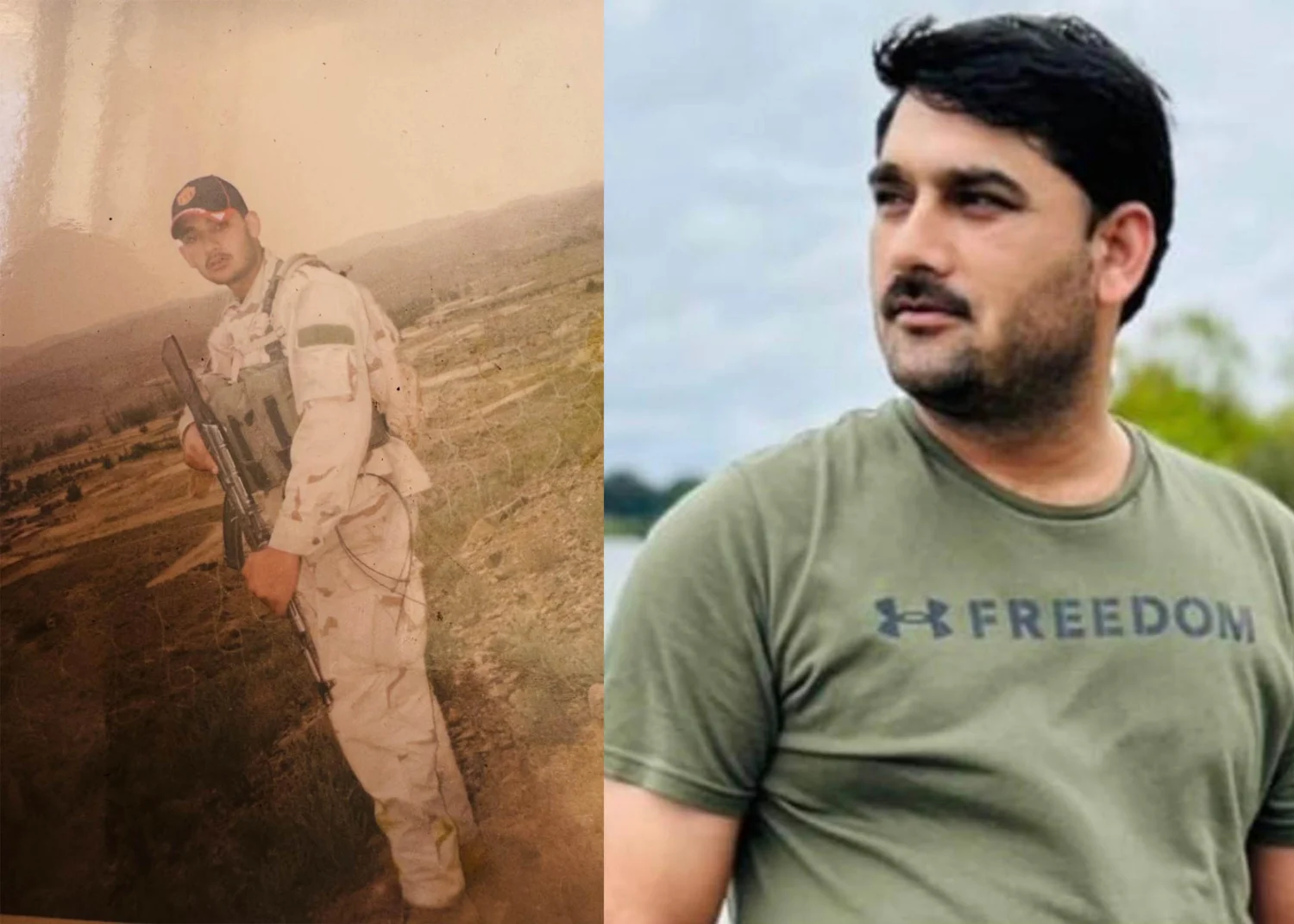
See Nazeer in Afghanistan, dressed in desert fatigues, an M16 in his hands, standing beside American servicemen. Nazeer had been an Afghan special forces soldier, part of an elite tactical unit known as the Zero Units. Created, funded, and directed by the CIA, the clandestine forces were officially housed within Afghanistan’s National Directorate of Security. But they operated largely outside the Afghan military chain of command, as a shadow force that answered directly to American commanders.
See the certificate acknowledging his work as a soldier: Department of the Army 3rd Battalion, 3rd Special Forces Group (A) Fort Bragg, North Carolina. Presented to Mohammad Nazeer. In recognition of your unconditional dedication to special forces, the fifth for freedom and against terrorism, your devotion to Islam, your family and Afghanistan. This certificate honors your sacrifice and service.Given this 8th day of September, 2006 A-Camp Goodwiin, Shikin, Afghanistan.
See the document from US Customs and Border Protection admitting him into the United States., class of admission OAR, Operation Allies Refuge, a code assigned to Afghan nationals who were granted humanitarian parole into the United States.
See his social security card: Mohommad Nazeer Paktyawal valid for work only with DHS Authorization.
See his Texas driver’s license. Smiling into the camera. A full round face, black hair combed to one side, his beard closely shaved.
See the photo of him standing before a lake. Squinting, a juncture of land green with vegetation behind his left shoulder. Freedom, his green T-shirt reads.
See his work permit valid from January 30, 2024 to January 29, 2029.
See State of Texas Certificate of Vital Record Certificate of Death 142-26-042511, Parkland Memorial Hospital March 14, 2026.
See the stitched v-cut on his bare chest after the autopsy. A big hole sutured on his left side. A fresh red bruise on his left side. Naseer doesn’t know its cause. Was it from the autopsy or something else?
Naseer hands me the phone so I can look at the photos. It is midday on a Saturday. We are sitting on the second floor of his house, where traditional red Afghan carpets cover the floor. We lean against plush, oversized pillows. Naseer wears a green T-shirt, green khaki pants. A trim beard wreaths his face.
After Nazeer died, Naseer moved Ziba and her children in with his own family, but it soon became apparent that their apartment was too small to accommodate thirteen people. A friend told him about this house. Naseer wanted to buy it, but the realtor required an $8,000 down payment, which he could not afford. He made arrangements to rent it instead. The rent is $2,300 a month, but with water and utilities, his monthly expenses come to about $2,800. That doesn’t include food, clothing, school supplies, or unexpected emergencies, such as a leaking toilet, which can quickly add up. Naseer earns about $8,000 a month driving a truck, but things will be tight—he still owes money on his Volvo VN, an aerodynamic, long-haul truck. Ziba does not speak English, work, or drive. She and Naseer’s wife stay home to look after the children.
Naseer mulls over his options: Two weeks driving, one week home. That might just be enough to pay the bills. If not he will stay on the road longer. Diesel prices are high. Tablets, clothes, backpacks, all this stuff for the kids. He shakes his head. He tries not to think too much.
I suggest he set up a GoFundMe.
Yes, he agrees.
*
I first heard about Nazeer in a headline that seemed to disappear almost as quickly as it appeared: an Afghan man who had served alongside U.S. forces had died in ICE custody. Then the news cycle moved on. Occasionally, it circled back to Nazeer, but not often. However, he remained a constant presence in my mind.
I had spent fourteen years in Afghanistan as a reporter. At times, I embedded with U.S. troops and came to understand the risks taken by the Afghan men who worked alongside them. The Taliban threatened their families. Even Afghans who translated for me received threats.
After Donald Trump was elected president in 2016, I stopped working in Afghanistan and turned my attention to immigration. But I never stopped thinking about the translators and fixers I had known there. When Kabul fell in 2021 after the U.S. withdrawal, I tried unsuccessfully to help some of them get out.
Every death in immigration custody matters. But Nazeer’s struck me with particular force. It felt personal. He was an Afghan who had fought alongside U.S. forces—a person who, by virtue of that service, had once been considered an ally. Someone I may have even met when I embedded with the army.
He died less than twenty-four hours after being detained by ICE. Outside of Afghan and veterans’ communities, his death prompted little sustained public outcry. No one was held responsible, no apparent consequence beyond promises of an investigation. Dallas County officials in Texas formally sought to block the public release of the full autopsy report after federal immigration officials explicitly asked the local district attorney’s office to keep the records sealed during their active probe. When the report was finally made public on August 12, 2026 it left me with more questions than answers.
His death certificate lists the cause of death as anaphylaxis complicating acute asthma exacerbation. It also cites the toxic effects of methamphetamine, heart disease, and cigarette smoking.
Methamphetamine?
The report does not explain how methamphetamine entered the body of a heavily monitored detainee who, according to his family, never used drugs and had quit smoking years earlier. And there’s this: The death certificate lists the onset of Nazeer’s fatal injury as March 12, 2026. ICE records say he was not taken into custody until the morning of March 13. The paperwork, in other words, appears to say that the medical event that killed him began roughly a day before ICE detained him.
That discrepancy demands an explanation.
So does the reason he was detained in the first place. ICE cited allegations of food-stamp fraud and theft from 2025. But Nazeer had never been convicted of those crimes. Even so, ICE used the allegations to classify him as a criminal illegal alien and begin deportation proceedings.
Additionally, immigration officials said he had no record of U.S. military service despite overwhelming evidence to the contrary.
Why would they say that?
A final question may be the simplest—and the hardest—to answer: Why did an acute asthma attack inside an ICE facility, under the watch of law enforcement and medical personnel, become fatal?
ICE officials did not respond to my calls; I did not expect them to. Answering honestly would force an admission of failure, expose the sheer cruelty and mindlessness of these immigration sweeps. The people responsible are supposed to represent the United States—not a banana republic. What does it say about us when a man is arrested, dies, and the truth about what happened is kept from the public because his life was treated as if it didn’t matter? Nazeer served the United States, which makes that betrayal even harder to accept. We have to ask: what kind of country are we becoming when some people’s lives are easier to disregard than others?
I reached out to Naseer and asked to meet him. He agreed. By writing about his brother, I hoped, in some small way, to acknowledge his service and the Afghans I had worked with and been unable to help.
*
America held such promise, Naseer tells me. Even when they were kids, Naseer and Nazeer wanted to come to the United States. As they grew older, videos of Afghan communities here, especially in Texas, deepened their desire.
The brothers and their eight siblings grew up in a four story, sixteen-bedroom, mud-brick home in a small village in Paktia Province in eastern Afghanistan. It is known for its high mountains, dense pine forests, and vibrant valley. Nazeer was born in 1984, Naseer four years later. Their grandparents, uncles, aunts and cousins also lived with them. Some cousins moved out when they were older and built houses for their families.
The United States is very different, Nasser says. Here, at eighteen, the parents put the children out. In Afghan culture young people marry but stay with their family.
A quiet, simple routine defined the Paktyawals’ lives, even after the Taliban first came to power in 1996. Their father worked as a carpenter, framing rough openings for windows. The boys attended school, played volleyball, cricket, and soccer, and flew kites. The Taliban monitored the roads but never bothered them. They lived in a small, conservative Pashto village, far below the government’s radar. Until September 9, 2001, when Ahmad Shah Massoud, the military leader of the anti-Taliban Northern Alliance, was assassinated by two al-Qaeda suicide bombers posing as journalists, world events did not touch them.
Something is going to happen, their father said after Massoud’s assassination.
Two days later, on September 11th, a group of nineteen terrorists linked to al-Qaeda hijacked four commercial airplanes in a coordinated suicide attack against the United States. The boys’ father assumed the Americans would retaliate and moved his family to Kabul because he thought there would be better opportunities there with the U.S. forces in control. Nearly a month later, the brothers stood on their rooftop, watching American bombs fall on the outskirts of Kabul.
Following the collapse of the Taliban regime and the rise of Western-backed President Hamid Karzai, Naseer and Nazeer resumed their simple life in Paktia.
As a teenager Nazeer would skip school and spend the day at a movie theater watching James Bond and Rambo films. Or he and Naseer would go to the Kabul Zoo. They would jump the fence and go inside. Their parents didn’t know.
But by the time he turned twenty-one in 2005, Nazeer wanted to make money. A friend told him that the American military was hiring Afghans for good money—$400 a month—and training them as soldiers. Nazeer signed up. Naseer wanted to join him, but Nazeer said no. You need to finish school. He gave him money to entice him to complete his studies.
When he came home on leave, Nazeer would not talk about what he had seen in combat.
I’m protecting my country, he told his brother, and nothing more.
He said he liked how American soldiers talked to him and other Afghans as equals. They all ate together and, during downtime, played volleyball.
Five years later, Naseer signed up as an interpreter for the U.S. forces in Kandahar. Survival meant anonymity; the Americans never uttered his real name around other Afghans, fearing Taliban sympathizers in their midst. Instead, they called him Tarzan, a nod to his muscular build and flowing, shoulder-length brown hair.
Why did you join? Nazeer demanded of his brother.
Same as you, Naseer said. It pays good money.
It’s not safe, Nazeer said.
At least I’m now supporting the family like you, Naseer told him. Hopefully, one day I’ll go to America.
Naseer liked the work, but his family faced rising threats from Taliban sympathizers who opposed any Afghan cooperating with the Americans. In 2014, he secured a special immigrant visa designed for foreign nationals whose support roles for the U.S. government put them in ongoing danger. American soldiers he knew recommended that he ask to be placed in Texas.
Texas has a lot of opportunity, and it’s cheap, they told him, promising that jobs were easy to find. Naseer was also drawn to Dallas by a friend—one of about 3,000 to 4,000 Afghans living in the metroplex. This friend, who had served as a translator for U.S. forces, strongly encouraged Naseer to relocate.
Naseer agreed. By that time, he was married; his mother had arranged the match in 2011, but the couple had postponed having children due to his demanding work and the region’s growing instability. Now, he hoped to finally start a family in the safety of the United States.
Nazeer was happy for him. You will have a good life for your kids, he said. A better life.
On the day he departed, they drove to the airport together with the rest of their family. They hugged and cried. Naseer felt fractured between the future waiting past the security gate and the family he was leaving behind.
No matter where we go, he tells me, we Afghans support our family. Support our siblings. Support our relatives. We stay close to each other.
Naseer found work at a warehouse in Dallas and moved to Richardson, where he rented a two-bedroom apartment and began studying for his Commercial Driver’s License. In 2016, his first son was born. Three more children followed, the youngest still a toddler. In 2021, Naseer became a U.S. citizen.
After he arrived in Texas, he and Nazeer spoke on WhatsApp every day. Nazeer always asked about the children.
As the security situation continued to deteriorate, he left the army and drove a taxi because he thought it would be safer than working for the U.S. He had married in 2010 and had started a family. He had their well-being to consider. He told Naseer he didn’t know if the government would endure.
We can only hope it will get better one day, he said.
But it only got worse. Naseer followed the news as the Taliban gained control of more and more of Afghanistan. When the government collapsed on August 15, 2021, he was frantic. He feared the Taliban would kill Nazeer for his work with the U.S. military. He told Nazeer, Go to the airport, take everyone with you. Show them documents proving that you worked for the Americans. Inform the troops at the gate.
Nazeer, his family, his mother, his sisters, and a brother—two other brothers had already left—drove to the airport. A panicked crowd closed in around them, and their mother collapsed. Nazeer’s sisters and brother took her home.
You stay, they told him. You have to get out.
Nazeer pushed his way to the gate with Ziba and their children and showed an American soldier his record of service. The soldier let him in.
That evening, the Taliban surrounded the family home and asked for both Nazeer and Naseer.
They are not here, their mother said without opening the door.
When she told Naseer what had happened, he said, You have to leave. Go to a friend’s house.
But the Taliban followed them. Three times they moved, and each time the Taliban tracked them down, demanding to know the whereabouts of Nazeer and Naseer. A friend helped them secure visas for Pakistan, and they fled to Peshawar.
When Nazeers’ flight reached Germany, he borrowed a phone and called Naseer.
You’re already in America, Naseer told him excitedly. You’ll be here very soon.
Nazeer called again from Washington, D.C. Then he flew to El Paso, where Naseer, his wife, and a newborn baby met him. Catholic Charities placed Nazeer in a hotel for two months before he moved to Richardson to be near Naseer.
He worked at a Dallas bakery for about a year before taking a job at a recycling center. Then he enrolled in a CDL class. After earning his commercial learner’s permit, he drove with Naseer for three months to train for his license. Nazeer took the wheel during the day, and Naseer drove at night.
Let’s play music, Nazeer would say, connecting his phone to Bluetooth and playing Afghan songs.
Naseer liked the heavy-metal band Five Finger Death Punch and its rendition of “Bad Company”. The band added a distinct spoken-word bridge to its version: Eye for an eye / Tooth for a tooth / Blood for blood / We’ve all gotta die.
Because the song frequently repeats the phrase, that’s why they call me Bad Company, it is sometimes misremembered or searched for as Bravo Company, reminding Naseer of his days translating for U.S. forces.
Do you understand the words? Nazeer would ask.
Yea, Nasser said.
OK, I don’t.
You’ll get used to it, Naseer said.
Nazeer loved driving on Interstate 80 with no traffic. Rest stops everywhere. As they got close to the cities he’d say, You know what? You can drive. I can’t stand these small cars. They don’t pay attention. Ok, Naseer would say. He didn’t mind. They drove to California, Washington, and New Mexico delivering tires. On other deliveries, they’d get into Wyoming and then drive all the way to Salt Lake City. He liked the mountains of Utah, Montana, Wyoming, Oregon, and Washington. After they’d make a delivery in Seattle, they’d rent a car and explore the city. Washington reminded him of Paktia because it was so green. He said if he ever left Texas he would move to Washington or Montana because its mountains and big trees and swollen rivers also reminded him of Paktia.
If something went wrong with the truck, Nazeer would learn how to fix it by watching YouTube videos. He never went to a mechanic. He’d do it. Radios, TVs—anything electronic he’d figure out how to make work again. The brothers drove a refrigerated truck transporting chicken, beef and ice cream. Then they began hauling heavy equipment like tractors, wood, machinery and pipes. The loads would be tied down with chains and tarps. Nazeer hated folding tarps. He’d say, You know what? I can help you take the tarp off but when it’s down it’s yours to fold. He didn’t want to deal with it. He hated the tarps.
Not long after Nazeer got his CDL, the Texas Department of Public Safety suspended the issuance, renewal, and reissuance of the license and learner permits for DACA recipients, refugees, and asylum seekers, the category that applied to Nazeer. His work as a soldier made no difference. Between December 2025 and mid-2026, the state canceled more than six thousand existing commercial licenses held by legally present non-citizens. The downgrade left Nazeer furious. He had paid $4,500 for the CDL class.
Things will work out, Naseer told him.
Easy for you to say, you’re a citizen, Nazeer snapped. You have nothing to worry about.
Once you have your green card you’ll be fine. Be patient.
Yeah, whatever.
Why worry? Your work permit is valid until 2029. You’ll have your green card before it expires.
Easy for you to say.
He could have a temper, Naseer tells me, but it didn’t last long. A smile always returned to his face. He took his old job at the bakery. He worked from 7:45 in the morning to 7:45 at night six days a week. He’d make four hundred to five hundred loaves of bread. On Sundays he would get off at 6 o’clock and meet Naseer and some of their Afghan friends in a park to play volleyball. He hoped that one day he would be allowed to drive a truck again.
*
On March 13, 2026, Naseer was home eating breakfast when his phone rang.
It was Ziba, Nazeer’s wife. She was screaming. Crying.
They took him!
Naseer didn’t understand.
What? he asked. Took who?
Nazeer! He’s just gone.
It was about 7:30 that morning.
Nazeer had been taking his older children to school. They walked down the stairs of their second-floor apartment and were heading toward his SUV when two black, unmarked vehicles pulled up.
One stopped behind his car.
The other blocked the driver’s side.
The children screamed.
Men in black masks, carrying guns, got out and grabbed Nazeer.
From a window, Ziba watched.
Who are they? She shouted in Pashto.
I don’t know! Nazeer yelled back.
One of the men spoke to him. Later, when Nazeer called Naseer from detention, he would say the man identified himself as an ICE agent.
I have paperwork, Nazeer said he told him.
The man didn’t answer. He handcuffed Nazeer.
Baba! his children screamed the Pashto word for father.
They covered their mouths and began to cry.
He has asthma! Ziba shouted in Pashto. He needs his inhaler. He forgot it.
She was holding the inhaler in her hand, waving it desperately.
The agents put Nazeer into one of the vehicles and drove away.
They took him, Ziba said again to Naseer.
Naseer got off the phone and sprinted barefoot to Nazeer’s apartment. Ziba stood inside clutching her children. Naseer told her to take them to his apartment. He didn’t know what else to do. He wanted to protect them. He wanted everyone—his family and Nazeer’s—together. He lives with the memory of their terrified, tear-streaked faces, their desperate crying. Ziba told him the men who took Nazeer wore clothes that resembled police uniforms, but she saw no police insignia.
They put him in a car and drove away, she said.
Naseer thought, Who do I call? He dialed Nazeer’s phone but he didn’t answer. He called again, his hands shaking, and this time Nazeer answered. He was inside the ICE detention center on North Stemmons Freeway in Dallas. It was about eight o’clock.
I don’t know what’s happening, Nazeer said.
He complained that his asthma was bothering him and he had chest pains.
I’ll text you later, he said, before the phone cut off. About twenty minutes later, an ICE officer called Nazeer.
We have your brother. His paperwork expired.
Naseer drove to the facility. After he parked, he walked inside and stopped at a window where an ICE employee sat.
You arrested my brother. I need to see him, he said. He has valid paperwork until 2029. Plus he has asthma, he needs his inhaler.
We can’t let you in to talk to your brother, the man said. It’s Friday. Get a lawyer.
He handed Nazeer a sheet of paper with a quick bar code.
Scan this paper for pro bono lawyers. It will show you some attorneys.
He has asthma, Nazeer says again.
We’ll take care of it, the man said.
Nazeer returned to his car and called 911. He gave the dispatcher his brother’s name. He has asthma, he said and needs help.
An ambulance arrived a short time later. Nazeer told them his brother was inside.
I need you to check on him if he needs treatment. He is in pain.
The paramedics disappeared through the gate. Naseer waited, pacing, for ninety minutes before driving around the perimeter. When he spotted another entrance, he realized the truth: the ambulance had already left with his brother. He called 911, again. The dispatcher told him the paramedics had checked on Nazeer. He was fine, the dispatcher said. He was not taken to a hospital.
Back at home, Naseer told everyone he hoped Nazeer would be home by Monday.
We’ll get an attorney and his paperwork will be validated.
He called Nazeer’s friends. They were shocked.
Why did they take him? they asked.
I don’t know, Naseer said.
The first night of Nazeer’s detention, Naseer felt under so much pressure that he left the house to sit in his car and be alone. He wondered what he should do. He thought of selling his car to raise money for an attorney. Then his phone rang. It was Nazeer.
I can’t breathe, eat or drink, he said. I don’t know what is going on but something is happening to me.
I sent you an ambulance, Naseer said.
No one showed up, Nazeer said. I didn’t see anyone. I’ve told them I have asthma. I asked for a doctor. They aren’t giving me anything. My body is shaking. Something is happening to me.
Naseer asked him to give the phone to an ICE agent.
After a moment a man got on the line.
Hello, he said.
I sent an ambulance this morning, but my brother says he feels worse, Naseer said.
We’ll take him to our doctor, the man said. We can take him to an emergency hospital.
If you take him, which hospital will he go to? Naseer asked.
We can’t tell you.
He hung up.
Naseer went back into the house but could not sleep.
What are they doing to him? he wondered.
He got up when he heard the children begin to stir. He found them in the living room asking for their father. His own children’s sad expressions made him want to cry. To distract them, Naseer drove them to a park fifteen minutes away. Just as they arrived at the entrance, his phone rang. He answered.
Are you Naseer? a male voice said.
Yes, who are you? Naseer said.
Your brother passed away this morning.
Naseer caught his breath and slammed the brakes. The children jerked forward in their seats restrained by their seatbelts. They stared at him, confused.
Check your number, Naseer said. You must have the wrong number.
Is this Naseer Paktiawal? the voice said again.
Yes, Naseer answered.
Your brother has this as an emergency number. He’s in Parkland Hospital.
Who are you?
I’m with ICE, the voice said.
Naseer hung up and began crying.
What’s happening? the children asked him.
Nothing.
They began to cry. He drove home.
When he entered the apartment, he called his mosque and told the imam what had happened. He got off the phone and turned to his wife, Ziba and the children. But the expression in their faces and their tears told him they already knew.
As many as thirty people who attended the mosque began converging on his apartment to offer their support. They prayed together and then drove to Parkland Hospital to demand answers. No one would speak to them. They waited until almost nine o’clock that night, when a nurse told them that someone would see them. Thirty minutes later, Naseer and other leaders from the mosque met with a hospital administrator. He said ICE had brought Nazeer in a little before midnight. They gave him oxygen, and he appeared to respond well. They also gave him antibiotics and a sandwich. His tongue began to swell, and he was rushed to the ICU just after nine the next morning, where he died.
Naseer asked when he could see the body.
Wednesday after the autopsy, the administrator said.
The next morning a large crowd of people, more than one hundred, Naseer estimated, came to the mosque to offer support. They wanted to block roads and protest. Naseer told them no. He did not want to stop people from going to work.
Naseer spoke to his siblings and they all agreed to bring Nazeer’s body back to Paktia to be buried beside his father’s grave. In 2025, his mother and sisters and one younger brother had returned to Afghanistan after Pakistan began a mass deportation drive targeting Afghan nationals without valid standard visas, having enforced strict deadlines following a policy initiated in late 2023. The family found an apartment. Enough time had passed that the Taliban did not harass them.
A friend arranged for the casket and its transportation to Kabul. Seeing his brother’s body, Naseer felt as if he had lost a part of his own. When their father died, Nazeer had become the head of the family, and Naseer would do nothing without his permission. He was his father, brother, and friend. Now that Nazeer is gone, Naseer feels lost, as if a part of himself has left to be with his brother in Paradise.
Naseer swore his siblings to secrecy; their mother’s high blood pressure made the news too dangerous to deliver alone or unprepared. He insisted they all be there together, with two doctors standing by in case the shock strained her heart. With the family rallying from corners of the globe, Naseer flew into Afghanistan a day ahead of the body, meeting his brothers arriving from Germany and Oman.
As soon as Naseer walked out of the Kabul airport he saw men with long beards he assumed were Taliban. He wore a head scarf to conceal his face. Although he was a U.S. citizen he didn’t know who might recognize him and report him to the Taliban. Every day people talk about someone who had worked for the previous government and then that person gets killed. He saw checkpoints everywhere.
The moment he arrived at the house and greeted his surprised mother, she asked, What’s happening? When his brothers from Germany and Oman arrived, she became more suspicious.
Why are you here?
Naseer told her. His voice shook. He tried to be as direct as possible. There was no use prolonging it. No matter how he told her, the end would be the same, so he just told her. Nazeer is dead. He can’t describe that moment, how the words came out of his mouth sounding so hollow and matter-of-fact. His mother collapsed.
The next day his siblings took Nazeer to Paktia and buried him beside their father. His mother wouldn’t let Naseer and his other two brothers attend the service. She was worried they would be seen by the wrong people. After she left for the funeral Naseer wondered how he would feel returning to Texas and not having Nazeer there to greet him at the airport. For the rest of his life he will never see his brother again. How would he face the children when he entered the house alone? Then Nazeer’s death would be real to them all. He was gone, truly.
*
Naseer and I leave his house for Richardson so that he can show me where he lived, the park where he and Naseer played volleyball and the bakery where he worked. The heat layers the air with what feels almost like a white glaze and I squint even with sunglasses. We get on the freeway and drive south for about 40 minutes before turning off onto a street with new high-rise apartments. Nazeer and Naseer lived nearby at Oakline Apartments. Trees shade the white buildings and green roofs. I stop and Naseer points at a building.
Nazeer lived there, he says.
I look at the second-floor apartment and imagine Ziba behind the glass door, watching her husband as he was surrounded by masked men with guns. The parking space where the ICE agents stopped him stands across from where she would have been standing. His children were with him, I remind myself. Now the parking space is empty, the entire lot quiet. No hint of what happened here remains. I imagine the apartment has been rented to a new tenant. People disappear, new people move in.
The bakery stands in the center of a shopping center. Its shelves are stuffed with bread, rice and other goods. In the back, an Afghan man stands sweating in front of black ovens where Nazeer once worked. He is making naan. Naan is a large, flat, oblong yeast bread with a golden crust marked with decorative vertical lines and sprinkled with sesame or nigella seeds. I smell its smoky aroma from being baked against the walls of an upright brick oven.
The store owner, Noor Alhaq Lali, smiles when he sees Naseer. He shakes my hand and we sit on stools and watch the baker scoop loaves of nan out of the oven with a wooden turner.
On the day they took Nazeer, Noor tells me, he was supposed to bake a large order of bread. When Noor came to work, he saw immediately that Nazeer had not been in. He called Nazeer but he did not answer. He didn’t show up for the rest of the morning.
Then a customer came in and said, You know Nazeer was taken by ICE.
Noor called Naseer. He expected good news, that it had been a mistake and Nazeer had been released but Nasseer told him his brother had died in ICE custody.
He stares at the floor before he speaks again. Nazeer worked for him for about six months. He knew how to bake bread. Nice guy, got along with everybody. He and Nazeer would talk about Afghanistan. One guy from a country meets another guy from the same country and of course they share memories. Their friendship was like that.
Now we are all afraid, he says. No one knows what will happen.
I thank Noor for his time. Naseer and I leave the bakery and stop at Terrace Park. The grass stands dark and green from the spray of a sprinkler beneath the clear sky.
Every Sunday night Nazeer came here to play volleyball with other Afghan men, Naseer says. He was happy. I still think he’s driving a truck somewhere. I’m still waiting for a message from him that he’s going to call me.
Naseer still has questions. He is seeking specific information regarding his brother’s medical treatment and detention, including the type of antibiotics administered by doctors and whether the assigned translator was fluent in Pashto. Additionally, he wants all official documentation such as the transcript of his call to 911 and all corresponding ICE agent reports. He suspects his questions may never be answered.
We start driving back to Princeton. He wants to take the kids out this afternoon, keep their minds occupied. Sometimes they ask, Are we going back to Afghanistan? No, Naseer tells them. This is your country now. This is your Afghanistan where you will study and work and have families.
He tells me that in Pashto, his name, Naseer, means helper or supporter. He is both of those things now for Nazeer’s children. He thinks he pays more attention to them than his own so they don’t think too much about their father. He will remind the youngest ones of Nazeer so they never forget him. It saddens him that he now speaks of his brother in the past tense so easily. What happened happened. Naseer must focus on their future and raise them the right way, so that Nazeer will be proud of both them and him.
He hopes they will forgive him for voting for Donald Trump.
Every day Naseer thinks about Nazeer. He hasn’t deleted his messages on WhatsApp or Facebook Messenger. He listens to them over and over. He had a dream of Nazeer recently. They were at a truck stop. Naseer was holding a big wrench over his shoulder. Nazeer laughed at him.
Whatever, Nasser told him, his go-to response when Nazeer teased him.
He doesn’t know why he was holding a wrench. Nazeer was the one who could fix anything.
Naseer waited for a sign, maybe for Nazeer to appear to him in some way and explain the dream, but nothing interrupted the dark but the fading image of his brother slipping from his mind. He stared at the ceiling. Unable to fall back to sleep, he searched for answers.