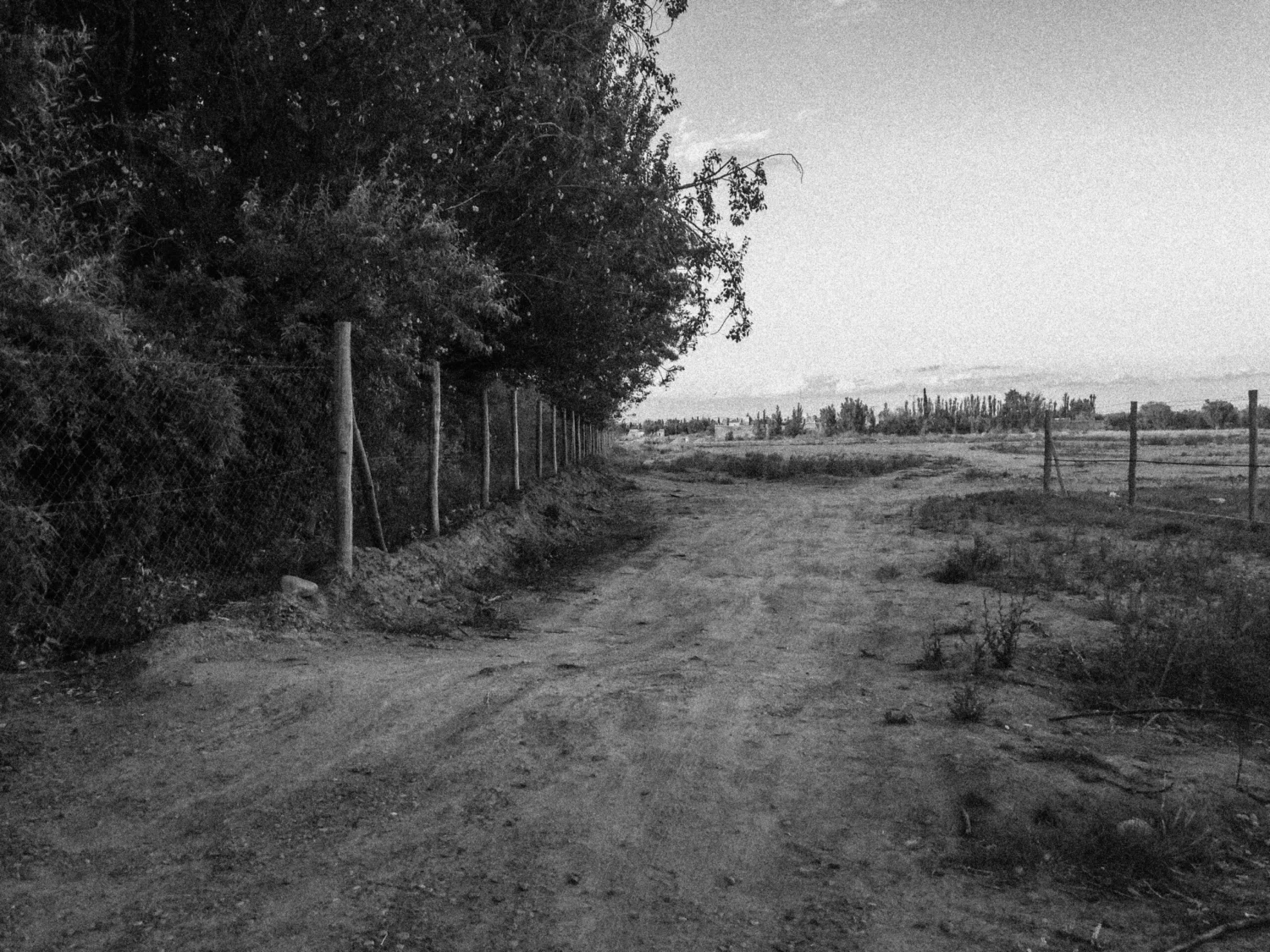
"Calle Perdida" by Emilia Rinaldini

You tell me it began with the word mine. Once

you give a name to something it starts

to be. After we’d made


mine it was easy for words like us and

them to follow. This separated us, so we tried

the word want in our mouths


until it tasted like need, until our tongues turned

it to take. Now, water is soft on the road. Little air

bubbles make a world of it and the sky is eaten


up. You breathe light

and quick. You watch. The miles

of roads. The fields. The ditches of rotting


and regrowth, of cycles all alone. Corn

in rows, a faceless army. We tell ourselves

they are all like this: enemy is not a word


with a name or a family. At home, the live

oak dips its branches back in the earth, a child

playing soldier, arms pulled inside shirt


as though blown off. When you speak

the ground waits for your words

like rain. The world teaches


us about lying and I am lying

in the grass, skin against the sharp,

beheaded blades, wondering how


and when hurt became

another type of language.


Sarah Brockhaus

Sarah Brockhaus’s poems have appeared in North American ReviewAmerican Literary Review, The Greensboro Review and Permafrost, among others. She is an MFA student at Louisiana State University and a co-editor of The Shore Poetry.

Emilia Rinaldini

Emilia Rinaldini is the Creative & Operations Director at Guernica, and a multidisciplinary artist working across art, design, and media. Her practice is shaped by a strong visual instinct and an affinity for original perspectives, with a focus on how images, objects, and environments come together to create meaning.


With a background in film and television, including her time at The Walt Disney Company, she developed a production-driven approach to making, valuing both structure and spontaneity. That experience continues to inform her work, grounding it in execution while leaving room for experimentation and evolution.


She moves fluidly between disciplines, drawn to emerging voices and building visual languages that feel both intentional and intuitive.