I have always seen myself in the images of skeletal kids. I was a bag of bones in my childhood and adolescence; a scarecrow planted in a farm.
Today, thanks to my sedentary government job, I indulge in a cuppa at about four every day at a tea-stall outside my office. Funny as it might sound today, as a kid I often tried to fix a deep-frying pan in my concave stomach in a bid to make it flush with my chest. Today the concave has become substantially convex.
Back in 1984, Mahesh Parmar, our family friend, landed a coveted job in a public sector bank. Getting his first posting at a town branch in Mehsana, he began to commute daily by train. In the first few days, he realised that the manager of his bank, Shah sir, also commuted on the same train. What luck! Pleasant company would take the sting off the tedium of the rush-hour between Ahmedabad and Mehsana, he thought.
One day on their way back to Ahmedabad, the manager held out his unlidded snack-box before Mahesh, silently insisting that he try some. As soon as Mahesh broke a sliver of the crispy, crunchy thing in the box, he exclaimed. “Sir, how does your wife make such paper-thin roti?” Everyone around burst out laughing, more at the man’s naivete than his question. “Parmar, this is not a roti; it’s called khakhra,” the manager clarified, a shade of smugness lining his face.
That evening, when he came to our house on his routine post dinner visit, Mahesh looked unusually excited. Without wasting a moment, he launched into a graphic description of his discovery, a fancy delicacy called khakhra.
Over years, Mahesh has scaled the professional ladder and become a bank manager, affluent enough to dine at a whim in a posh restaurant. But the fact remains that in the mid-nineties, the brittle, flaky eatable, upheld so vigorously as the pride of Gujarat by Narendra Modi, was completely unknown to us Dalits living in the squalid, tumble-down, cheek-by-jowl dwellings in the backstreets of Rajpur in Ahmedabad.
Even today, there would be at least four to five households in my chawl that wouldn’t have encountered the thing called khakhra.
Those days of my childhood were a time of utter deprivation when every single grain of food meant the world to us.
Ba, a textile mill worker, was the sole earner in our large, working-class family of nine – five brothers and two sisters. The crisis of food security loomed so large that even the coarse grain rotla made from reddish wheat, provided under the ‘PL 480 US food aid’ program, had become a luxury for the poor.
Food rations were strictly controlled, and one could procure a smidgin of grains, if one were lucky, from the Fair Price shop, but not before doing multiple rounds to the subsidised public ration facility for the poor and pleading with the proprietor.
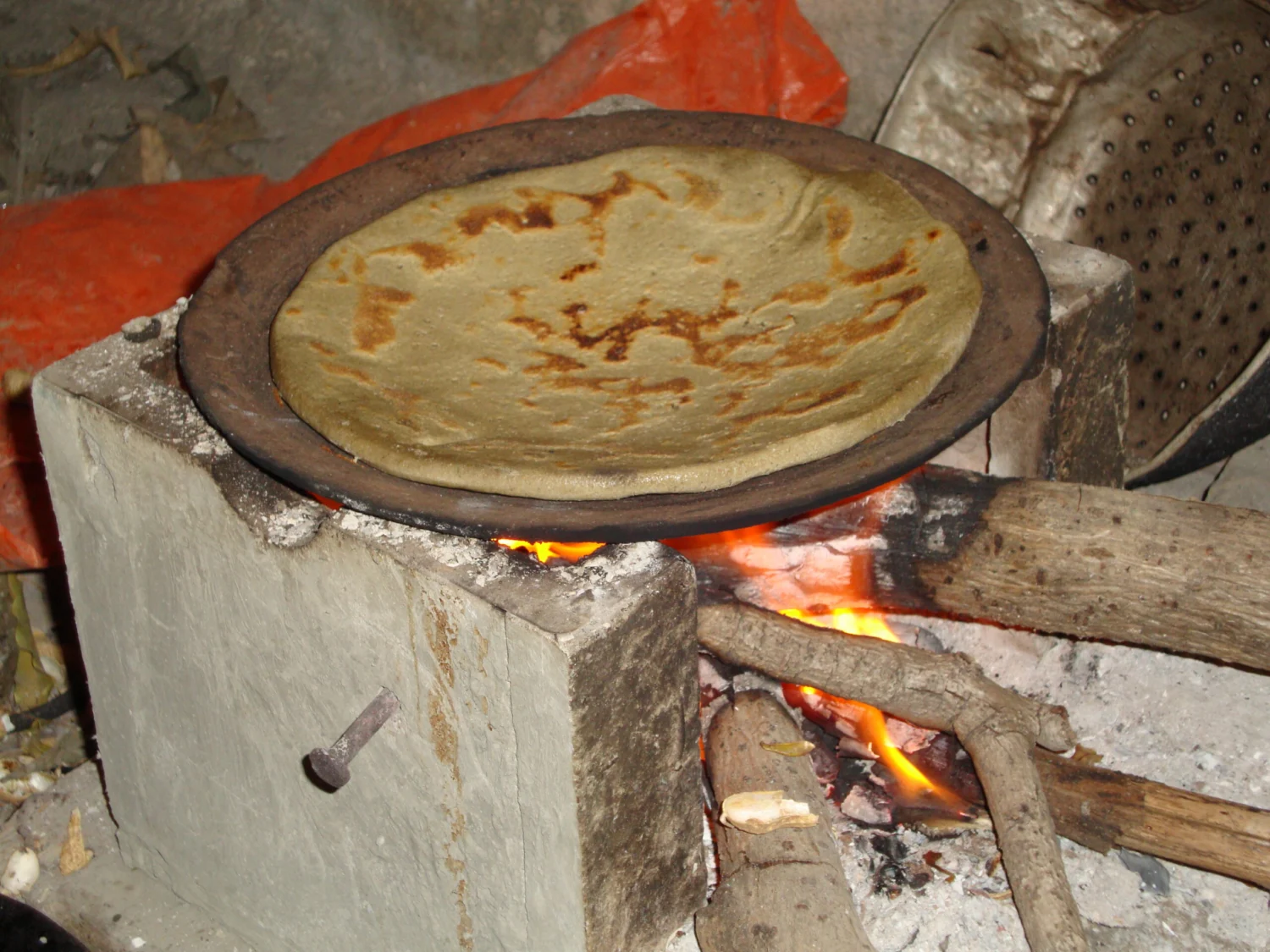
We had to fill the pits of our tummies with thick rotla made from the flour of lowly grains, like millet, sorghum and small-grain or fat rice. At daybreak, Ma patted and baked round cakes of rotla over a sigri, fuelled by sawdust, and served one each to us brothers. We hungrily ate our share of the piping hot rotlo with curry and hid what remained of it – generally a quarter – within the folds of our respective quilts, piled on a wooden hope chest, like a prized booty.
A stinking quilt, a soiled chest and a quarter of a rotlo, tucked away in that mouldy safe – that’s all we knew and had in the name of a bank. A unique rotla bank. Today, a sense of nausea creeps over me as I think of the frigging piece of reeking rotlo and the fact that I ate it with such relish.
Most of the men and a handful of women of our chawl worked in the surrounding textile mills that functioned in three shifts. The routine of the chawl life, throbbing day and night with the deep hum of those mills, was organised like clockwork to the mills’ schedule of sirens.
Ba’s shift started at seven in the morning and ended at half past three in the afternoon. The lunchtime was clocked for half an hour, eleven to eleven-thirty. His tiffin would be readied by nine-thirty and delivered by one of us boys at ten sharp when the towering mill gates were thrown open briefly.
My day school kicked off in the afternoon, so it mostly fell to me to do the honourable thing of walking all the way from Rajpur to Rakhiyal, the tiffin-box dangling in hand. Ba would be at work inside when I reached, so I had to place the tiffin-box in the shed, designated for Dalits to dine.
On lucky days, Ba would personally come to receive his lunch at the gate and buy me hot, oily puris, worth five paisa, from the mill’s canteen. This was a reason enough for me to undertake the long march every day and linger in his shed in the hope that he’d come out.
All the workers, Dalits and non-Dalits, drudged in those mills together under the same precarity and pressure, and yet their dining sheds were segregated. It wasn’t until my teens that I realised why the hyped Marxist unity of workers was missing among those in Ba’s mill. Indian social reformer Dr. Ambedkar was spot on in his analysis of the caste system as a division of labourers rather than of labour.
Every day at three-thirty, Ba’s shift ended. By the time he walked home, it would be a quarter past four. All of us brothers would take our position at the post office on Rajpur crossroads, ready to burst into a sprint at the first sight of Ba in the distance at the bend of the Topi Mill. This was not out of the delight of seeing him after a half-day long absence. The rat-race was to snatch the tiffin from his hand before anyone else did. For the tiffin carried a slice of rotlo Ba deliberately spared and brought back for us, his ever-hungry boys.
The government’s midday meal scheme was yet to be introduced then. But we did get a glass of milk at school every day before classes. My school, a lacklustre municipal primary school, was just a stone’s throw away from our home. I had no fancy school bags, lunch boxes, muti-coloured water bags or insulated flip-lid sippers.
During the recess, I’d shuffle my way back home and have a cup of wishy-washy tea with the hoarded, mouldy slice of rotlo. Things weren’t so dismal for everybody in my school. A few cliquish kids, who came from the faraway chawls, did bring lunch boxes from home and polished them off, sitting in a circle in the playground, classroom or lounging royally on the windowsill, their legs stretched out and eyes soaking the city hubbub outside. Being an ace in academics, I wasn’t generally asked by my teachers to run errands like bringing spicy hot pakoras from the modest, hole-in-the-wall shop on the pavement outside. But when I saw my sticky-fingered classmates sampling pakoras on the sly from the order on the way to its delivery and their over-the-top description of the pakoras’ heavenly taste, I burned with jealousy.
Today, I have to follow a diet regimen to keep this old, frail body going. Fried food is strictly out of bounds for me, but in adolescence, I craved fried tidbits. Oil was a luxury in our kitchen, something to be bought in miniscule quantities, in a dedicated small bowl or a toyali, a handy waterpot, from Naran Sheth’s provision store, tucked deep inside Jethibai’s chawl. The game was to go shopping for it in the dead of the afternoon when the stingy Sheth settled for siesta, putting his large-hearted servant in charge of the shop.
Puris we got to eat only around the festival of Shitala Satam, that too after lining up in an endless queue before the Fair Price shop under the beating sun and the gathering dark from the afternoon of Nag Pancham to the evening of Randhan Chaath. All for a seer of maida, soybean or palmolein oil, whatever was available for a condescending dole-out, to fry hot puris and anoint our craving palates with fizzing oil.
Even amid absolute privation, Ma and Ba indulged my brother, the privileged eldest son of the family. His claim to the lion’s share of parental pampering was also due in part to the fact that he studied at St. Xaviers College in Ahmedabad. Ma served him a fried rotlo every morning to break his fast with, but the choosy sir deigned to have just the middle part and leave the oil-rich edges. In a way, it was to our advantage. For Ma then equally divided the edges amongst the rest of us, a left-over breakfast for her left-over sons.
Only a select few homes could afford the luxury of broken, discarded rusks – those sold in open handcarts – in their breakfast. The rest helped themselves with the left-over from the previous night’s meal, mostly a lump of stone-cold khichdi meshed into a cup of scalding hot tea.
I remember, once someone in the chawl had innocently admitted to soaking non-veg pulao in a tumbler of tea. The poor thing was ruthlessly ribbed for days by the young and the old in the chawl. Catcalls of “pulao-tea” went up whenever the gentleman passed by. In a similar vein, an entire household in our chawl had come to be called banti-bavata – the eaters of lowly grains – like broomcorn millet and raggi. The nickname, in all probability, had stuck from the platitude the elderly woman of the house often mouthed: “One should eat whatever one gets, banti or bavato, without a shout or a pout.” Poverty had not blunted a people’s sense of humour and even with very little, they could find something to laugh about.
The financial crunch in my family had robbed me of the pleasures of school excursions. The only picnic I went on in class three was to Kankaria Lake and Gandhi Ashram in Ahmedabad. All students were required to bring their own snacks from home.
My elder sister had lovingly packed me my favourite combo, sauté mashed potato and puris, in a dolachu, a small, lidded brass bucket. Who was interested in seeing the sites at Kankaria? Not me. My heart was locked inside the dolachu. We reached Gandhi Ashram after noon. Our teachers sat us down in a big circle, asked us to pray and then have the home-brought snacks. Rushing through the prayer, I had hardly unlidded the dolachu when a crow overhead aimed jets of its droppings right on the puris and flew away cawing triumphantly. At the sight of the shit-soiled puris, I burst into tears as the boys around me roared with laughter. Later, a few felt bad about it and gave me something to munch from their snack-boxes. Even today, after all these years, when I step into the cool, lush green of Gandhi Ashram, I feel a strange, stinging feeling. And then, I end up casting about the Gandhi Ashram, not for Gandhi but for that cunning crow.
Our life in Rajpur was bleak but not hopeless. Food shortages were thankfully punctuated by episodes of satiating meals when we stuffed ourselves.
During the winter, our working-class suburb witnessed vendors hawking fish and green garlic. During the mango season, it was customary for chawl residents to invite guests, especially their married daughters and in-laws, and treat them to the whipped pulp of ripe mangos and rotla. The aroma of mango pickles in the month of May and nutrition-rich vasanu in December hung over the chawls, the smell so dense that it cancelled out the odour of overflowing toilets.
Mama, our uncle, was an early widower, so Ma had reared his sons like her own. Kalamama’s son, Babu, had a slight handicap. One of his hands looked like a snuffed-out stub of cigarette, so we mockingly called him Bablo butt. Babu worked in a lodge in a labouring suburb called Saraspur. Once, he stepped into a pan of boiling oil and burnt his foot. Ma had nursed him round the clock for days.
Bablo had come to develop a soft spot for our entire family. His job at the lodge was to lug a load of tiffin-boxes on his rickety bicycle and deliver them to existing customers. On days when Bablo butt landed up at our place on his way back from delivery rides, he would let us polish off the left-over food in those tiffin boxes. The helpings of tainted, tasted dal, rice, rotis, puris and fried delicacies would make our day.
In a context where a frigging piece of rotlo became a veritable battleground, there is no question of me having heard of, let alone tasted, chocolates, you’d think. But adjacent to our house in the chawl was a kutcha hut, which we had rented out to a man called Tulsibhai. Tulsibhai worked as a caretaker of tourist buses of the Ahmedabad Municipal Transport Corporation. Handing out costly chocolates as welcome munchies to the tourists who hopped on those sightseeing buses was his delightful job description.
Of course, some of the chocolates made it to the chawl to be dispensed to us fawning kids in return for errands run for Tulsibhai. So rare and alien were those pricey chocolates that even the local confectioners of Rajpur were struck dumb when we flashed one to them.
Our chawls were filled with mixed castes and classes, harbouring people like us who struggled to make both ends meet and people like my chum Poonam whose family led a life of reckless extravagance and conspicuous consumption. We called him “an elephant’s calf” as a crack on his tubby figure. The elephant was cash-rich, a fact confirmed by the staggering amount of pocket money the calf always had on him. I would sweet talk Poonam into buying those chocolates in colourful wrappers, but not before clinching the best bargain in which he was made to feel that paying a bomb for those world-class goods was worth it. The money made would then be spent on grocery, toiletries and other essentials for the house.
For plain broke families like ours, the water-soaking mutton was more pocket-friendly and nourishing than the freshest of veggies. Sometimes I wonder if the meat-eating of the working-class Dalits, living in those huddled-up chawls, had anything to do with taste or liking or was a kind of forced necessity.
A dish of spiced lentils and boiled rice was meant only for the affluent and upper caste. I can count on my fingertips the rare festive occasions on which I had dal-rice on my plate. On days we were so broke as to be unable to afford anything for curry – vegetable or meat. Ma asked us to get some dal from Umiya Shankar Lodge in Gomtipur to go with the rotla. The other-worldly fragrance of that dal, spiked with kokum and peanuts, melted our hearts. I still remember how the lurking fear of being caught by our non-Dalit classmates in the act of buying dal from the bazaar drove us to skulk on the roadside. The sense of shame, laced with a blood-curdling fright, overwhelms me; and sends a chill down my spine even as I write this
Today, whenever I see rag picking kids in cities, I see my kid-image in their faces. For, in the months of vacation or on days of leisure, I too set out with my friends, a tote bag hanging from my shoulder, on picking expeditions. Not rags but bones. Meat was consumed liberally by Dalit population in Rajpur and the bones, once the beefy dogs had their turn on them, lay around in abundance drying in the sun. We picked them through the day under a scorching sun and sold away the bagful to a tin-shed shop outside Santram Colony for whatever was on offer.
If bones had been a source of income, they had also been a source of public embarrassment to us. One such episode involving a bag of bones had taken place during the prolonged anti-reservation riots of 1981, protesting affirmative action job quotas for Gujarat state’s lower-caste communities. A long-lasting curfew in Rajpur had crippled our movement and unauthorised absenteeism in a government job for someone like me had its consequences. As a stop-gap arrangement, we moved to our small row-house in Maninagar, a mixed neighbourhood essentially but dominated by a bunch of ‘pure’ vegetarians.
Days wore on without the situation getting back to normal. It had been a while since we had mutton, and our stomachs had begun to rumble for it. One day, taking courage in both hands, we smuggled some in and relished a spicy, hot mutton-curry to our heart’s content. But what to do with the contraband bones? Late at night, we tiptoed out in the street with the load of bones, hidden in a thick polyethylene bag, hoping to dispose of it off in a scrub far away from the housing society. At the society’s gate, we ran into a young man, out on a walk with his pet dog. The dog pounced on the polyethylene bones bag and shredded it to pieces. Our guilt tumbled out.
Eventually, the men in my family landed government jobs, thanks to the reservation policy of the state, and the days of deprivation were over. Reminiscing on one’s poverty, and worse still writing about it, has become a matter of embarrassment. It’s still something to be discreet about in social conversation.
Today, the chawls of Rajpur are part of my past. My extended family live in ease and luxury in fancy colonies in Ahmedabad and Gandhinagar. Ma, in her eighties, now prefers crispy khakhra, what she calls “Bania roti,” as snacks over everything else.
When I see my nephews gorging on expensive chocolate bars and ice-cream balls without batting an eyelid, a surge of mixed feelings washes over me and sends me scurrying down memory lane in search of my lanky, malnourished body.
This is an edited extract of the chapter ‘The Frigging Fuss over a Rotlo’ from Chandu Maheria’s memoir The Mayor’s Bungalow (forthcoming), translated from Gujarati by Hemang Ashwinkumar