Text: Ben Buckland and Carissa Western
Images: Ben Buckland
The desert is green. Just a tinge—enough that you barely notice it at first and then you look again across the sand and it feels impossible. It’s been raining. Heavy drops in the afternoon. And the desert, this most patient of landscapes, is coming to life. Emptiness and stasis, it turns out, are illusions. If you watch closely, you can see the desert change.
We are here to witness Sebeïba, a festival said to be three thousand years old. Moussa, born in Djanet into one of its oldest families—the families, he says, who carry Sebeïba—tells us the story: when two rival tribes living in an oasis deep in the Sahara, locked in a long war, heard that Moses had been victorious over the Pharaohs, they laid down their weapons in peace. Or perhaps—for there are multiple stories—it began as mourning for the death of the Queen of Sheba, in the form of a poem and a hat (the tkumbut) made as a memorial for the local families who traced their lineage back to her noble tomb “so our next generation remembers our queen is dead.” Or maybe it is just the fear of the wind, says Moussa,* as a thick tesist (sand haze) hangs on the air around the oasis.
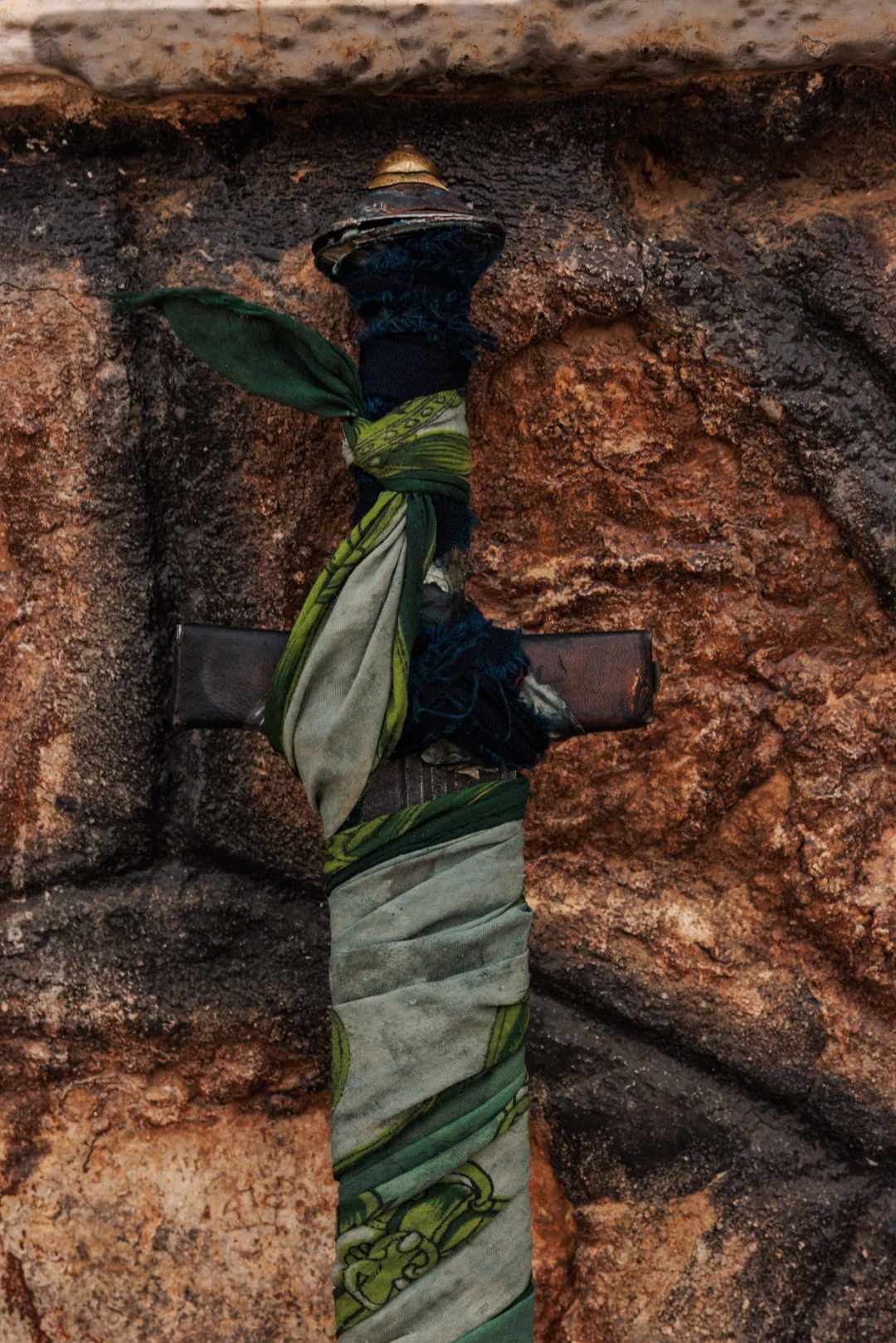
Like the desert, Sebeïba first appears unchanging. A day-long contest between two rival ksours of the oasis town of Djanet: El Mihan and Zelouaz, staged through dance, drumming and song. The swords and the scarves. The tall red hats. We could be time travellers and news of the Pharaohs fresh off the latest caravan. But if we look closer, Sebeïba’s meaning is as layered as its history, and it is evolving—subtly but profoundly, in response to forces from far beyond the oasis.
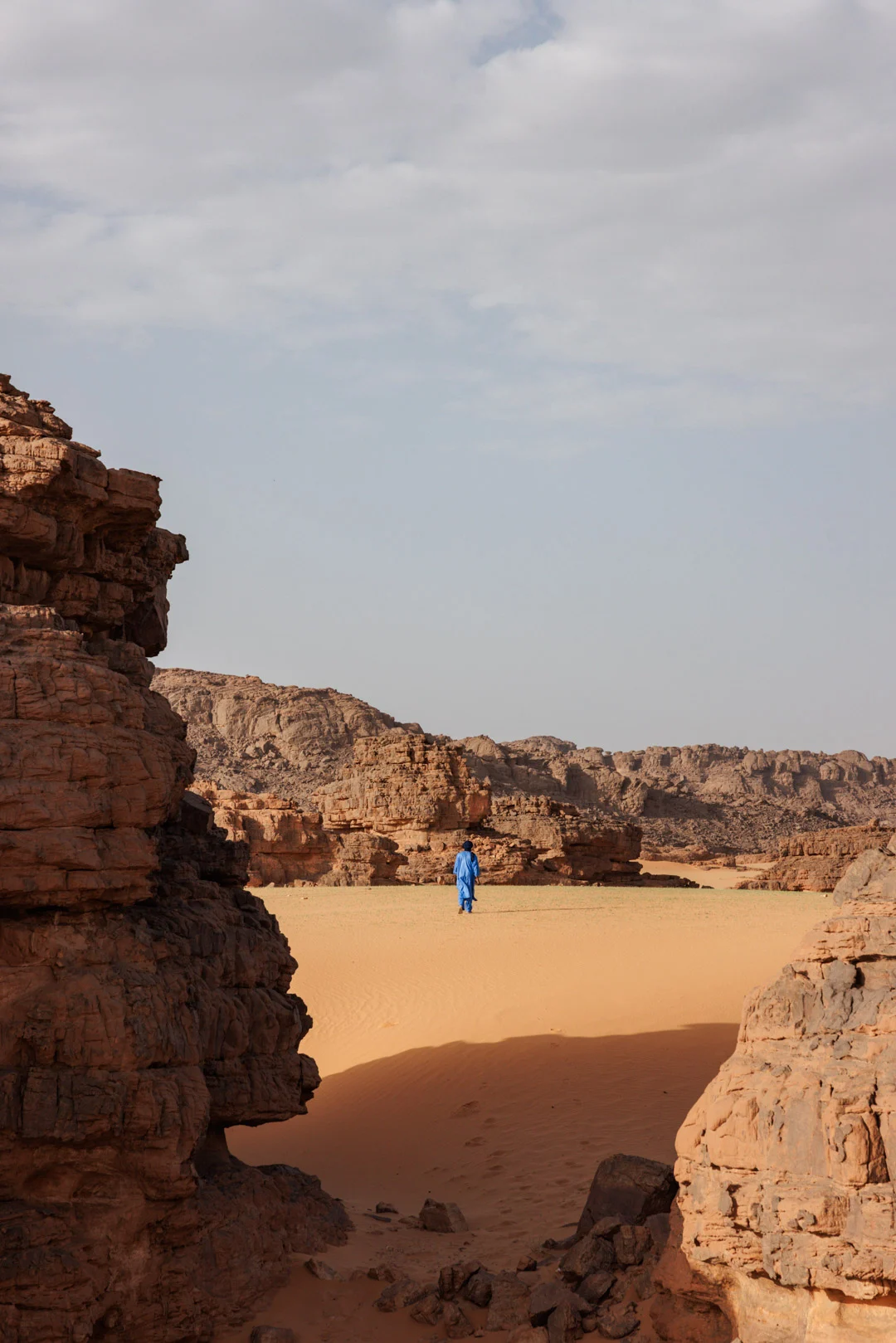
Despite Sebeïba’s three-thousand year history, the way Ibrahim, a veteran teacher and scholar of history, describes it to us resists the idea of simple preservation. Not a re-enactment. Not a custom on autopilot. “The people who reflected on it,” he says, “were desert sages.” It has been reasoned through, not stumbled into.
The journey south begins days before, in Algiers, where a cold fog is flowing off the sea, creeping along the alleys of the Casbah and wrapping the minarets in long white scarves. Below, the Haussmann boulevards pile their grid upon the rocks and beyond, the Mediterranean. Fishermen and the dark, sleek bodies of swimmers on the cliffs. Cats waiting on the rocks for whatever is left of the catch.
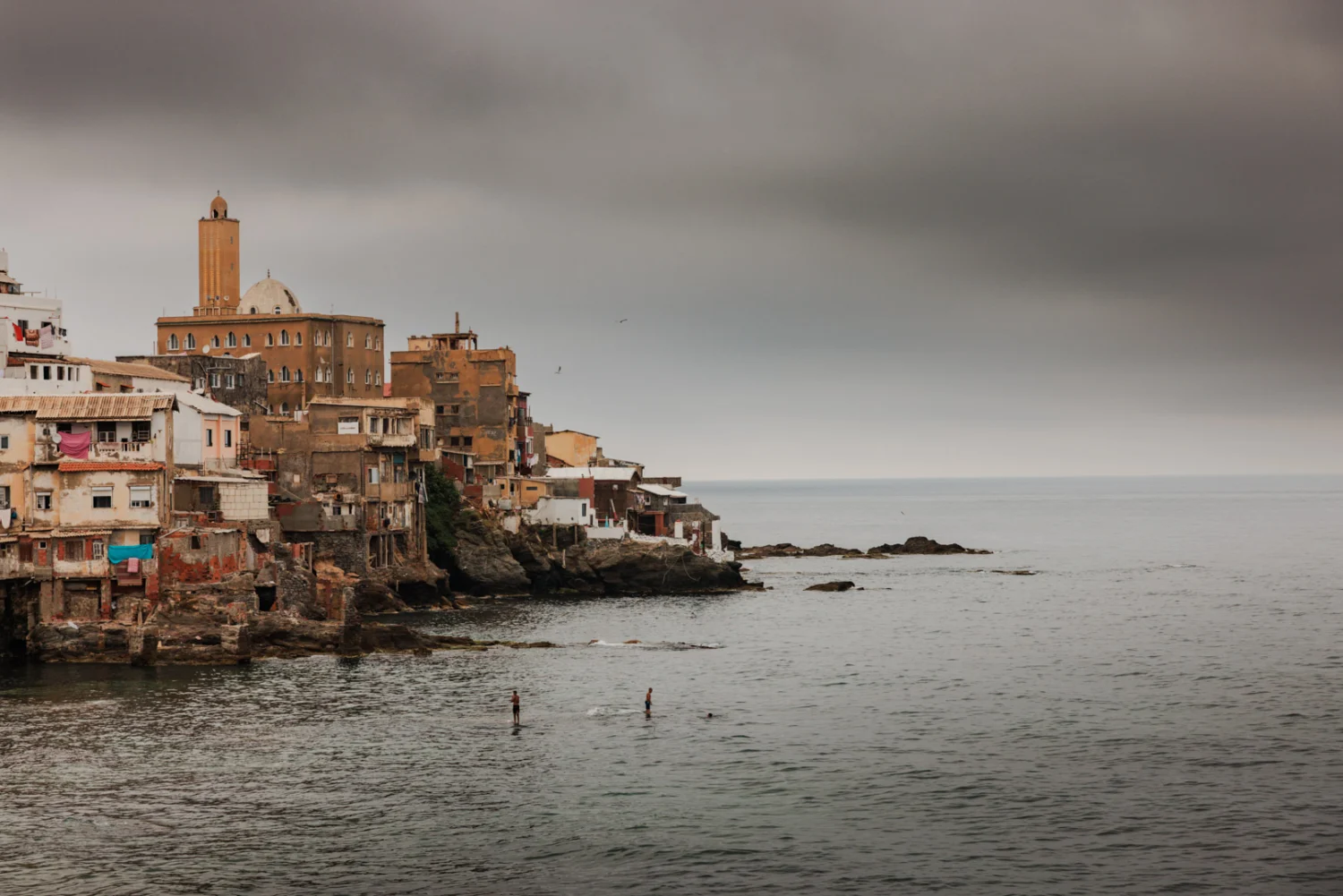
Here in these streets, the 20th century was at its cruelest—the crucible of torture that crushed opposition in the Battle of Algiers. Then later, the civil war’s too many uncounted deaths, and the question “qui tue qui” still waiting for an answer.
In the desert, the Imuhar** were long overlooked. They lay at the margins, but no longer. The eyes of both the state and of tourists have turned towards the south.
Flights to the deep Sahara take off and land in the middle of the night. We hear various reasons why: less turbulence in the cool night air, or that the planes are needed for more prestigious routes in the day. Whatever the reason, we arrive and the desert is deep dark; the sand piling up on the road, flowing over it in the wind, like the surface of a river in the headlights. As if the desert would take all this back if we just turned away for an instant too long.
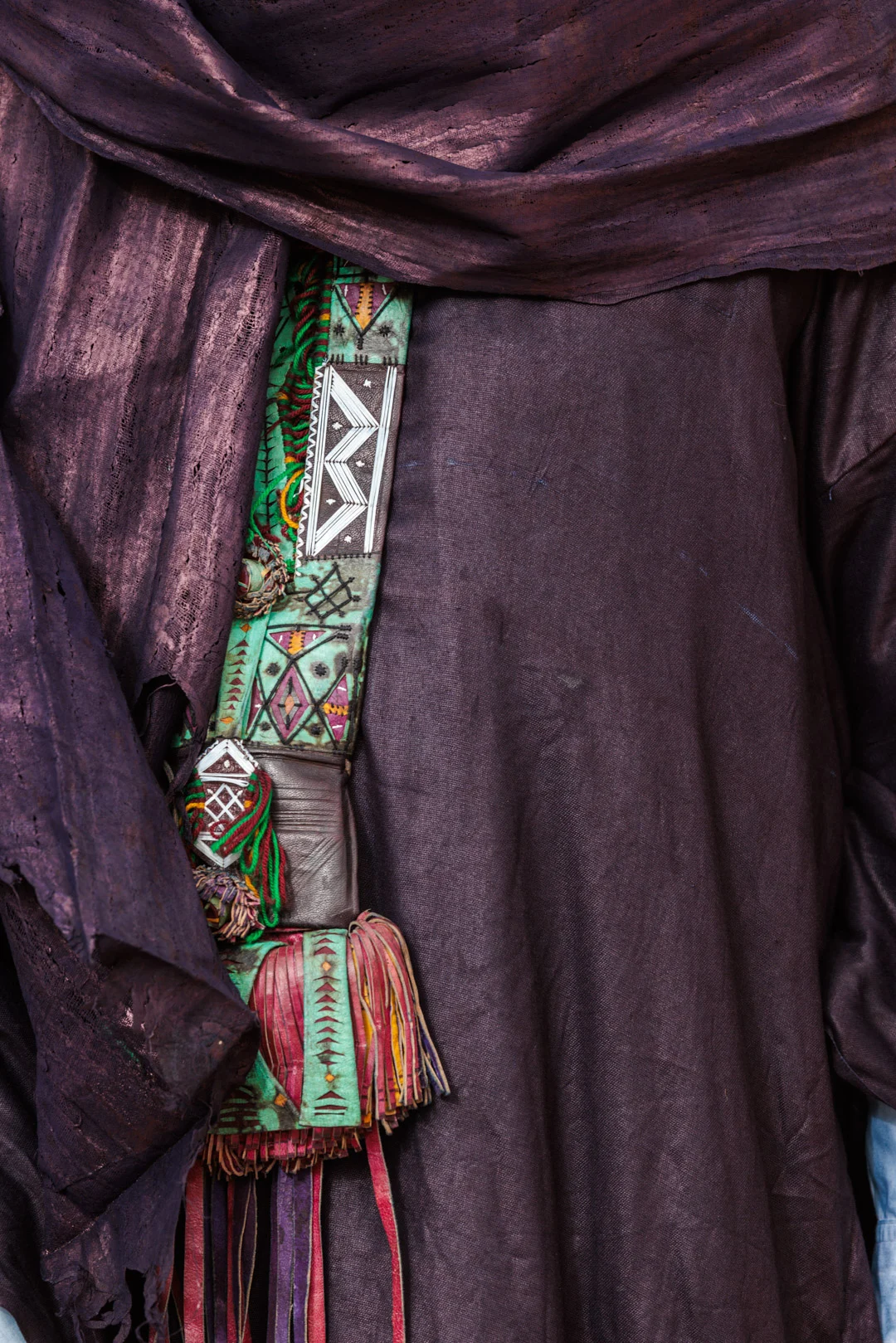
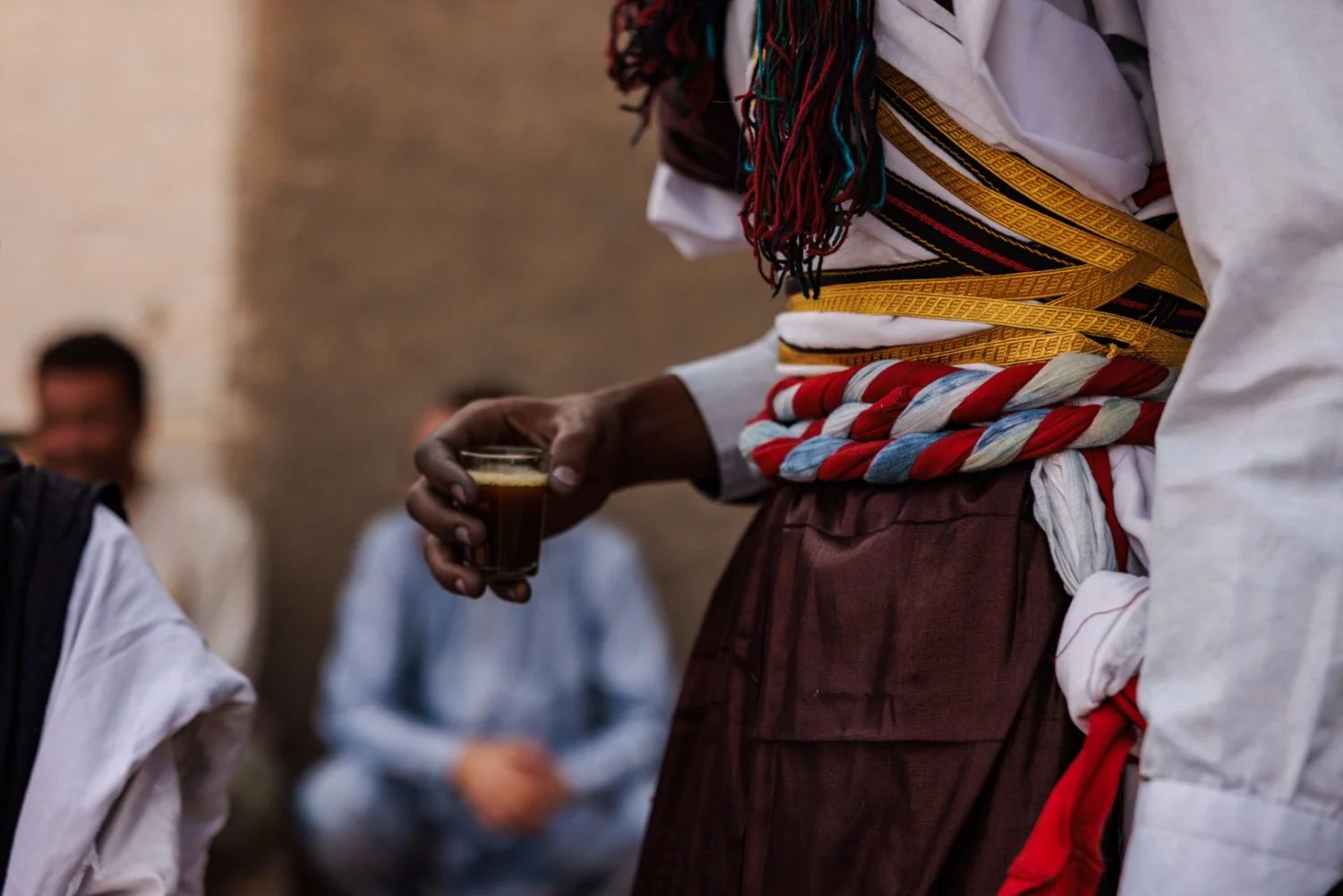
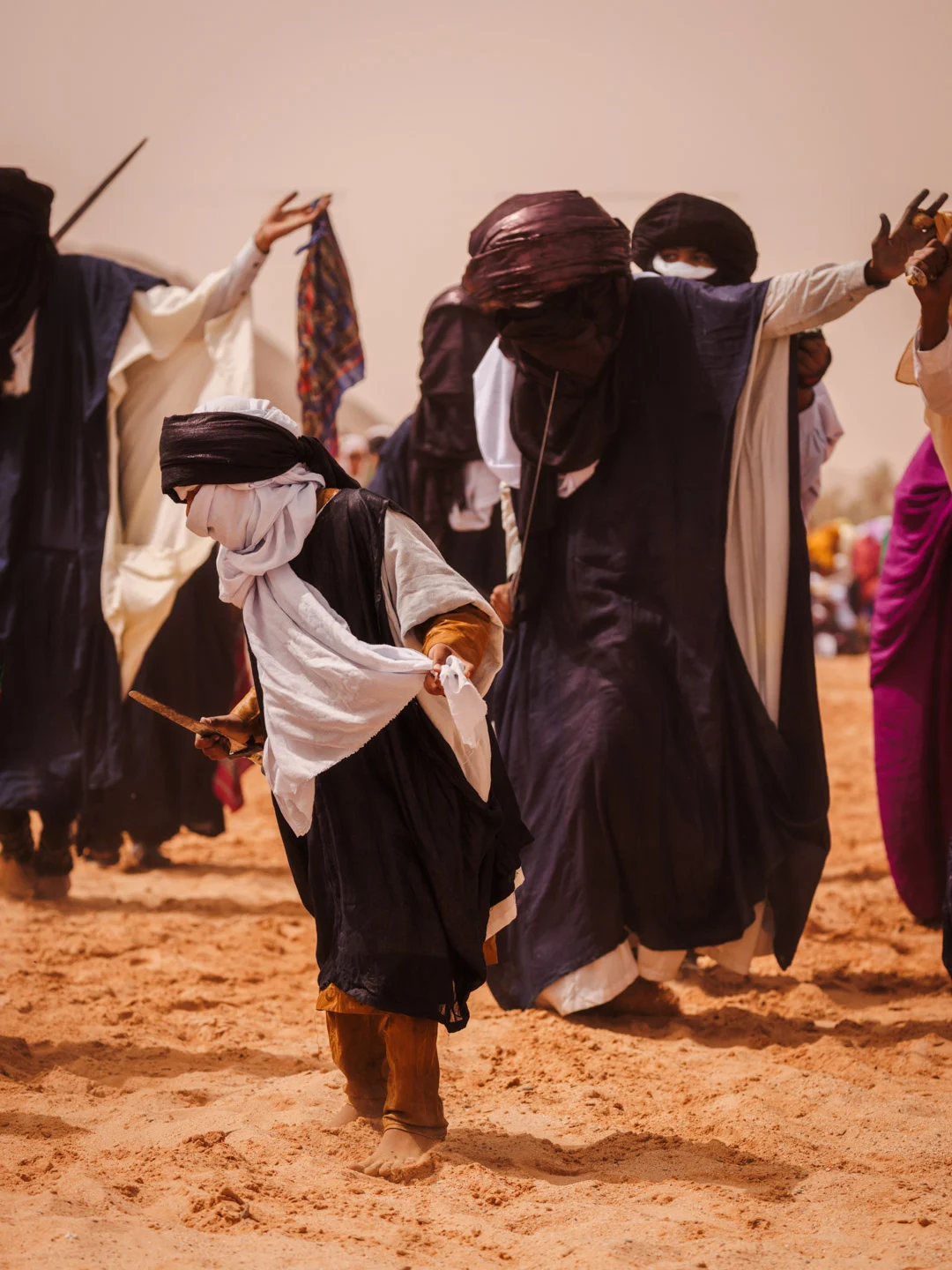
In Djanet, preparations have been ongoing for weeks. Women have been making food, polishing silver and swords, and inspecting tagelmust, their precious indigo, almost black in the shade. And in the past few days, practising the music and the dances (and selecting the dancers and musicians) that will determine which side of the oasis carries the day. These practice days are also when the youngest members of the community can learn and rehearse; though their exclusion from the more serious festival day is no longer as strict as it once was. Now when they enter the ritual they are allowed to stay. Moussa explains that, amid so much change, there is an even greater need to instill a love for Sebeïba among the young.
The importance of this day for the Imuhar of Djanet is heightened by the fact that most of the festivals and gatherings that used to thread communities together across the region no longer exist. We hear of their absence in whispers: Tafsit and Ziyara of the Hoggar are gone; festivals in Niger have stopped; gatherings across the border all but a memory. This in a context where governments are worried by the idea of transnational meet-ups and what they could mean for the fragile security of the Sahara, even if relations between the Imuhar and jihadist or broader independence movements are more complex than these fears might suggest.
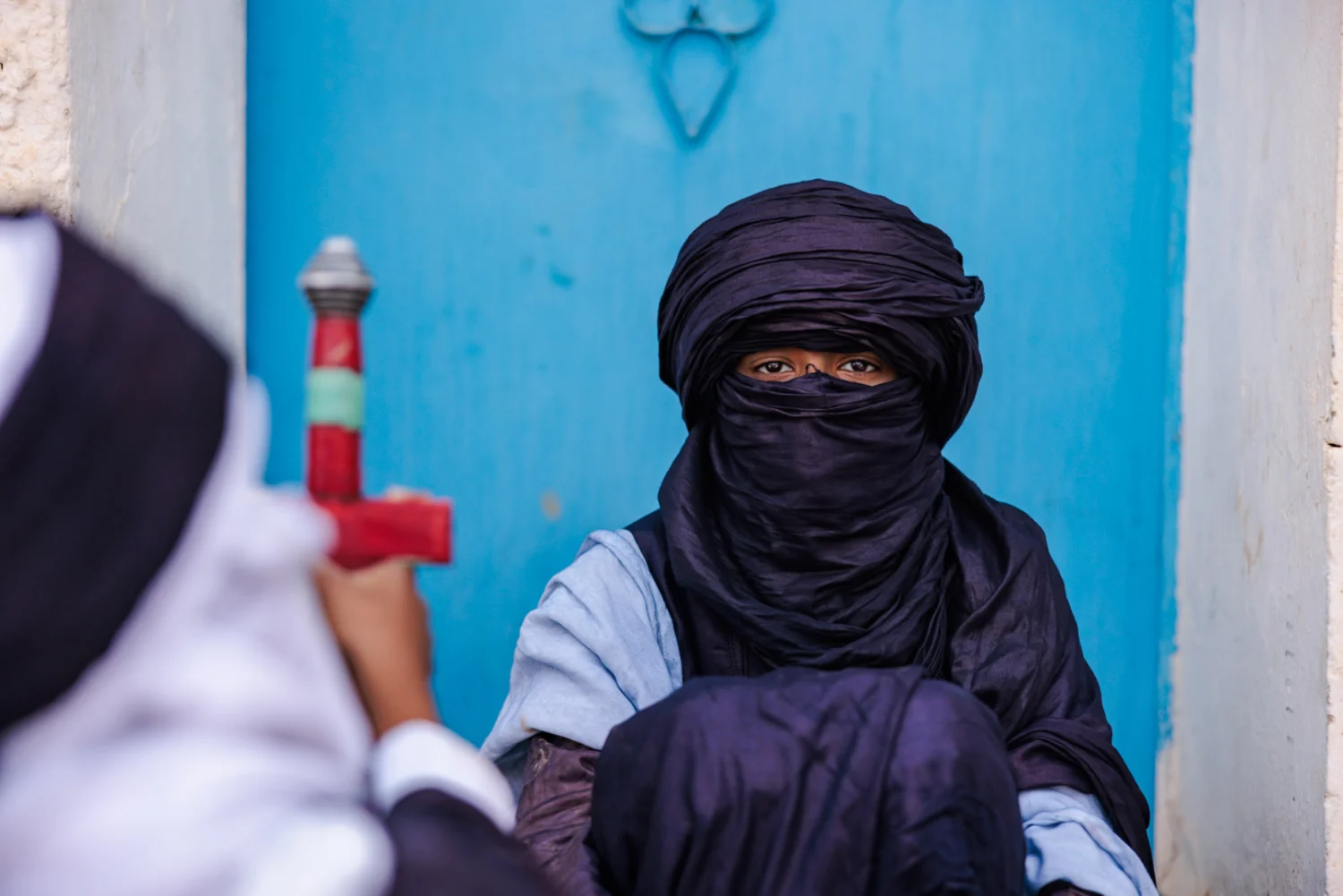
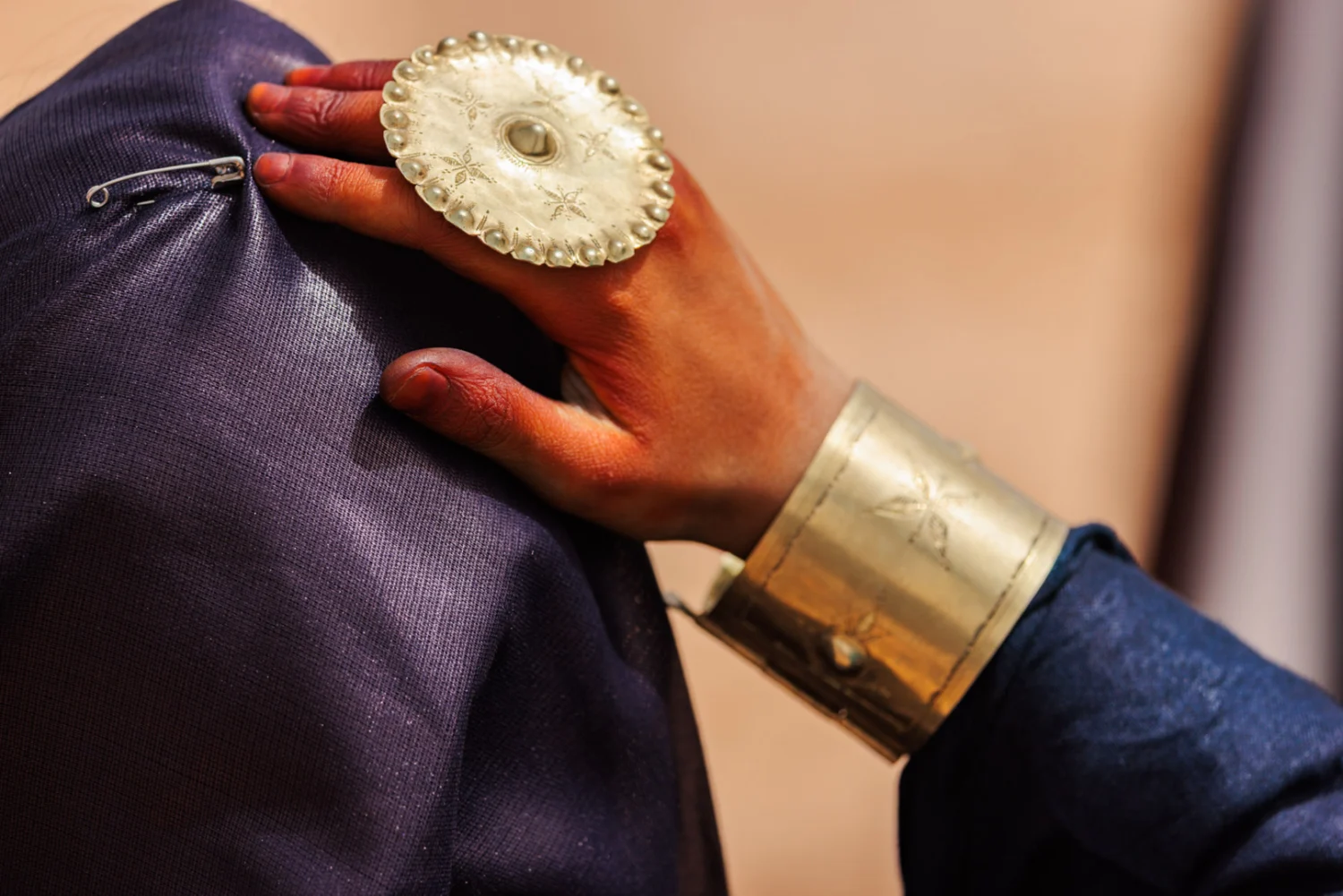
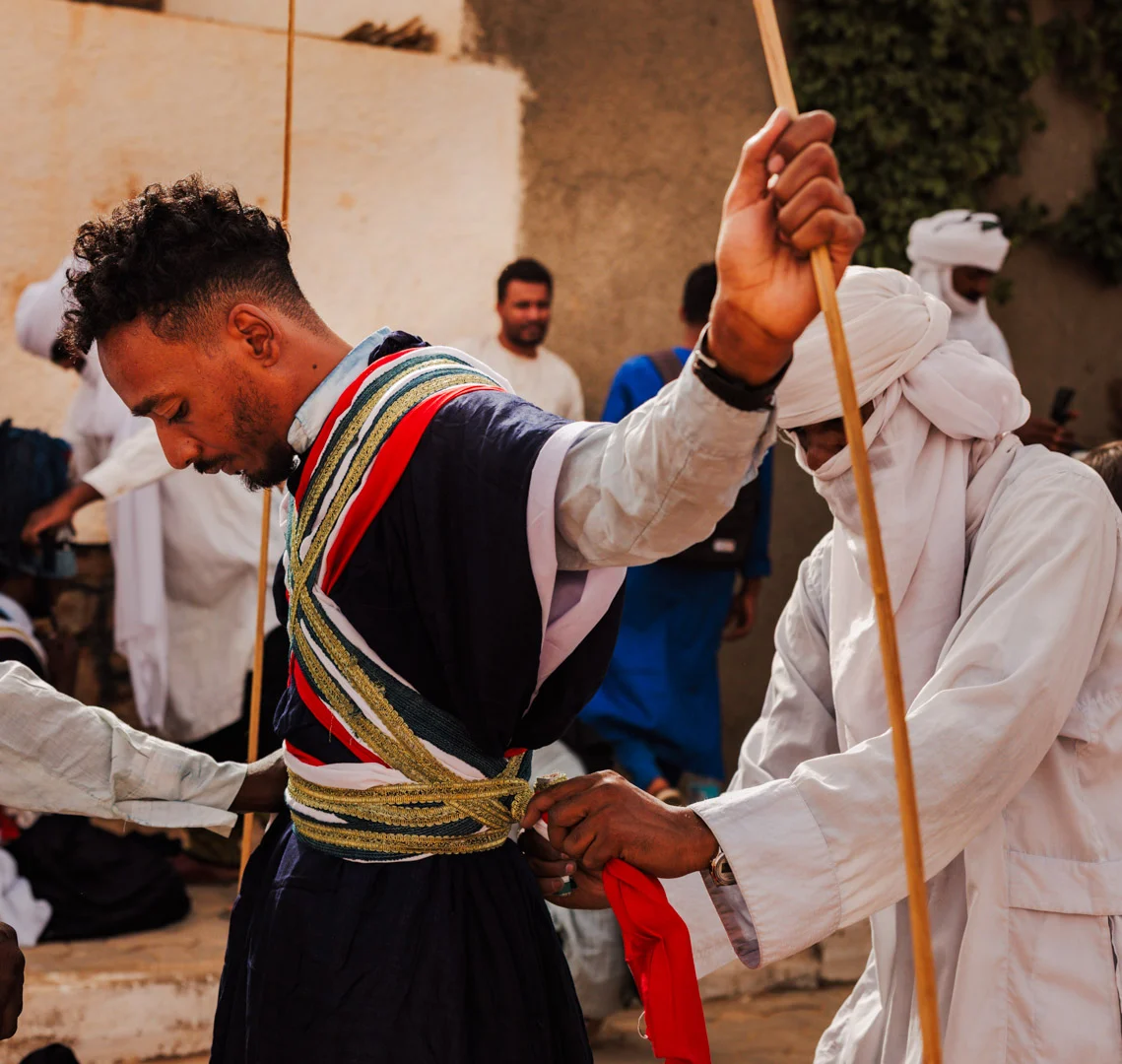
Whatever the reasons, here, Sebeïba has adapted by becoming more local, less transnational. Judges once came from Niger and from Libya, unknown to the dancers until the contest began. Now the festival turns inwards. The community judges itself.
In place of the Imuhar who once came from abroad, visitors to Sebeïba are now more often tourists. Mostly Algerians from the north who come, says Ibrahim, because they are “curious about this culture, which is theirs too,” despite its long years on the periphery of Algerian politics and society.
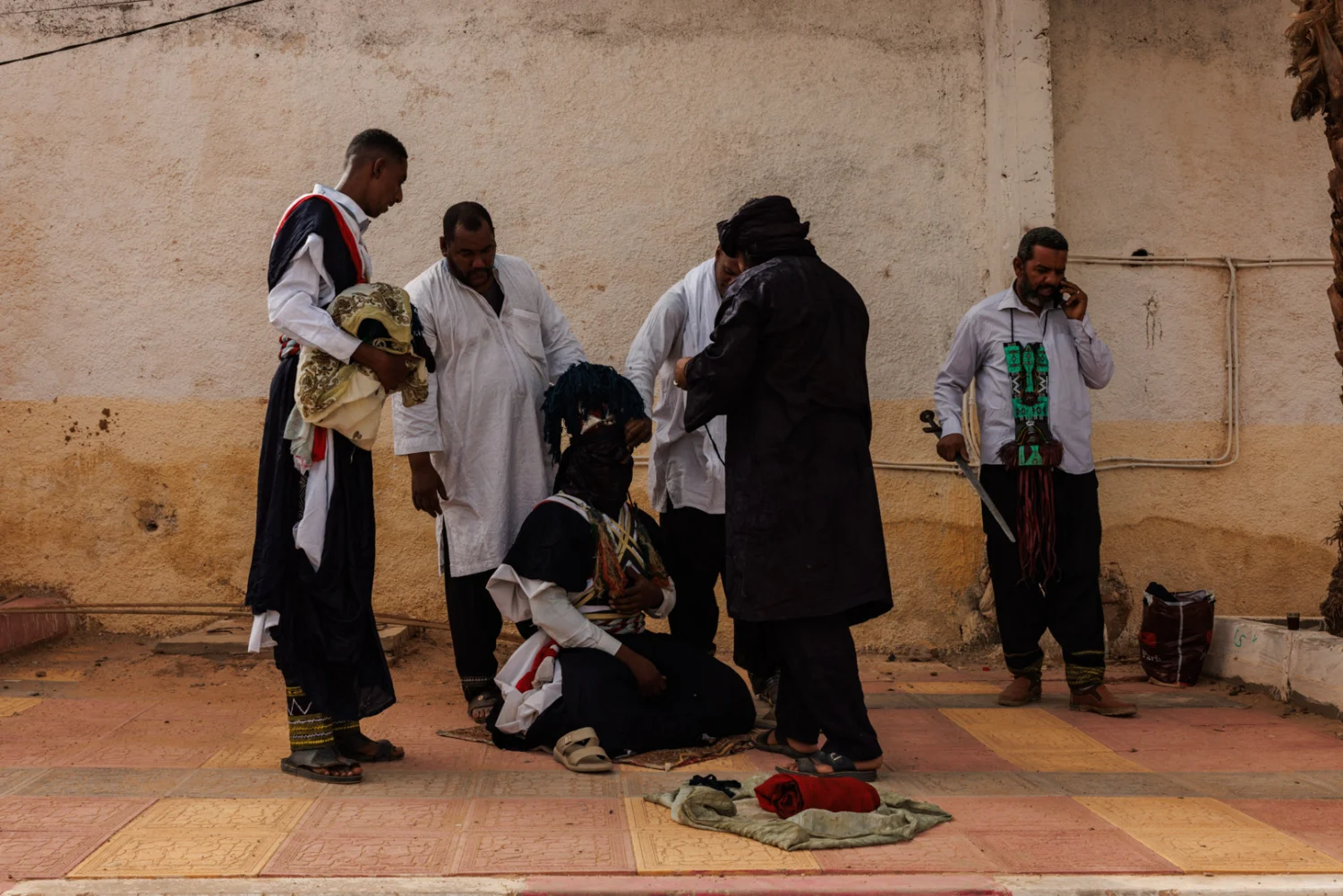
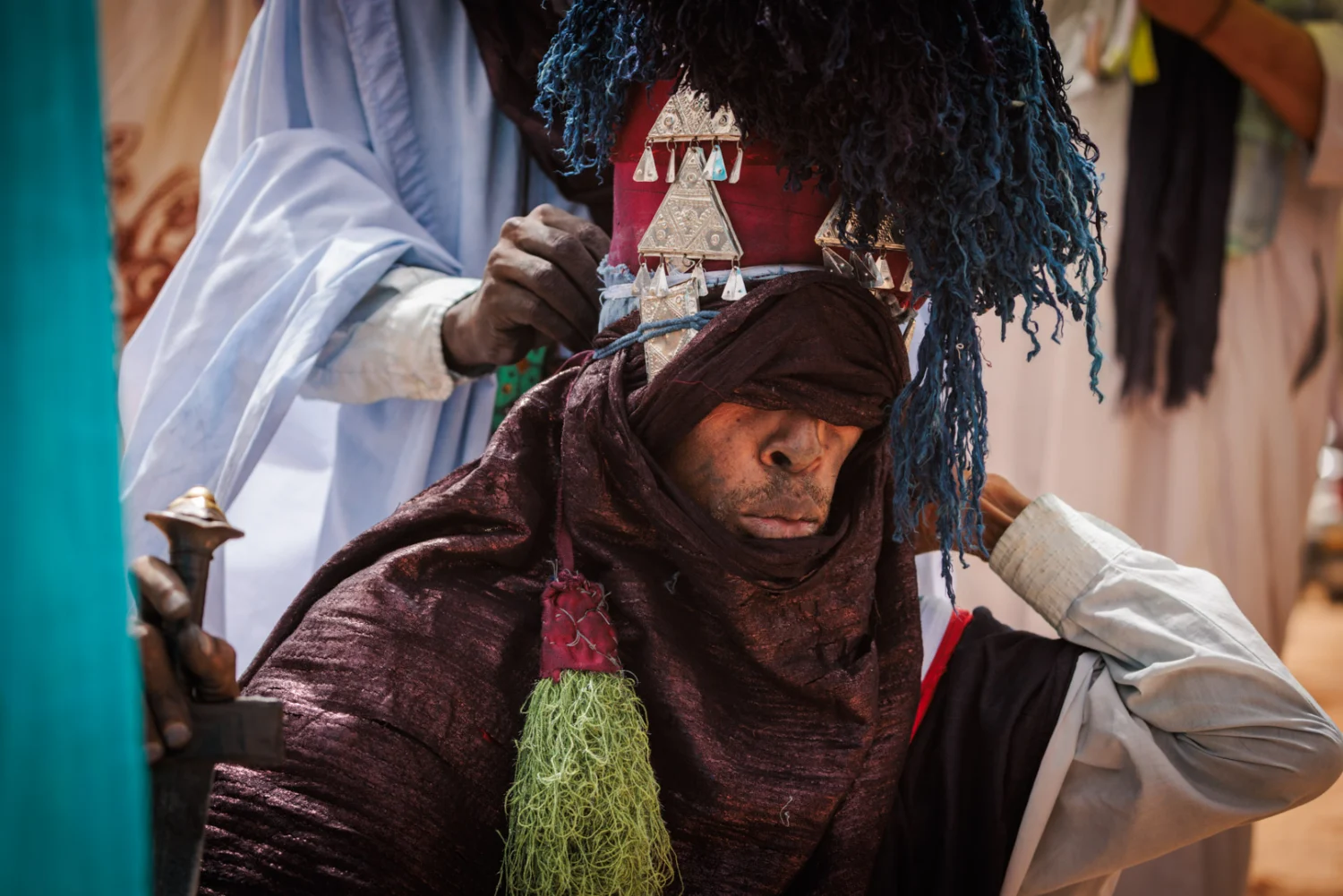
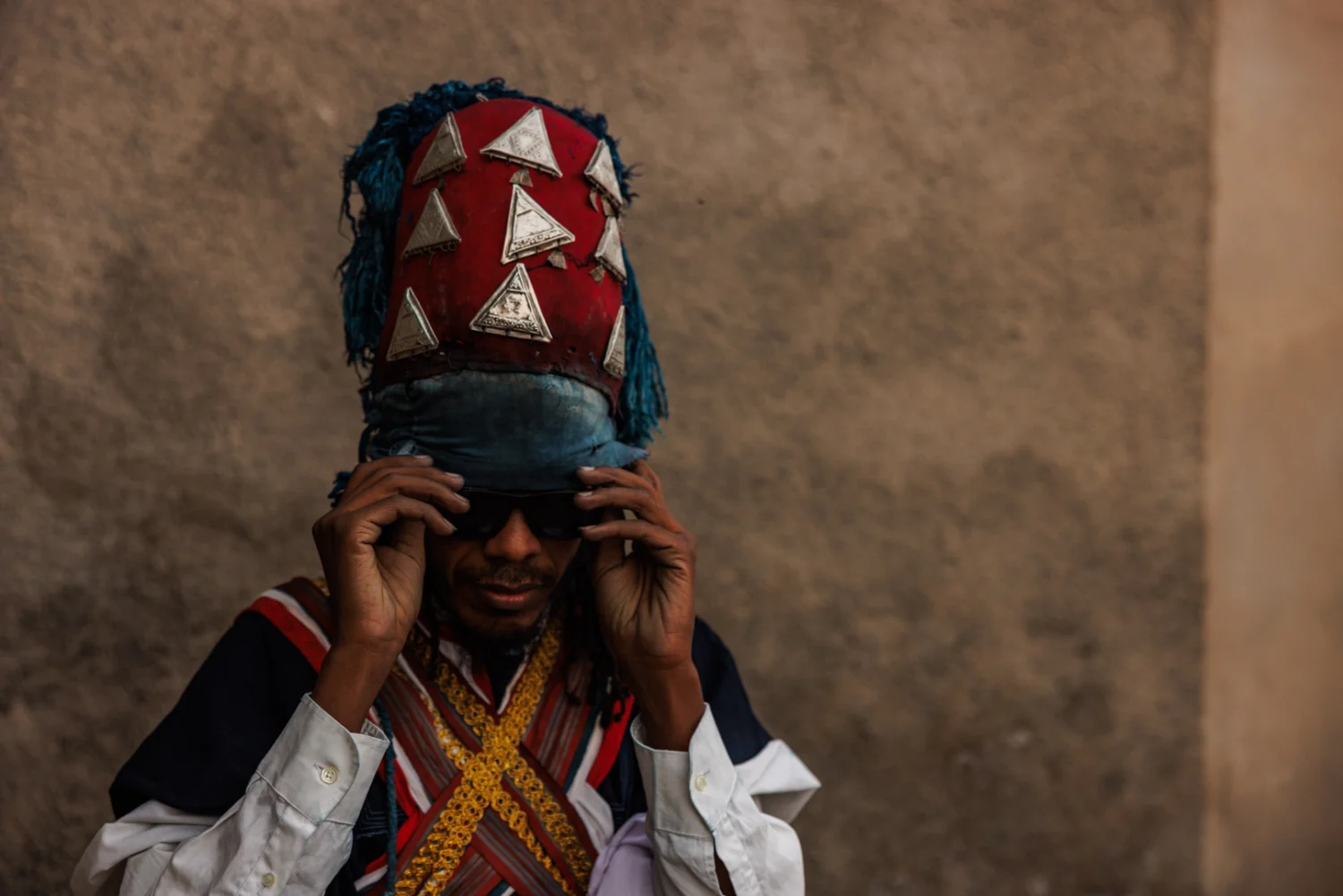
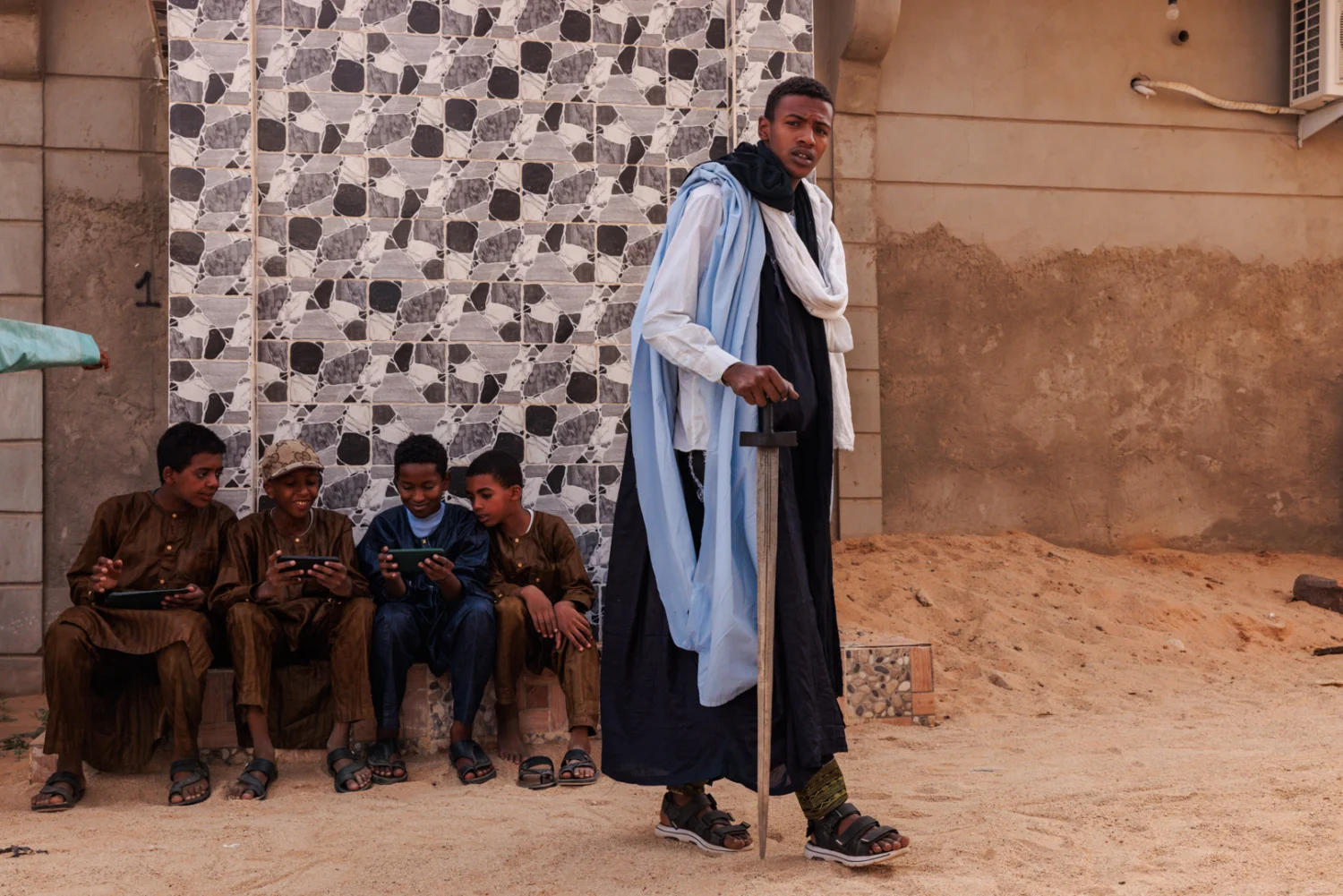
They—we—gather at the edges of the wadi, as the men and women of each side of the oasis assemble. At times, we’re aware of the lenses. The phones held up. Of people asking for selfies. Of the Algerian TV crew and their drone and looming boom mic. In these moments, Ibrahim’s words feel darkly prophetic, that tourism, which funds continuity, also threatens to fossilise what we’ve come to see. “We fear that one day people will go looking for Sebeïba and we’ll be forced to buy a ticket … like at the cinema.”
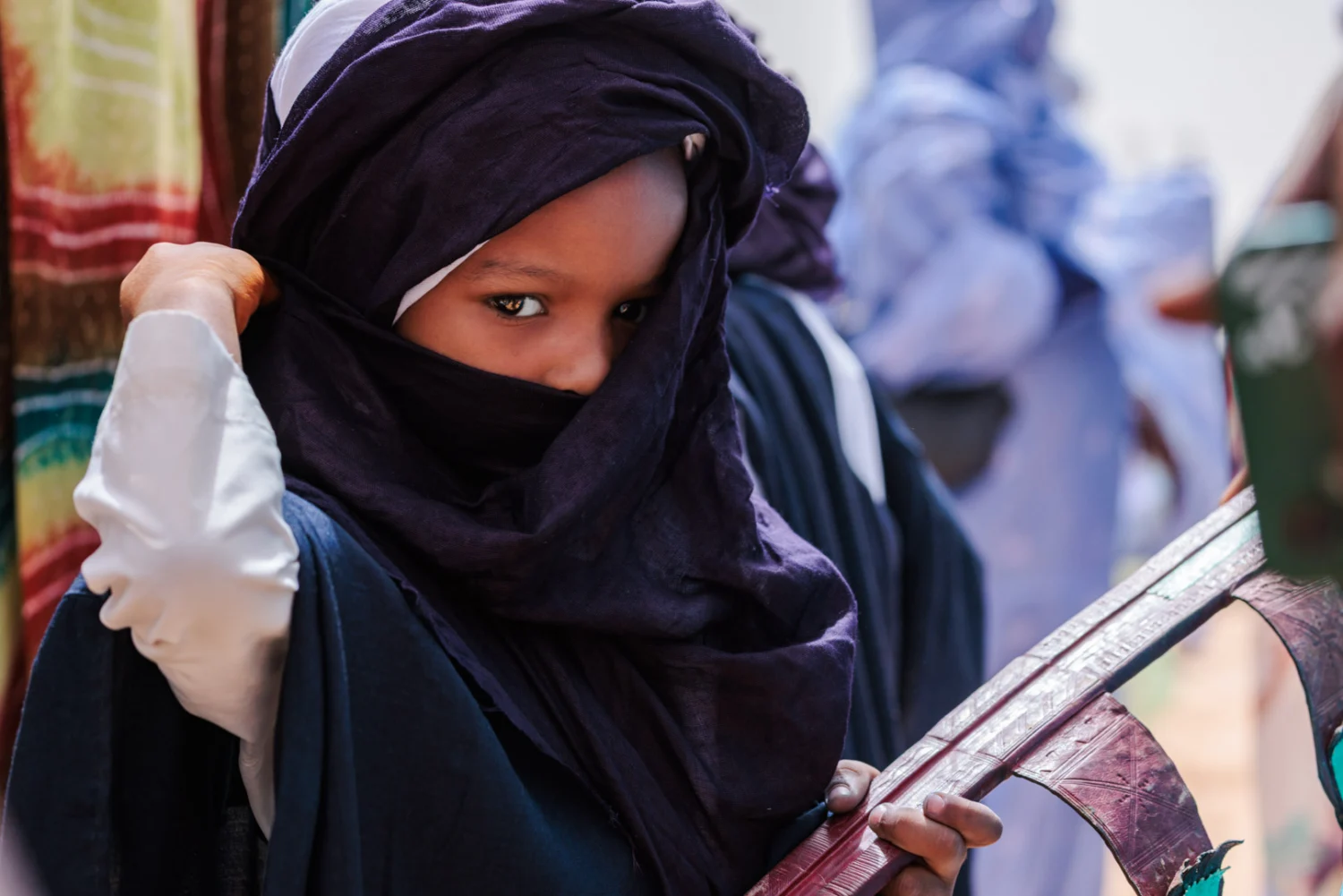
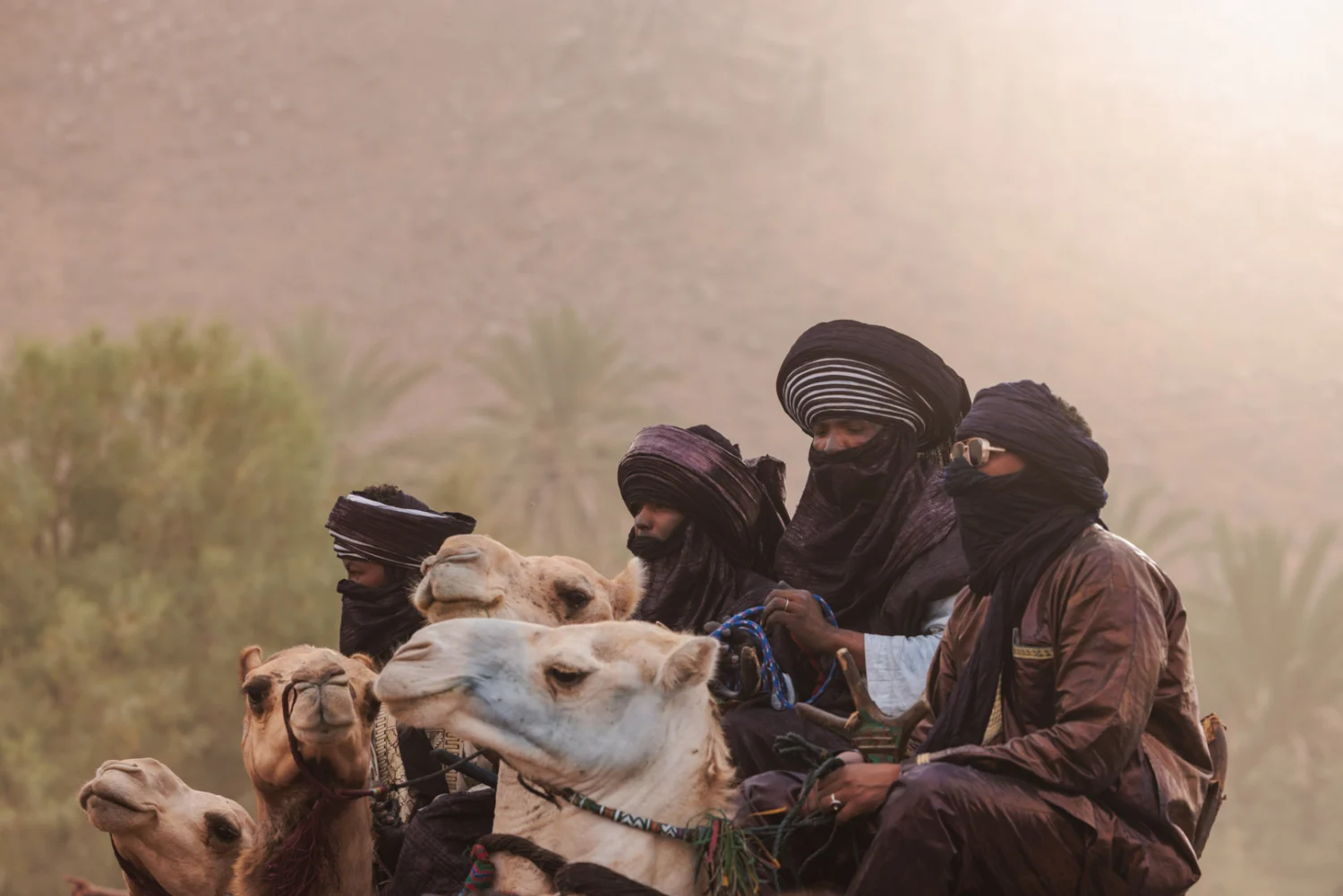
But as the day draws on, the light softens and the dust rises, and the distractions and foreboding fade away until the whole scene feels mystical and timeless. The watchers dissolving into the haze until only four camel-riders remain, rising like ships above the dust. The swords of the dancers shaking, humming like the sound of giant beetle wings. Song and drums a low background swell. Rising like the sea.
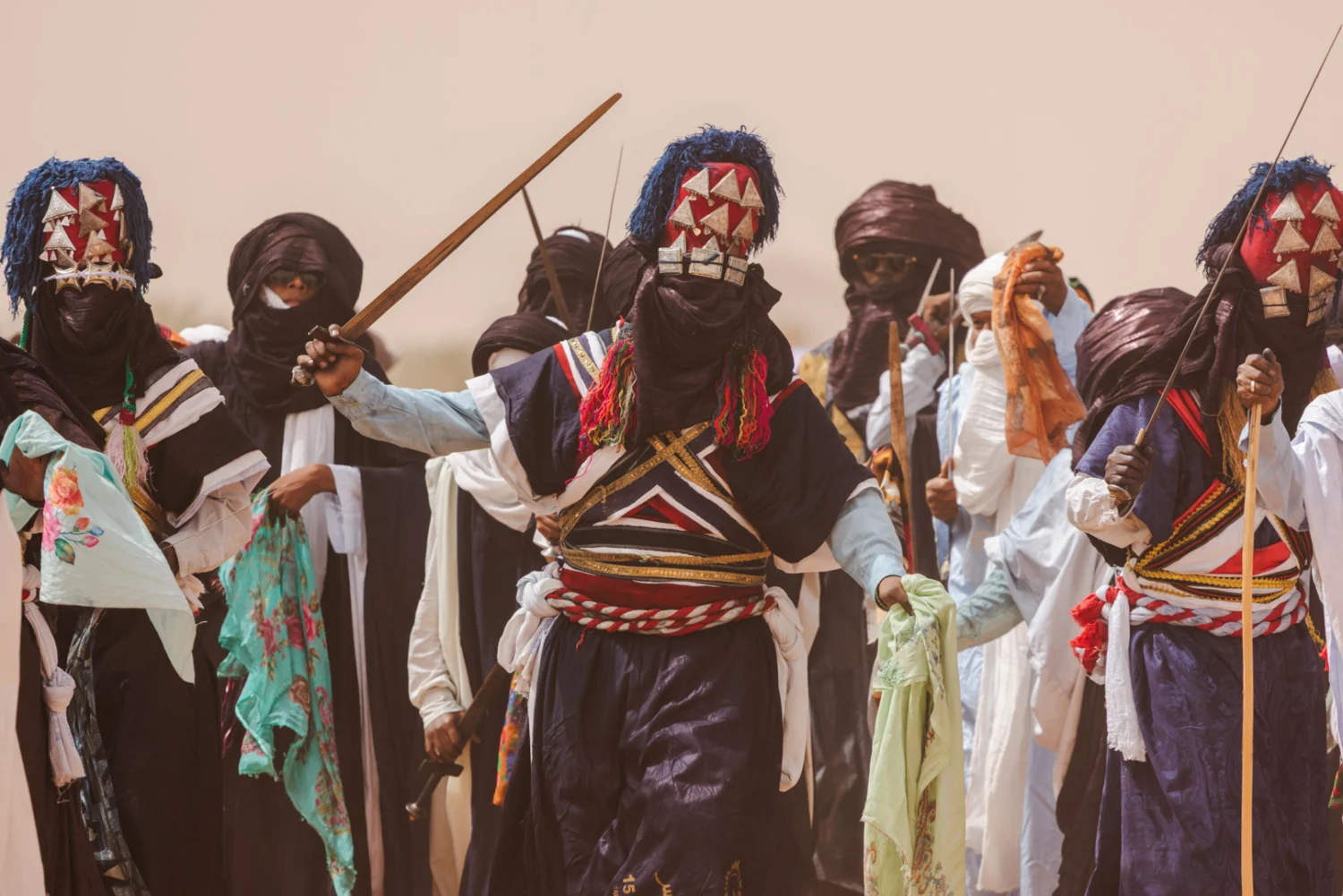
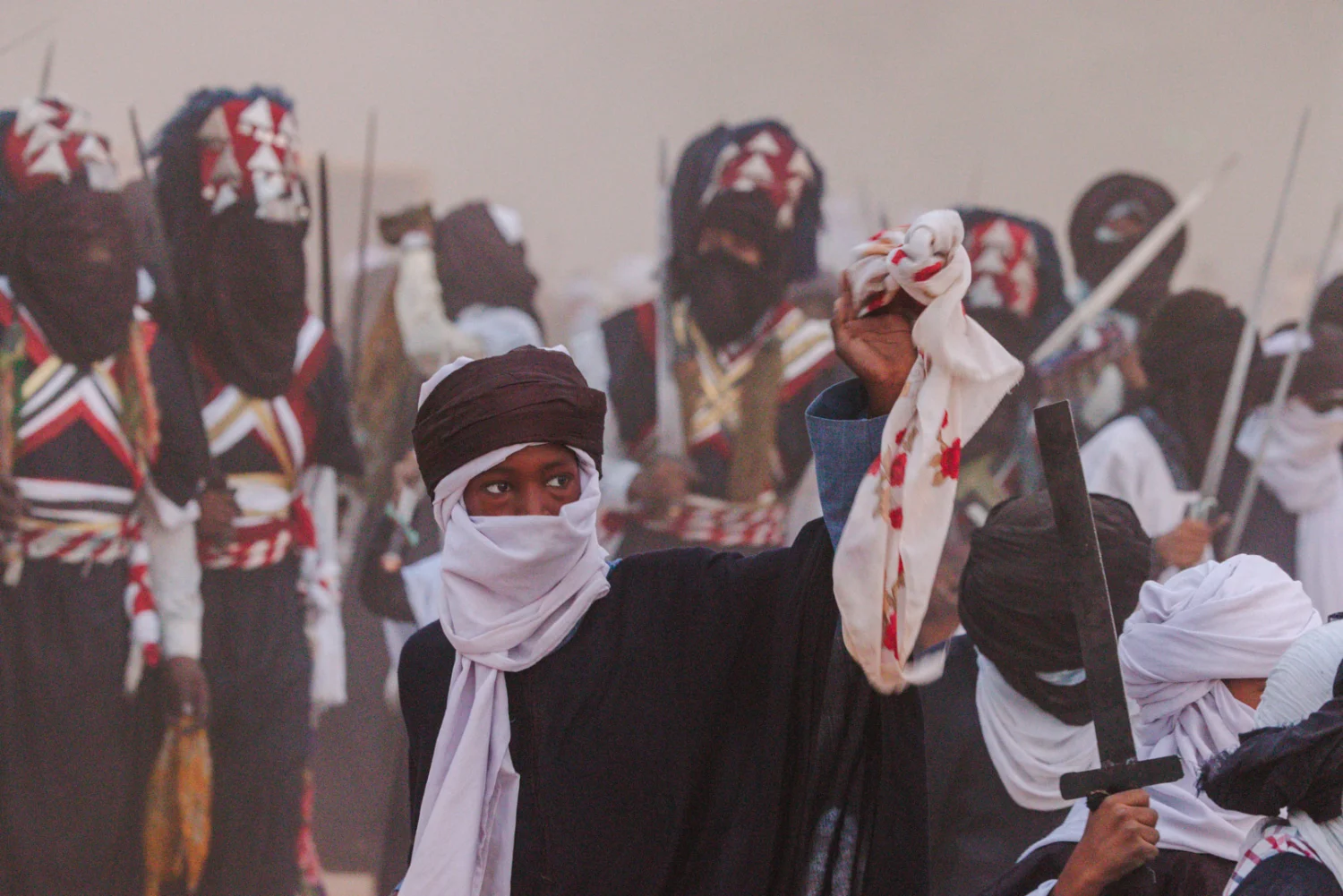
Among the poems, Moussa tells us, are some that remain unchanged, poems as old as Sebeïba itself, and a key criterion by which the festival is judged. Others, he explains, evolve every year, reflecting recent changes. Praising whoever is “a hero” in society.
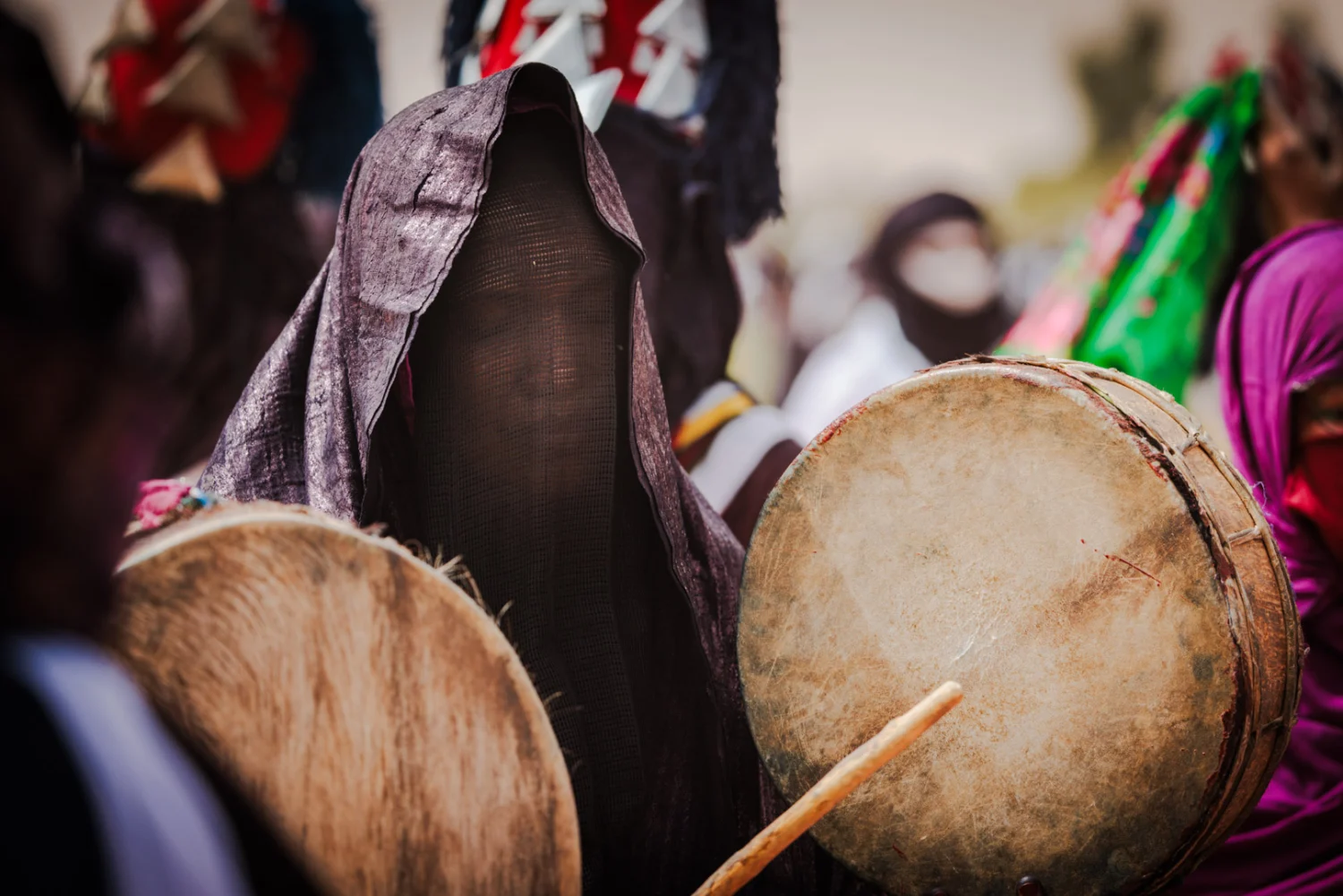
“Our society is matriarchal,” explains Ibrahim, “the woman is at the base of everything.” And in Sebeïba it is no different: it is the women who lead. “All the poems are from women, all the music and rhythm is from the women, everything is from the women, the men just dance,” Aicha, a locally respected performer whose family has farmed the oasis for generations, tells us. In the afternoon, as the percussion deepens and the atmosphere intensifies, the women’s formation, a pyramid of emerald and deep plum rising above the gathering dust, choreographs the final stages of the event.
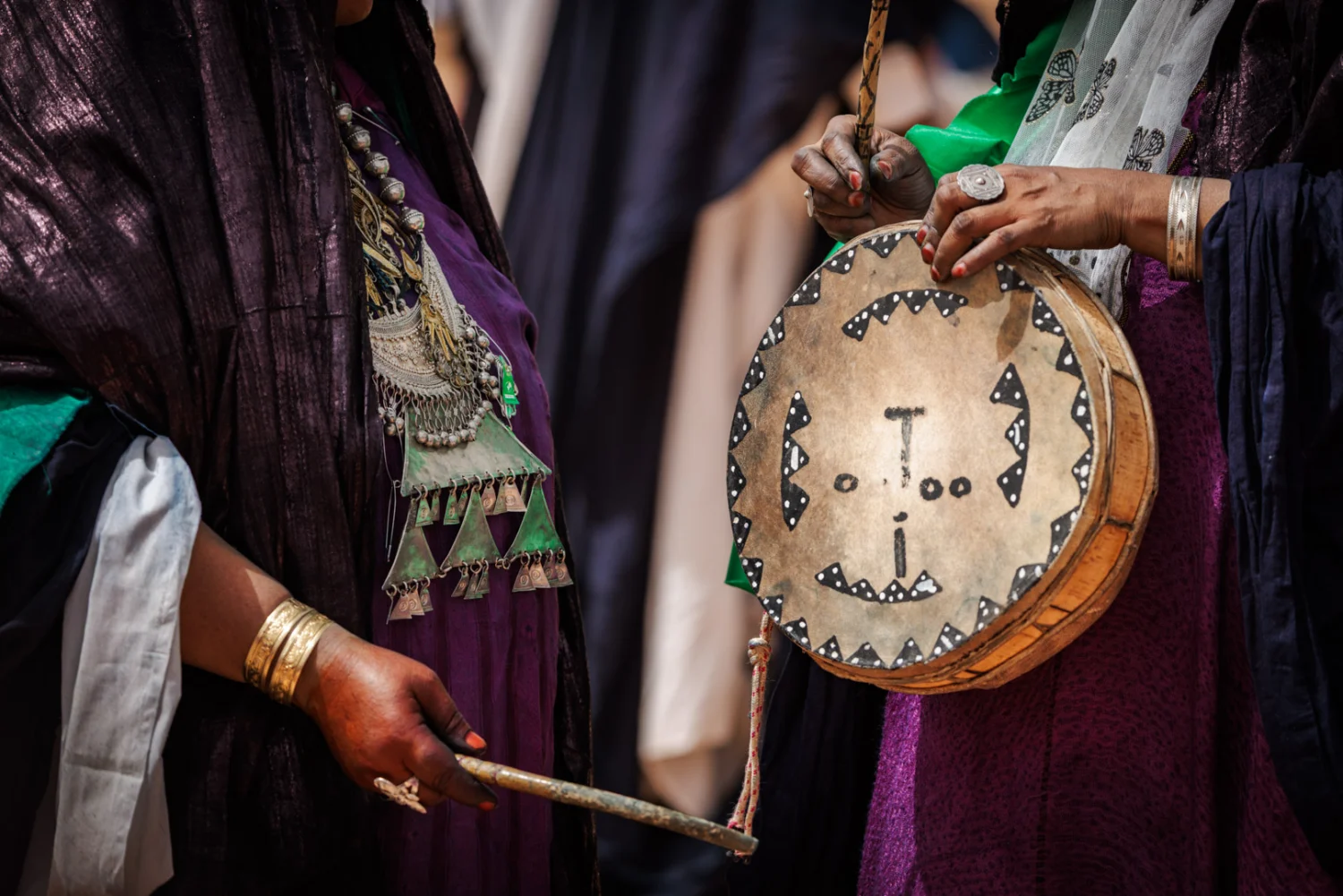
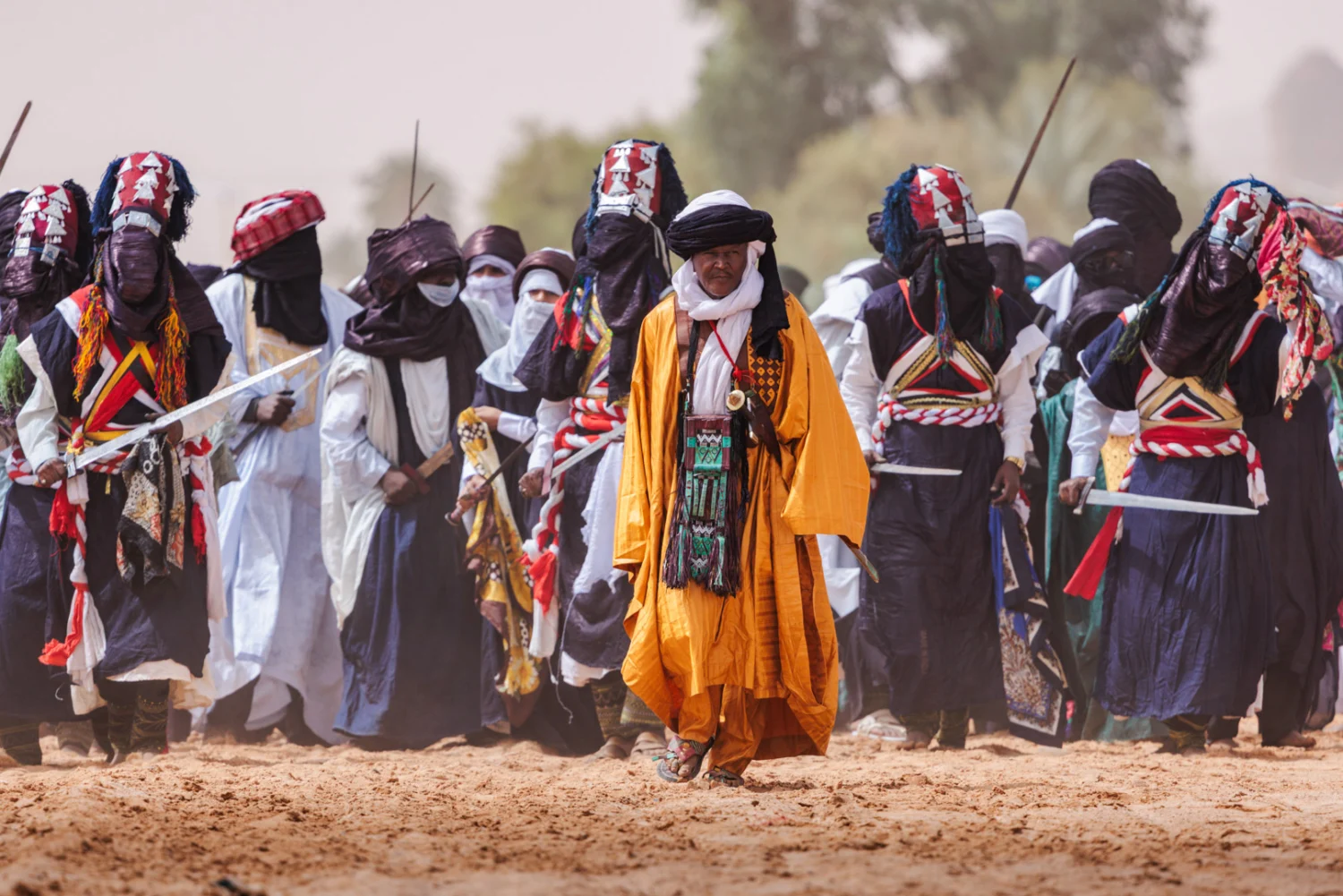
As they play, their jewellery glints in the soft light—silver pieces reserved especially for this day. In everyday use the designs have changed, the metal is as much nickel and zinc as pure silver now. The tall red hats of the men (which some say are adapted Ottoman fezzes) evidence that change isn’t only modern. Though Ibrahim strikes a note of warning about both the changing materials and the newer fabrics that appear each year, Indian saris and glossy cottonade shimmering next to indigo. “If you have changed”, he says, “you will change again and again […] if you falsify today, you’ll falsify your whole life.”
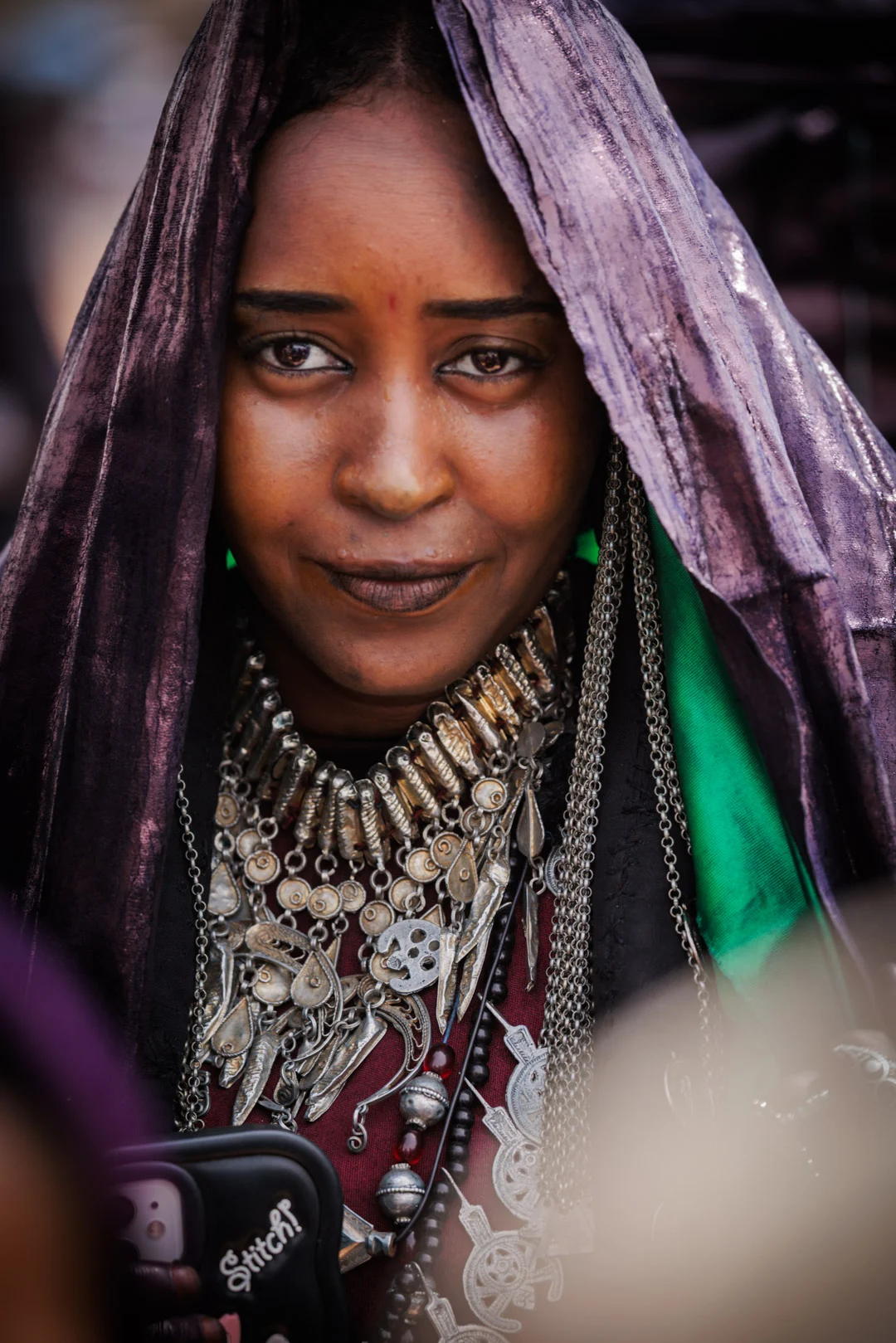
There is less too. The exquisite geometry of traditional jewellery is lost, along with those that used to make it. Families covet a few cherished pieces that still speak to geography and place. And fewer hats. As Moussa explains, the town now pools all the tkumbut and assigns them to the best dancers, rather than the inheritance they once were. In Zelouaz, the uzarnas, heavy drums, are gone too, for lack of those with the strength to carry and to play them.
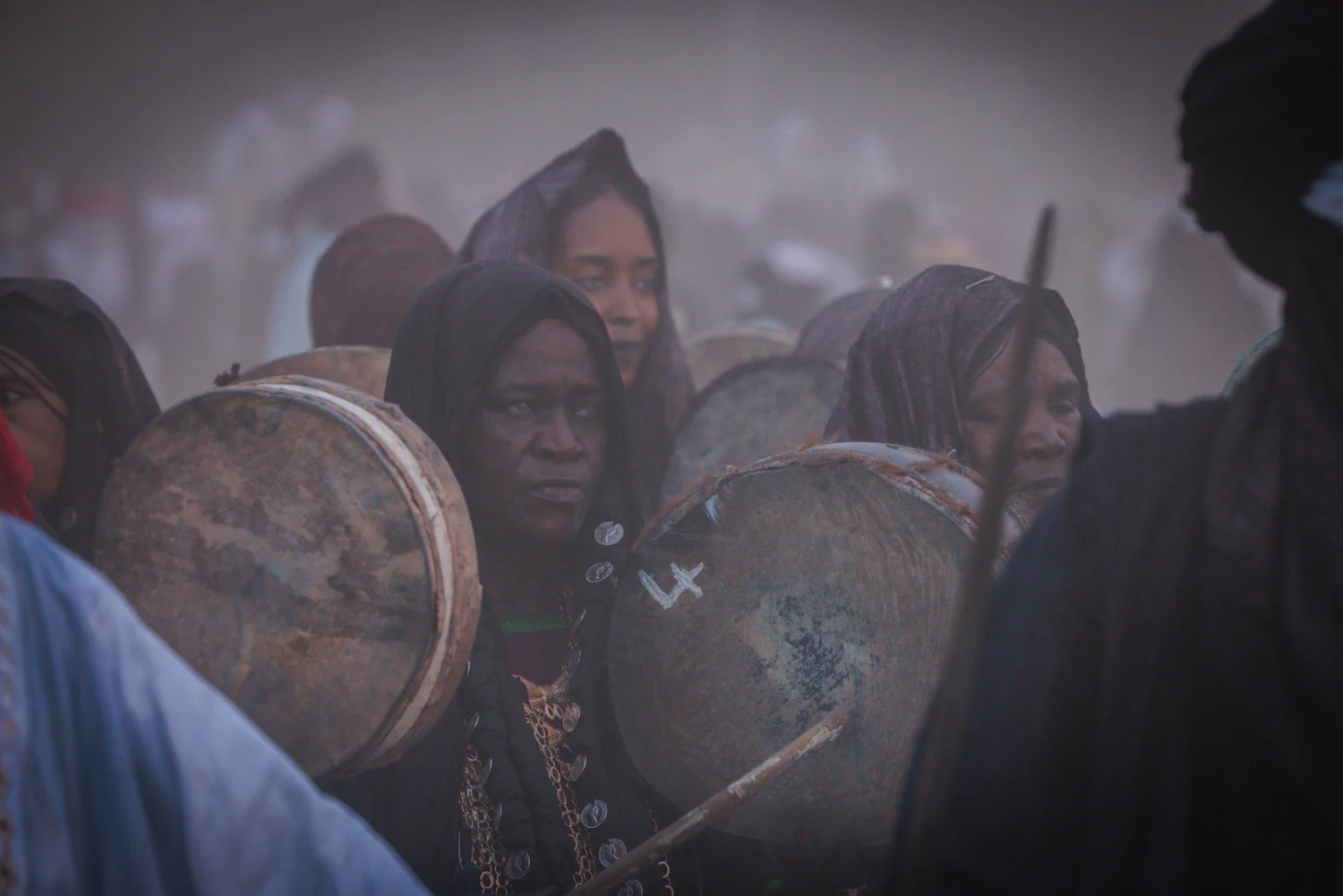
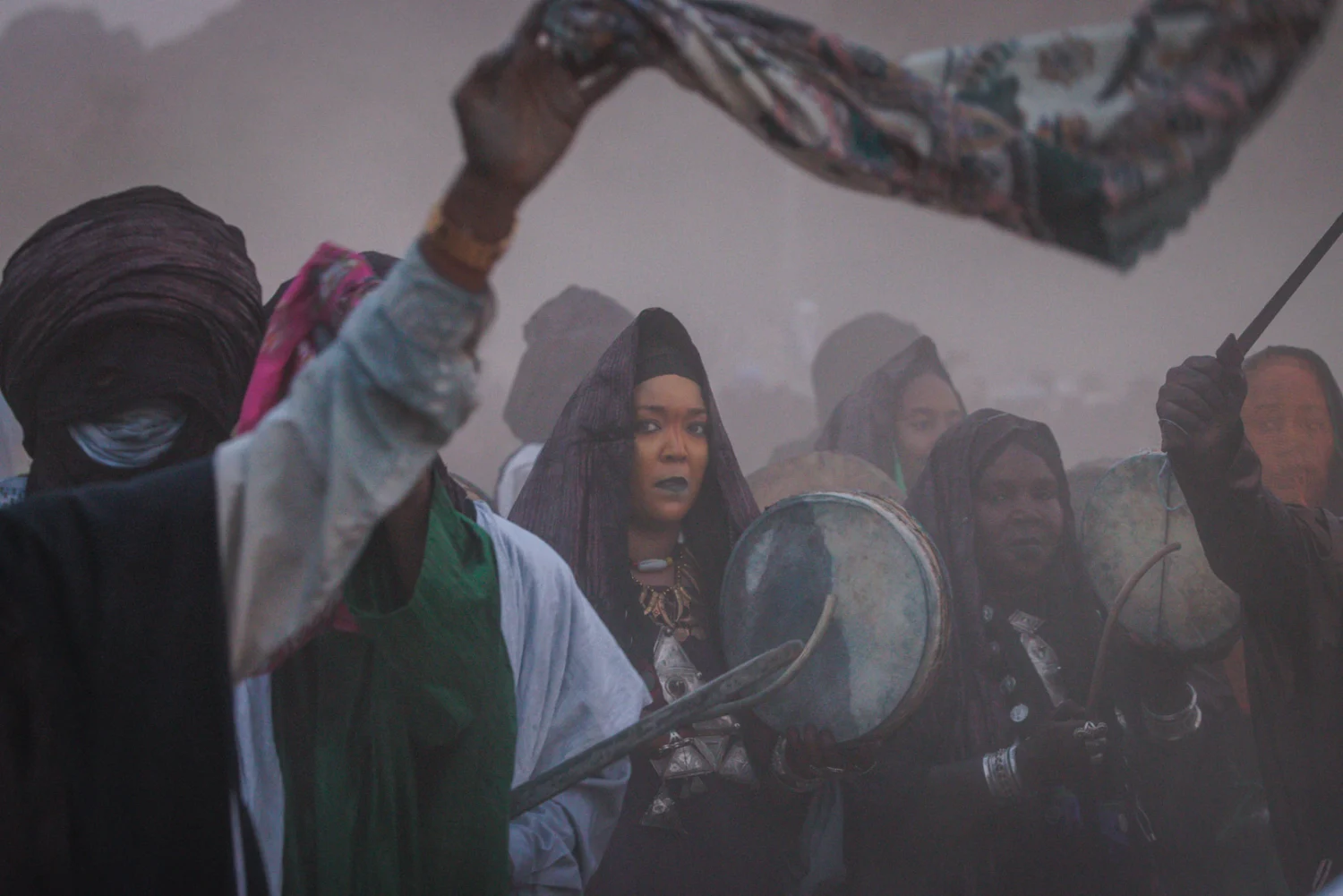
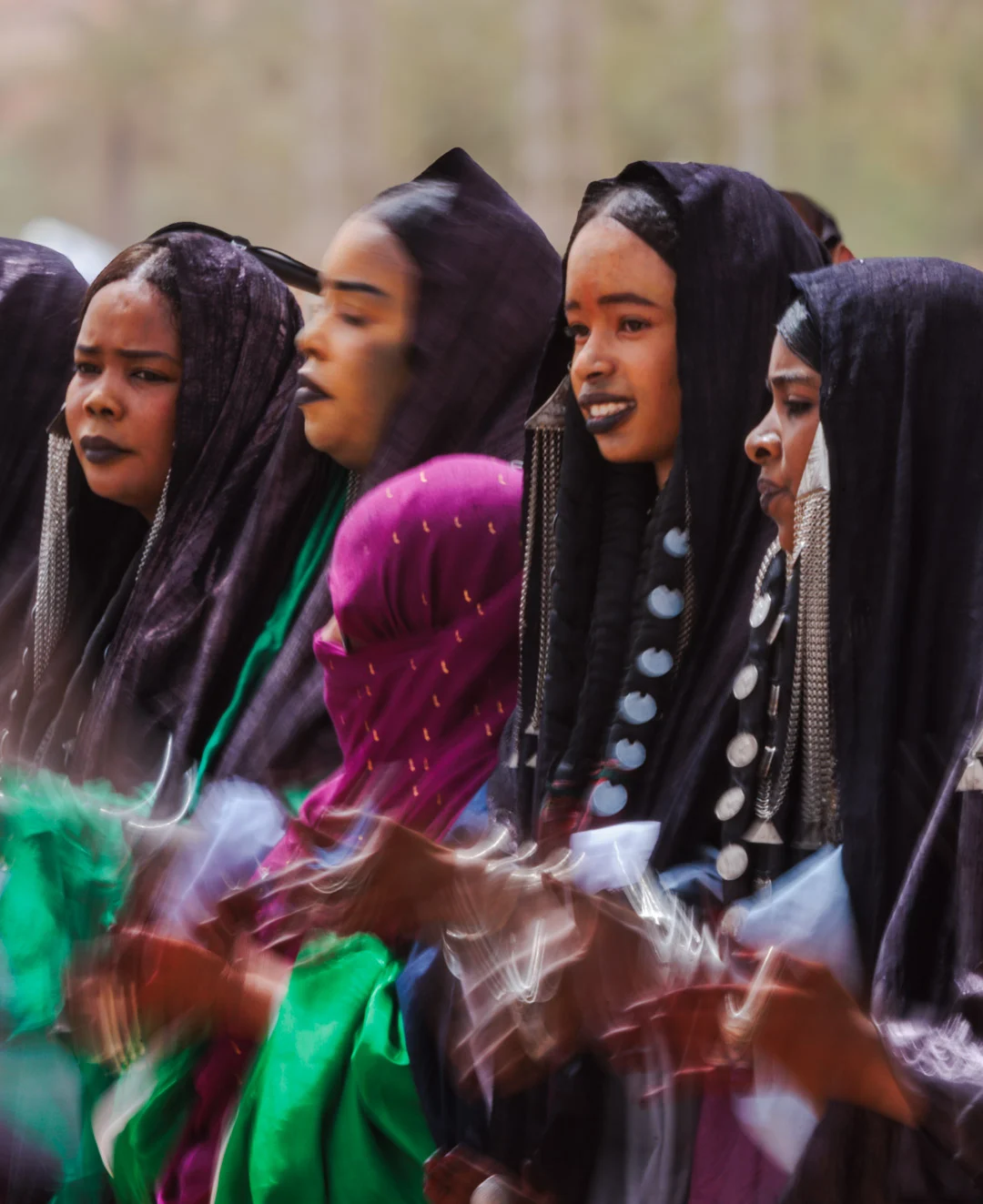
Though all of that is forgotten in the moment, in the wild energy of the dancers and the crowd, as the music swells, swords clank together, and the two sides move across the wadi.
Later, once it is over, and the moon is rising over the desert, Moussa’s words come back to us. “Sebeïba,” he says, “is my ID card in the world … You will not find Sebeïba in other places.” In the hazy half-light the words ring differently. Sebeïba appears as the unique and irreplaceable character of Djanet.
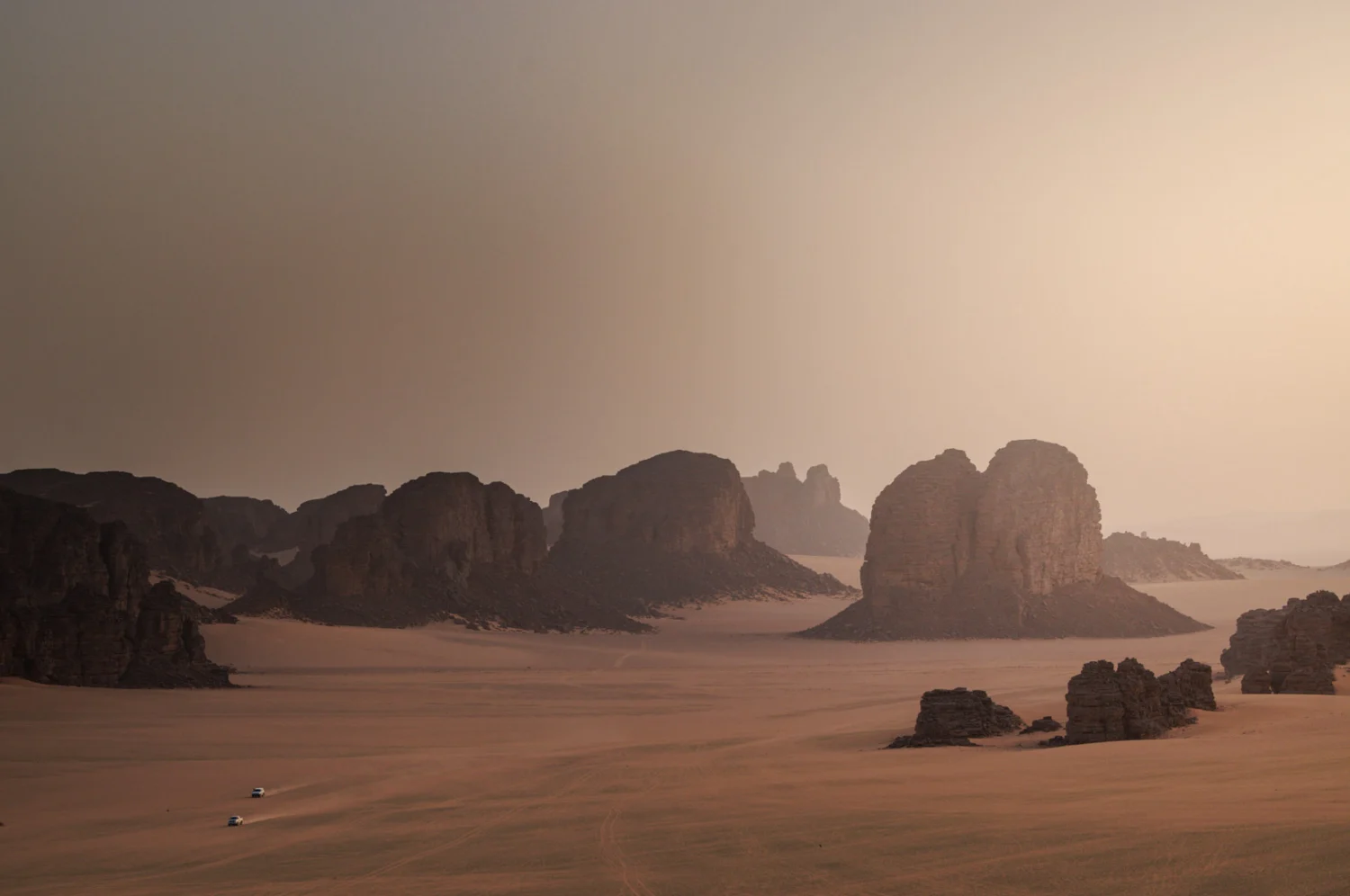
Looking out across the landscape, the stone towers of the Tassili rise like dark forests. A pair of jackals dart, noiselessly, across the sand. A goatskin abayoug, once the sidepiece of the camel, bounces gently against the window of the car. The desert, neither empty nor unchanged.
* Some interviewees are identified by pseudonyms. Given the sensitivities around discussing cultural and political identity in Algeria, names have been changed to protect those who spoke with the authors.
** We have chosen to use this term rather than Tuareg, both because the etymology of the term Tuareg is itself not agreed, and, more importantly, because those we spoke with preferred to self-identify as “Imuhar”.