We’ve had plenty of arguments throughout our marriage—five years of it—but then there was the one about the cottage cheese.
I found the container in the fridge and maybe went too far when I held it up to Suzanna’s face.
“Here—smell it,” I said. “Did you buy this just to let it spoil?”
“Stop it,” she said, pushing me away. There was a tightness in her voice I’d heard before—half irritation, half worry. She shoved me so hard that I lost my balance and knocked into the kitchen table where Zenith was napping, causing her to leap off, and claw into my thigh, sending the cottage cheese flying, before darting out of the kitchen.
“Now look what happened,” I groaned, rubbing my thigh. “And I just mopped the floor.”
“Is it my fault?”
“Well, you’re the one who buys this strange cat-tage cheese and then lets it spoil.”
“It’s cot-tage. When are you going to learn English? First of all, it’s not strange. And second, for your information, it’s very healthy.”
“Oh, yeah? What was it the cheese guy said in that French movie? In the history of cheeses, cottage cheese is only a footnote.”
“So what? Who made you the refrigerator police anyway?”
She was right. I had started checking the fridge regularly, making sure no food went bad. Suzanna wouldn’t touch leftovers, and coming from a place where throwing away food was a no-no if not a sin, I ended up eating them, reminding myself that many people in the world didn’t have enough to eat.
The other side of this was saving money. My worry about money—and being able to pay the mortgage—started after the dot-com crash, when I lost my software engineering job. It wasn’t long before the daycare center where Suzanna worked closed as well.
“Suzanna,” I said with a note of desperation, “how many times have I told you that we need to save money? You should buy less of this weird cheese.”
“Oh, yeah? Do you think Dunkin’ Donuts is any better? Have you looked at yourself in the mirror lately?”
She hit a sore spot. But she didn’t stop there. She went on saying she was the one saving money. I almost laughed. This was from a woman who once rented a chicken. The cottage cheese, the waste, her tone, made it all come back and I said, “Sure . . . like your egg project.”
As soon as the words left my lips, I knew I’d gone too far. The egg project was something we hadn’t gotten over completely.
I still remember the sound of that van, brakes squeaking as it pulled into our driveway a couple of months after we lost our jobs. A yellow van with a chicken and a basket full of eggs emblazoned on the side. A thought-bubble above the chicken’s head said, “Yes, I came first.”
Two bulky men in white T-shirts with the same chicken-and-egg logo got out. Suzanna waved and rushed out to meet them. They took a large box out of the van and followed Suzanna to the backyard.
I was used to her buying things online. Mostly odd household or kitchen items that never worked as advertised or went bad quickly. One I remembered well was the tiny, solar-powered mosquito-repelling device that was supposed to emit low-frequency sound waves that mosquitoes hated but seemed instead to attract them.
But this box and whatever was inside was bigger than anything she’d ever ordered.
I stepped out into the backyard and watched the men open the box and pull out a wooden chicken coop with a live hen inside. My eyes traveled back and forth between the hen, Suzanna, and the men until Suzanna explained that for a hundred dollars we could keep the chicken and the coop for a month, with the option of owning it for two hundred dollars more.
“What?” I wanted to yell out, “three hundred dollars.” But I held my tongue.
The hen was a puffed-up ball of red-orange feathers squatting in the corner of the coop. I had to admit that the coop was tastefully built, with a gable roof, windows on either side, and a perch in front with a sloped platform leading to the ground so the hen could move in and out. One of the men reached in for the hen, patted her head, and held her out to Suzanna. To my surprise, Suzanna—a city woman who I was sure had never touched a chicken—held it as if she’d known about chickens all her life. She stroked the hen’s head and murmured to her in a low voice.
“Welcome, little one. I hope you’ll be happy in your new home.” There was a softness in her face, something I missed seeing since we lost our jobs.
Then she turned to me. “We need to find a name for her.” And right away she added, “I know, we’ll call her Joo Joo.”
Joo Joo means “bird” in Persian, and I wasn’t surprised since Suzanna was good at picking up words that she liked.
The hen, cocking her neck right and left and blinking her bitty yellow eyes as if approving the name, let out, “buck, buck, buck.”
“She’s really cute,” I said to the men. “There’s no denying that. But for three hundred dollars, she’d better be the hen that lays the golden egg.”
Suzanna rolled her eyes, but the men grinned politely.
The coop came with a booklet and DVD explaining how to take care of the hen and clean the coop, plus two bags of chicken feed, which they pointed out was organic, and an arsenal of sprays for disinfecting and deodorizing it—all at an extra cost. I wanted to say, “Of course—what’s another hundred dollars,” but held my tongue again.
It turned out that Joo Joo didn’t lay an egg a day as promised. At first it was one egg every two or three days, then one a week, and finally none. By my calculation, the dozen or so eggs she laid cost us roughly ten dollars each. Suzanna, who worried about Joo Joo day and night, thought she was depressed, and kept calling the company, and in the end they came and took away the hen and her coop.
Now, the moment I mentioned the egg project—saying that instead of saving money, Joo Joo had eaten better than both of us and produced nothing—Suzanna let out a loud groan, ran upstairs to the bedroom, and shut the door.
I knew that tone of hers—part worry, part pride. As I scraped up the cottage cheese from the floor, I realized how often a little thing pushed us into arguing about something silly. I went upstairs and stood outside the bedroom door. It was quiet. I cautiously knocked and said I was sorry. After a moment, I said that I loved her and it was my fault things got out of hand. Usually after an apology and a show of affection, things would calm down and we’d make up, but this time, after bringing up the chicken story, I wasn’t sure and decided to leave her alone, hoping that she would read one of her murder mysteries and before long everything would return to normal.
I grabbed a Rolling Rock from the fridge and headed down to the basement to busy myself with the collection of used computers, printers, and scanners I’d dragged home from the swap shop at the local recycling place or bought at yard sales. Cleaning and fixing them was a way of passing time with the hope of selling them and making a bit of money.
I dusted off one of the computers, laid it screen-side down, and was loosening the screws in the back when I heard the doorbell. I started upstairs, but Suzanna was already there. I was relieved to see her, thinking that the bad moment between us had passed. Then I saw them at the door, a police officer and another man, both in dark suits and sunglasses, standing on the front steps. Over their shoulders I could see the police car parked the wrong way in front of our house, blocking the driveway. My first thought was that Suzanna had called the police. Assault by cottage cheese—I could see it coming.
The notion of needing to be wary of the law, from the old country, was still with me, and here living in America, it had intensified during our honeymoon in Hawaiʻi. Suzanna hadn’t wanted to hang around Waikiki Beach sipping exotic drinks like Blue Hawaiʻians or Piña Coladas from glasses decorated with little paper umbrellas. Instead, she’d wanted to go hiking in the mountains behind Honolulu. The day before the end of the trip we went up Wilhelmina Rise to an obscure trail she had somehow found out about. We hiked more than a mile on the knife-edge path to a place where Kaneohe Bay on the opposite side of the island came into view. Suzanna opened her arms to the fragrant breeze and sighed.
“Heavenly,” she said. “What a place, what a paradise. Perfect for the Sun Salutation.” Then she took off her shoes and stood up straight in Mountain Pose, saying we might never be on this spot again and asking me to follow her, because she was dedicating her practice to our marriage.
I was moved by her gesture and tried to copy her through the vinyasa, but soon gave up. Yoga had never been my thing. Thin and beautiful, she faced the sunset, bending and curving gracefully while breathing in a rhythmic pattern. My eyes and heart filled with desire, I watched, losing track of time, until I realized we’d stayed too long. The day was coming to an end and the sun would soon sink into the sea. We’d have to hurry to get back before darkness descended, and one misstep on the narrow path knotted with rocks and roots would send us crashing down the valley.
Suzanna put on her shoes. We started to walk in single file and had gone only a few steps when she stopped and turned her green eyes on me.
“Do you know what I just thought?” she asked with a smile.
“No, what?” I said, thinking that she’d decided to take her clothes off, lie down beside a bird of paradise bush, and suggest we make love to add to the memory of our honeymoon.
“I’ll bet,” she said, still smiling, “that if I accidentally fell off this cliff, the police would think that you’d pushed me, but if I pushed you off, they’d think that you’d fallen on your own.”
I just smiled, but as time went by, I began to think that maybe she was right and that she had the upper hand. And now there were two police officers at the door.
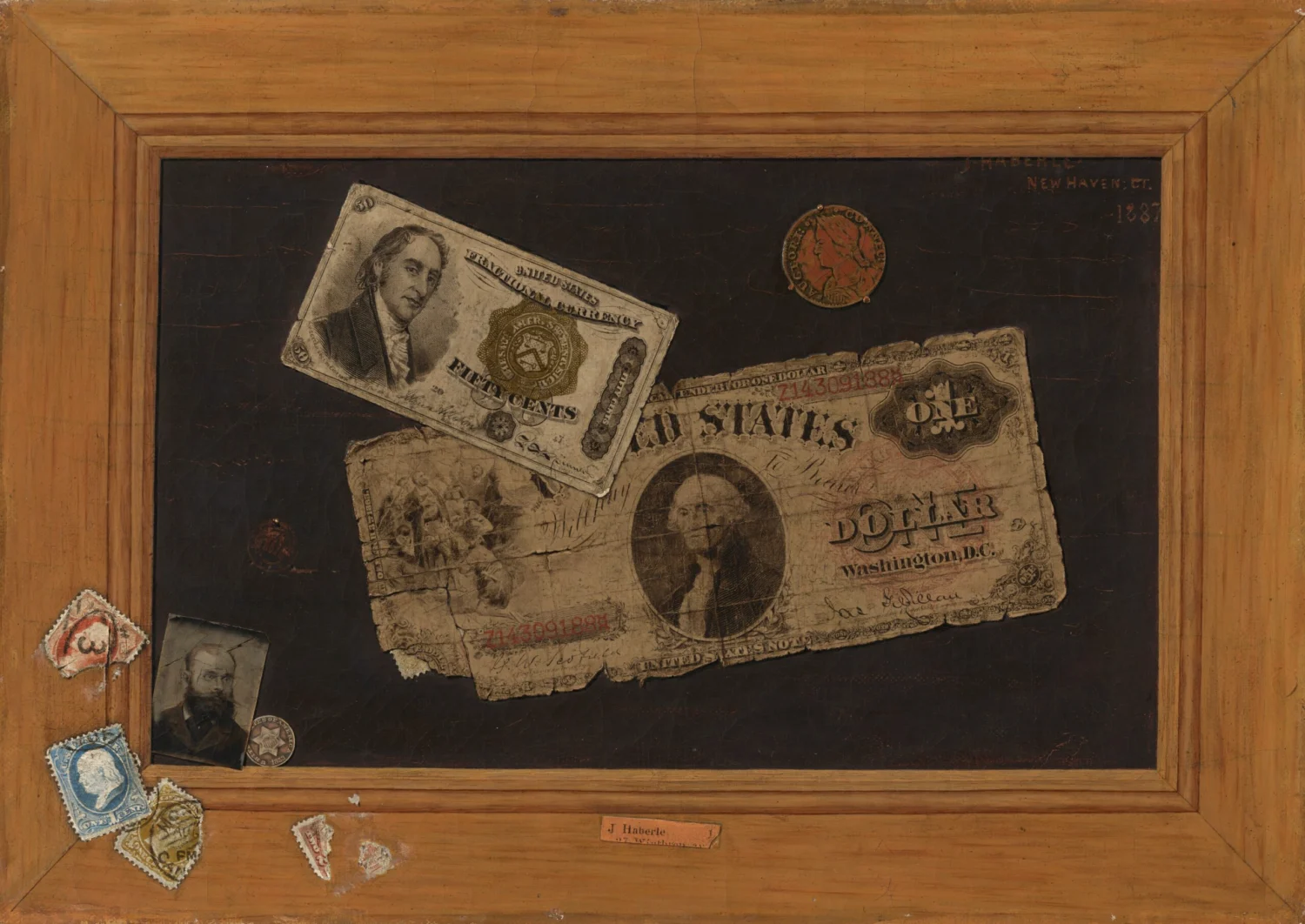
The man in the black suit said he was an FBI agent and showed Suzanna his badge. Then he opened a manila folder and pointed to a twenty dollar bill clipped inside.
“Ma’am, we’re here about this.”
“Oh, it’s my husband you want then,” she said in a cheerful voice. “Please come in.”
So she hadn’t called the police after all—it was that damned twenty dollar bill. My thigh started smarting again, and I scratched my leg nervously, moving out of the way to let them in. The officers walked into the living room and stood with their shiny black shoes on the blue-and-red Persian carpet that had been a wedding gift from my family to my wife.
“Are you a US citizen, Sir?” It was the officer in the black suit. His tone was calm, but his eyes were obscured behind his dark glasses.
“Yes, I am . . . What’s this all about?” I tried not to look nervous, even though I knew very well the reason they were there. It was the incident at Dunkin’ Donuts two weeks earlier.
The Dunkin’ Donuts in our small town was a hub for retirees who enjoyed the cheap coffee and pastries and, more recently, jobless parents who brought their children there. It had become my habit to go a few times a week, get a cup of coffee and a chocolate glazed donut—my favorite—and sit at a table near the retirees, listening to their conversation, talking about sports, music, old films, or how in the old days, life was simpler, town wasn’t so crowded and the policemen said, “good morning.”
That morning, unlike other days, I didn’t go inside, since I needed to get a bag of litter for Zenith at Walmart and then go to the library to pick up the mystery novel Suzanna had put on hold. So I went to the drive-through and ordered my usual. At the pick-up window, I handed a twenty dollar bill to a puffy-faced young woman who looked like she’d had a long night. After a moment she pulled the window shut and disappeared. Soon a young man pulled open the window and stuck his head out.
“Sir,” he said in accented English that I couldn’t place, “we accept no counterfeit bills here.”
It took me a moment to realize what he was talking about. My first thought was that he was pulling my leg.
“Oh, really?” I asked.
“Is not joke, sir,” he said firmly.
I was astonished, and to tell the truth a bit excited. I’d never seen a counterfeit, and asked to have it back.
“Why you want it back?” he said. “Is no good.”
My idea was that I would take it to my bank and ask for a good one, but he said the bank wouldn’t exchange it. They would take it away. It was the law.
“Really?”
“Yes, sir. And if I give it back to you, I need your name, your plate number, and a copy of your driver’s license so I can inform the authorities.”
That was the last thing I wanted. I paid with a $5 bill, which luckily turned out to be genuine, then drove home and told Suzanna all about it.
“Good,” she said firmly. “That should keep you away from that place for a while.”
The events of that day were running through my head. I was realizing that the guy at the window must have taken down my license plate and reported it to the police, when the FBI agent waved the bill in front of me.
“Where did you get this?” he asked. The other officer stayed quiet but vigilant, his hand on his gun.
“I don’t know,” I said and turned to Suzanna. “Honey, didn’t you give it to me?”
“I don’t think so,” she said coldly.
The officer surveyed the living room, taking in the large flat-screen TV, the art on the wall, and the Persian carpet under our feet.
“Sir,” he said, “What do you do for a living?”
“I used to work for an IT company.”
“You mean you’re out of work?”
“Yes.”
“How do you spend your time, then? How do you earn any money?”
“Well . . . I’m trying to write a book.”
I surprised myself by saying that. Suzanna gave me a look. I couldn’t blame her. I’d been talking about writing a book for more than a year, but every time I went to my desk in the basement, I couldn’t get started. Maybe because Suzanna repeatedly warned me not to write a word about her or her family.
“Hmmm,” I heard from the officer.
“Sir,” he said, “I want you to tell me where you got this bill. We know you were trying to buy donuts with this.”
“Officer,” Suzanna cut in, “I’m sure it came from the bank’s ATM. It must have, because we always get cash from there.”
One thing I loved about Suzanna was her cleverness and confidence. Shifting her gaze between the two officers, she explained that in order to have a twenty-dollar bill, you’d have to sell something—which we hadn’t done. Or you’d have to buy something with a fifty or hundred-dollar bill—and we never had large bills like that—in order to get back a twenty in change.
I was amazed by how she calmly explained this as if she had rehearsed it the night before. By the slight smile on the officers faces as they glanced at each other, I could see that they were impressed by her reasoning.
But the FBI agent wasn’t giving up.
“Sir,” he said, “are you counterfeiting money in the basement?” The serious note in his voice had gone up a notch.
“No, officer,” I said nervously and started to rub my thigh again, the degree of itching seeming to increase with the seriousness of the officer’s tone.
“He wouldn’t know how, sir,” Suzanna said, all smiles. “He wouldn’t recognize a counterfeit bill if you handed it to him.”
She was trying to impress him at my expense. It was working.
“Well––it’s very easy.” The officer put the folder under his arm, pulled out a twenty-dollar bill from his wallet, and handed it to me.
“Here—feel the texture between your fingers.”
Then he gave me the bill from the folder. “Can you feel the difference?”
I shook my head, and Suzanna grabbed the bills from my hand.
“Oh, yes,” she nodded. “This one is smoother.”
“Exactly. And not just that,” the officer said, “Look at the edges and the lines. They’re not as sharp and clear as on the real bill.”
“I see,” Suzanna said, handing the bills back to me. “Here, honey, look. It’s so obvious.”
I again tried to compare the bills, but wasn’t sure I could actually tell the difference.
“They even smell different,” the officer said.
I took a sniff of each bill.
“Sweet,” I said. I could see that other officer, his hand still on his gun, listening with amusement.
“How was it made?” Suzanna asked airily, as if chatting with a long-time acquaintance.
“It was probably scanned and printed on a color printer.”
I thought about the collection of printers and scanners I had in the basement.
“Oh, really?” Suzanna said. “I had no idea. That simple!” Then she turned to me with a questioning look. “Did you know that, dear?”
I shook my head and wanted badly to tell her to stop talking. But she went on as if she were part of the investigation team.
“I always thought that it was done outside the country, and that it was hundred-dollar bills that were counterfeited.”
“No ma’am,” the officer said. “It happens here as well. People try twenties and sometimes fives—they’re the easiest to pass off.”
I was looking for a chance to signal to Suzanna that she’d said enough, but she kept on talking.
“That’s interesting,” she said. “I really had no idea.” Then she asked several more questions that they seemed happy to answer.
Finally the officers moved toward the door, and I started to relax a bit, thinking they must have concluded we weren’t the type of people to be counterfeiters and they were wasting their time.
At the door, the FBI agent turned around.
“Let me give you a piece of advice. You should check every bill you receive, even the ones from the bank.”
I nodded, and Suzanna said we would certainly make sure to do that.
We watched them get into their car. As soon as they drove away, Suzanna narrowed her eyes.
“Good going,” she said. “That’s all we needed—to have the FBI show up at our door.”
There was no point in saying a word. I grabbed another Rolling Rock from the fridge and took refuge in the basement, collapsing in exhaustion on the old couch where I usually sat ruminating or watching TV until I fell asleep.
I didn’t know how much time had passed before I woke up and found Zenith, who had crawled out from wherever she’d been hiding, lying on my chest, purring.
“Oh, it’s you,” I said, “the unfaithful. You take her side and scratch me and then run off?” She meowed and rubbed her cheek against my unshaven face.
“Ok,” I said, “you’re forgiven this time, but you better be careful.” She looked at me with sleepy eyes and meowed again.
The house seemed strangely quiet, and in the semi-darkness of the basement I felt as if I were waking from a monstrous dream. It took a few minutes for the events of the afternoon to come back to me. I was thankful that it was over, but not exactly relieved, thinking that the police might return.
After a moment I pushed Zenith off my chest, stood up, and went over to the desk. I wanted to write down what had happened, thinking it might be a good opening for the book I’d been trying to start. All the gestures and conversation were alive in my head, but when I tried to write things down, it wasn’t the same. I gave up and sat there, thinking. Above me, I could hear Suzanna moving around the kitchen, and it made me think perhaps she was right when she read a few pages of my writing and said I was trying to describe a simple situation using fancy words, and the characters seem wooden.
I got up and went back to the couch. I felt the bulk of my wallet in my back pocket, and as I took it out to lie more comfortably, a thought flashed through my mind. I took the only money I had, a five-dollar bill, looked at it, turned it over, and checked the other side. I smelled it–it smelled of paper with maybe a faint trace of Suzanna’s hand lotion–and then stared at Lincoln’s wrinkled face and sober cast-down look. I couldn’t tell if it was genuine or a fake. Examining the bill, I started to wonder whether I could scan and print it. Just to see how it would go, I got up and plugged in one of the scanners and was about to put the bill down on the glass when I heard Suzanna at the top of the basement stairs. In a panic, I crumpled up the bill and pushed it into my pocket.
“I’m going to the grocery store,” she shouted down. “Do you need anything?”
“No, I don’t think so,” I said quickly. I wanted to add, “How about some cottage cheese?” but stopped myself.
“Alright then,” she said, “I thought I’d get chicken for dinner. Maybe you can get the barbecue ready.”
“Okay,” I said. Then I felt something by my feet. It was Zenith playing with the five dollar bill that hadn’t gone into my pocket after all, but had fallen on the floor. She was batting the bill between her paws, stopping and staring, then jumping on it as if it were alive. I bent down to snatch it from her grasp, but she outmaneuvered me a couple of times. I finally got it back, put it down on the scanner, and smoothed out the wrinkles with the palm of my hand. Then I closed the lid and pushed the button. The scanner clicked and sent a blue whoosh of light along its length. I checked the result—Lincoln’s face was barely recognizable.
Alright, I thought, so I need a crisp new bill. And a better scanner. And a good printer. I’d only print a few bills. Just a handful. Enough to pay off the mortgage. Maybe get a new car. My mind was racing. Or maybe just enough to take Suzanna on another trip to Hawaiʻi. I’d get to have a Piña Colada on Waikiki Beach and maybe we’d even climb up Wilhelmina Rise again.
This sweet winding thread was broken by Zenith meowing and pressing her head against my feet. I rubbed the stomach of my furry accomplice, then decided I’d better hurry and get the grill going before Suzanna came home.