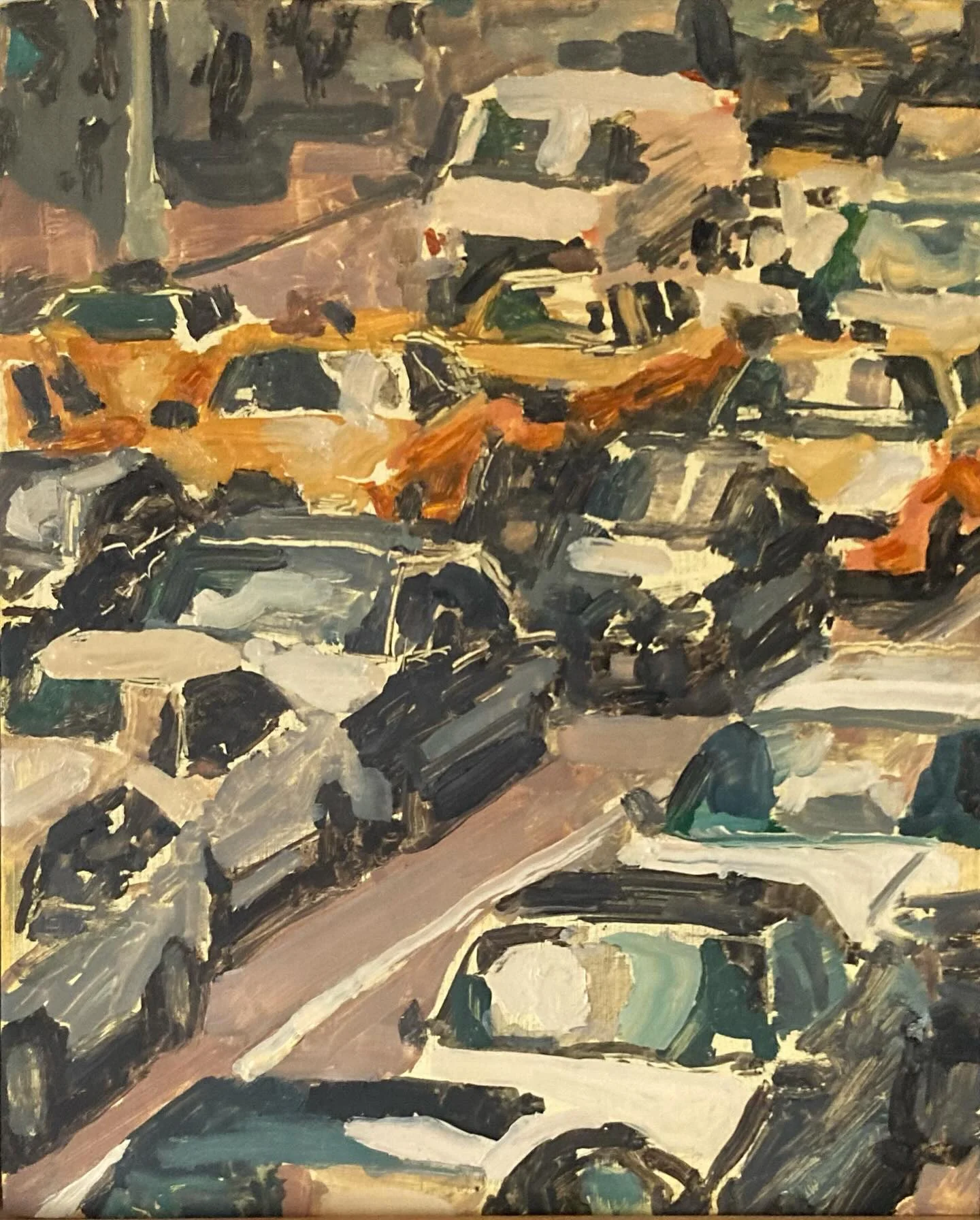
“NYC” by Will Yackulic

The DMV camera flashes;

for a second I am immortal —

blinking, crooked-smiled, a citizen of nowhere.


They tell me to wait.

The plastic seat sweats against my thighs;

a boy beside me eats Flamin’ Hot Cheetos,

his fingerprints bloodying every page of his workbook.


In my wallet:

a torn movie ticket,

my father’s faded voter ID from a country that voted him out,

an expired green card.

My face younger, fuller,

a woman who still believed in applying twice, appealing once.


I watch the numbers light up over the counter —

B198. B199.

The woman at B200 asks about “home address” and “legal name,”

like those are simple things,

like you don’t lose them the way you lose teeth,

one at a time, without noticing.


Outside, teenagers skateboard across the lot,

their wheels scraping up sparks from the concrete.

An old man feeds pigeons the ends of his sandwich,

talking to them in a language

even they don’t understand anymore.


When they call my number,

I stand too quickly.

My knees crack like bad translations.


Molly Thapviwat

Molly Thapviwat is a poet, writer, singer, and longtime English educator based in Bangkok, Thailand. Raised in Los Angeles, she studied English pedagogy in London and Liverpool. A winner of the 2025 Wigtown Poetry Prize, her work has also been recognized in the Slipstream Poetry Competition, the Welsh Poetry Competition, and other international contests. Her poems have appeared in Candlestick PresstrampsetThe MacGuffinFrontier Poetry, and elsewhere. She is currently completing her debut poetry collection and a first novel. Outside of writing, Molly performs as Elvis Little Sister—one of the few professional female Elvis tribute artists in the world.

Will Yackulic

Will Yackulic is an artist based in Oakland, California. His recent paintings depict scenes of everyday urban life (traffic, signage, and commonplace objects like school buses, milk crates, and orange cones) collapsing distinctions between still life and landscape. Largely absent of figures, the works instead reflect human presence through the built environment and routines of daily movement. Departing from his earlier, highly detailed projects, Yackulic’s current practice emerged from the constraints of parenthood, embracing shorter, immediate periods of making. Working from photographs taken throughout his day, he creates paintings in single sittings that function as diaristic records of passing moments. Intimate in scale and grounded in observation, the works explore time, attention, and the fleeting nature of contemporary image-making.