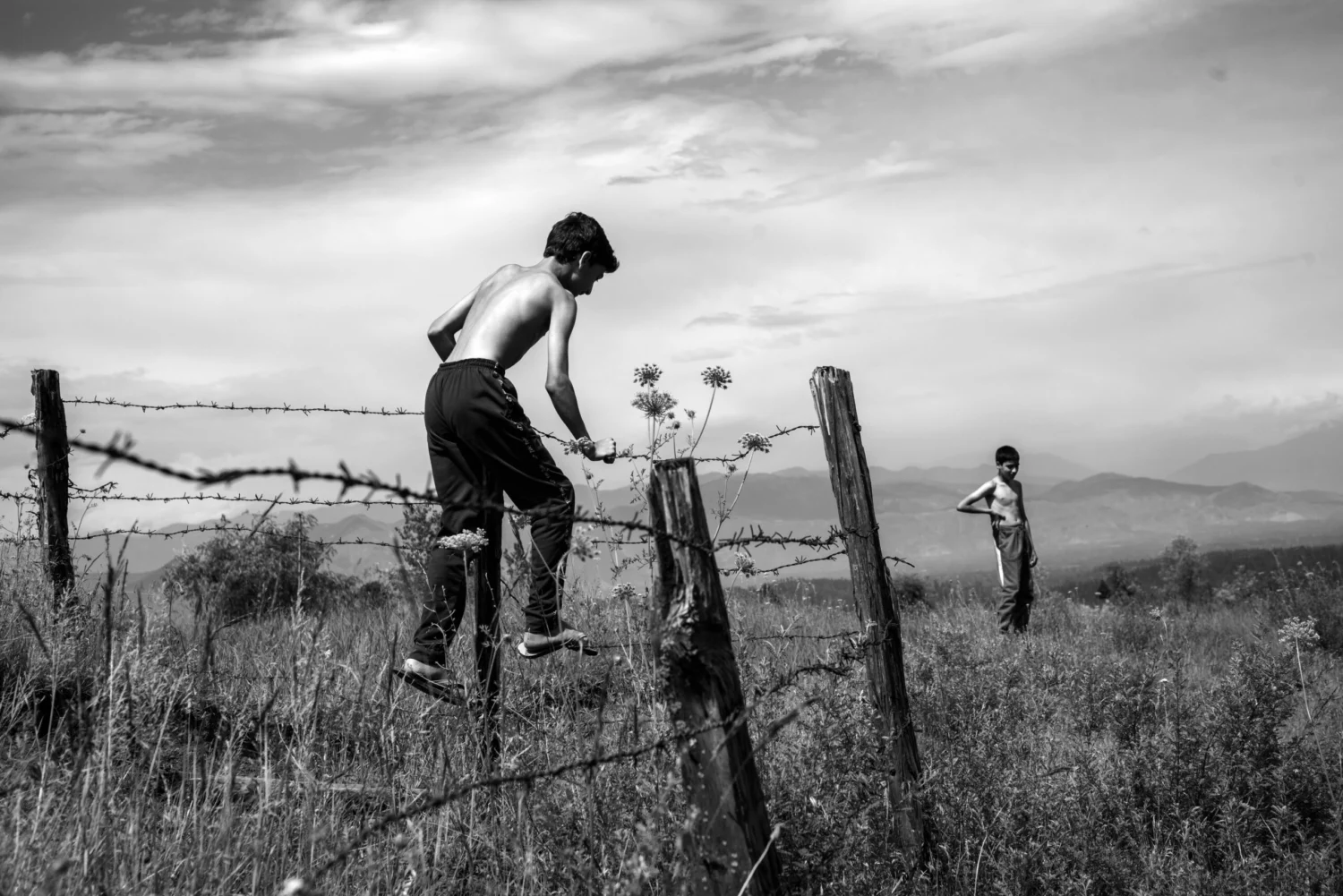
I first met Showkat Nanda in the midst of the 2025 India-Pakistan War, while trying to connect with photographers and journalists documenting the cross-border shelling that, over four days, devastated towns and villages across his native Kashmir. On the night of our first call, Nanda, who has chronicled the region since 2007, was still making his way through communities reeling from bombardment along the Line of Control, and I came to him with short, efficient questions centered primarily on the perils and stakes of reportage in Kashmir: the pressures of recording violence in a context rife, especially since 2019, with censorship and surveillance; the inheritances carried by border communities, many of which have now lived through multiple wars.
But it was not long before other, more elusive modes seeped into our conversation, as arrestingly as they do in Nanda’s photographs themselves, sliding in sublime black-and-white from documentary to apparition, or from historical witness to spontaneous play in vibrant technicolor. Speaking to his evolution from news photographer to documentary photographer, Nanda recalled a teacher telling him that single images are like pearls: “beautiful, but easily lost in a drawer unless strung together by the thread of narrative.” Describing the journal he made as a child from two surviving photographs of his brother and a handwritten couplet by his father, he recited the verses aloud in Urdu before offering their English translation, so that I might hear their original music. Alongside the roles of documentary photographer and “opinion photographer,” as Nanda has often described himself, it was soon evident that one could also add those of writer and poet.
Thus began over a year of conversation between us, woven through phone calls, emails, voice memos, writings, and photographs. As Kashmir staggered through yet another aftermath, Nanda continued telling me about the histories and obsessions coursing through his work—violence, disappearances, buried archives, dreams, faith, protest, and the particular burden of trying to give context to lives so often supplied with it against their will. Again and again, he returned to the idea that, in places like Kashmir, the work of storytelling begins precisely where the news cycle ends and the afterlives of violence begin.
This interview is the record of these exchanges, Nanda’s photographs and sentences forming powerful breakwaters against the sea of sanitization that quickly followed the 2025 war, with politicians and television panels rushing to celebrate, in language thick with a macabre irony, the “return of normalcy” to Kashmir.
— Youmna M. Chamieh for Guernica
Youmna M. Chamieh: You’ve been working as a photographer across Kashmir since around 2007, traveling throughout the region from Baramulla, where you are based. Could you begin by talking about how your practice shifted over time from news photography toward documentary work?
Showkat Nanda: When I first began working, like many others of my generation, I was primarily doing news photography. In Kashmir, news photography itself emerged through the conflict: almost always, the region comes into the international spotlight only during India–Pakistan clashes. Over time, I began to feel that something was missing in that mode of working. There is something amnesic about news images—one day’s photograph is forgotten the next, as another incident inevitably replaces it. Around 2011, after discovering the work of W. Eugene Smith, who saw “objectivity” less as a virtue than a limitation—and a few years after my late mentor Izhar Wani first introduced me, in 2007, to James Nachtwey’s film War Photographer—something changed. I stopped chasing single, powerful photographs and began to see myself as a photographer with a point of view, almost like an opinion writer.
I began revisiting earlier stories and spending more time with people—sometimes a year or two on a single project. I became increasingly interested in what happens after the “flare-up,” once the headlines move on. Outside Kashmir, people often reduce the region to a border dispute, but for those living there, it is first and foremost a humanitarian reality—one in need of photography that treats people as participants, not subjects. Once the explosions stop and the death toll settles, human stories are all too quickly forgotten. And yet that is precisely where our work as storytellers should start. If a photograph is a slice of reality, then we are witnesses to everything that surrounds that slice. We see things the world never sees, conversations, silences, gestures, consequences that don’t make it into the frame. To pretend that those experiences don’t shape the image itself is no longer possible.
Youmna M. Chamieh: Your work certainly feels durational and deeply contextual, resistant to the front-page logic of the “conflict image.” Could you talk a bit about how you began thinking about photographs as parts of larger stories, and about the relationship between image, context, and interpretation in Kashmir?
Showkat Nanda: One of my teachers once told me that single photographs are like pearls. And where do you keep pearls? In a cupboard or a drawer, away from people. But if you want to show those pearls to the world, you have to turn them into a necklace. You don’t need fancy equipment or deep technical knowledge to do this. The only thing you need is a one-dollar thread. That idea stayed with me for years. I realized that individual images, no matter how strong, needed a narrative thread connecting them. Hence the term documentary photographer. As a documentary photographer, you’re not bound solely by what you see; in fact I often think of myself, really, as an “opinion photographer.”
In Kashmir especially, context is everything. I remember once seeing the same photograph used in two completely opposite ways. In one place, the caption described young boys throwing stones as “the people we fight against,” and elsewhere the exact same image was framed as “these little kids are our heroes.” A photograph is only a fraction of a second—it cannot contain the whole reality on its own. It’s up to the photographer, who has experienced the wider situation and seen the moments before and after the click, who knows the whole story, ultimately, in a way the viewer cannot, to tell that story.
Youmna M. Chamieh: Storytelling might be a heavier burden than ever before in Kashmir. After 2019, when the Indian government revoked Article 370—stripping the region of its limited constitutional autonomy and ushering in mass communications blackouts, arrests, and a broader destruction of public archives—Kashmir was plunged into an almost total silence. How are future generations meant to understand what happened to their elders in the 1990s? Your most recent project, “Fragments Beneath the Earth,” takes on this burial of memory in a literal way: uncovering the family albums that, for fear of night raids and arrests—particularly because photographs of young men became dangerous to keep—families began burying underground in the 90s. How did this project begin for you?
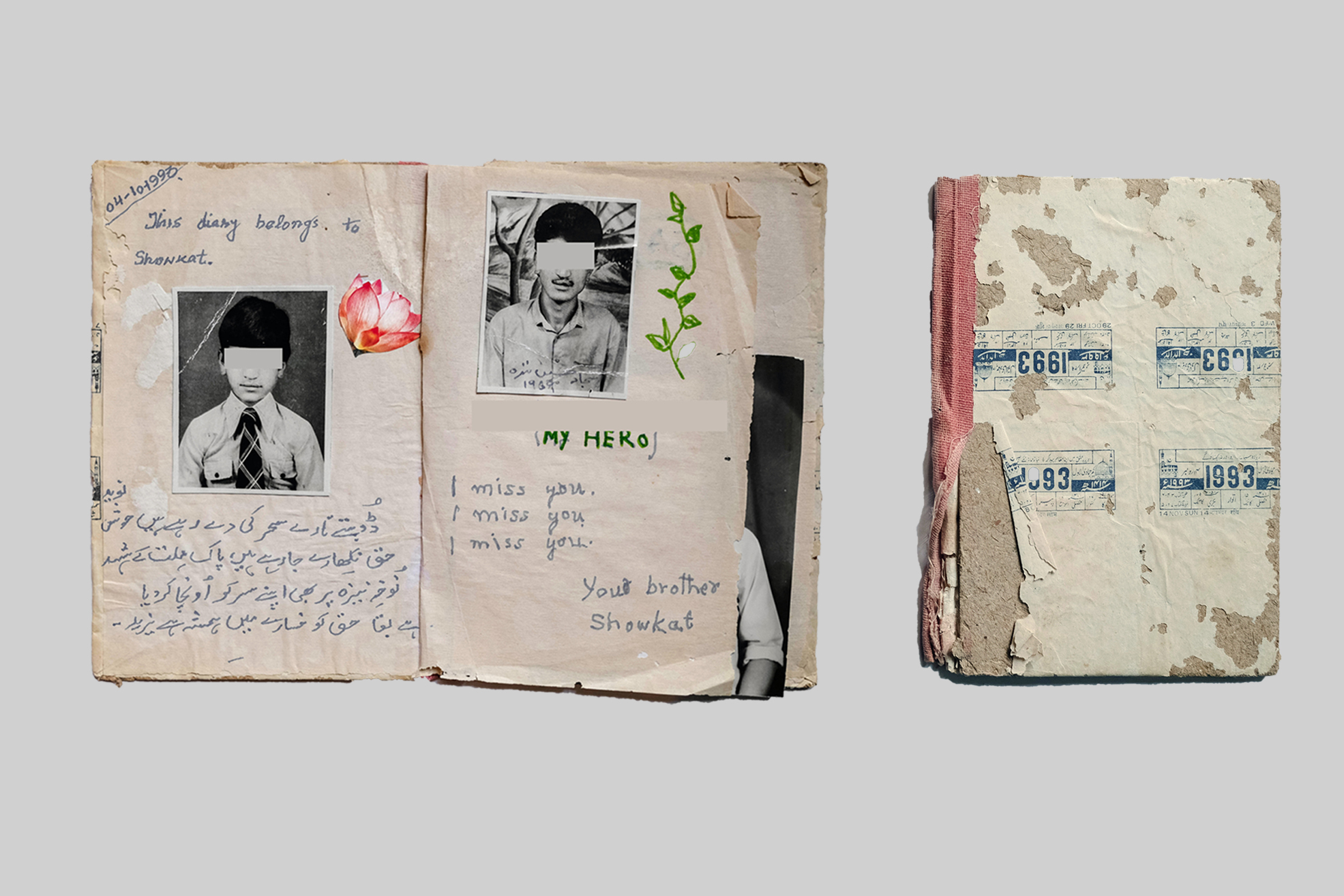
Showkat Nanda: It is a project born, in many ways, of my own first archive. In 1990 my brother left home; we had no idea where he had gone. A week later, my father took me to a nearby rocky stream. Inside a gap in a stone gabion wall, he hid a bundle of my brother’s photographs wrapped tightly in plastic. He told me, “If something happens to me, you come here and take these photographs out and preserve them.”
For one and a half years, we believed it was not the right time to bring them back home. Then we learned that my brother, like hundreds of young men at the time, had tried to cross the Line of Control into the Pakistan-administered part of Kashmir, and shortly afterward had died after falling from a ridge into a gorge. We returned to the stream to retrieve the photographs, but the wall had shattered, probably because of flash floods, and the photographs were gone. I still remember the silence of that moment. My father came back home, walked to a large mirror in our living room, opened the back of its frame, and removed two photographs he had hidden there separately. Those were the only pictures of my brother that survived.
In 1993, when I was around ten years old, I made a journal out of those photographs. I pasted them carefully onto pages and included a couplet my father had written in Urdu about martyrdom and Imam Hussein, along with one of his poems. Looking back now, I think that was my first instinctive act of archiving.
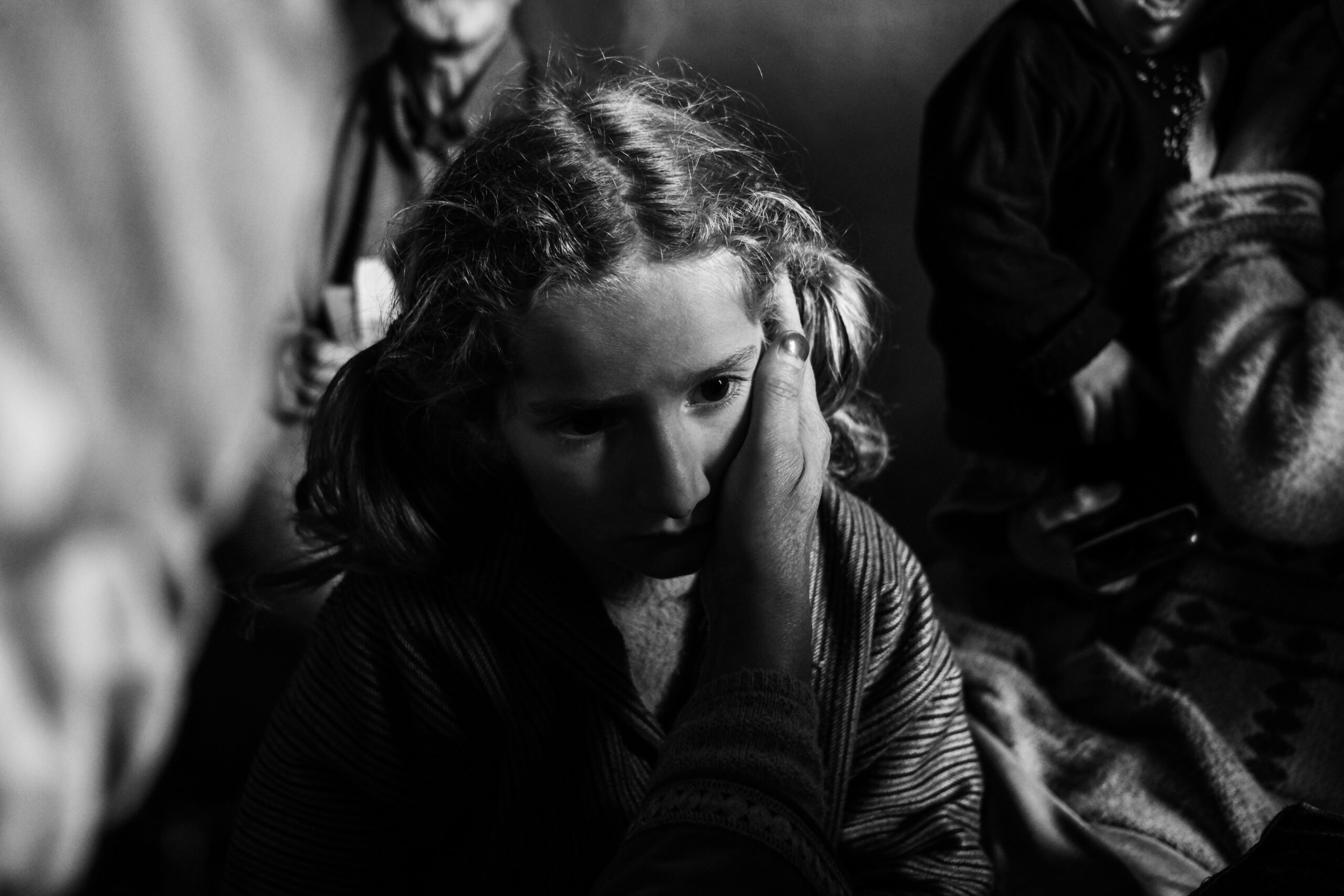
In a way, the buried albums project is another angle to my 2015 series, “The Endless Wait.” Since 1990, according to human rights organizations, almost eight thousand people have been “disappeared” in Kashmir. Often, all that remains publicly visible of the disappeared are the faces of their relatives. Working with women whose sons and husbands had disappeared, I wanted to understand the other side of those stories: how violence continues to live on in small gestures, expressions, and the private rituals of memory.
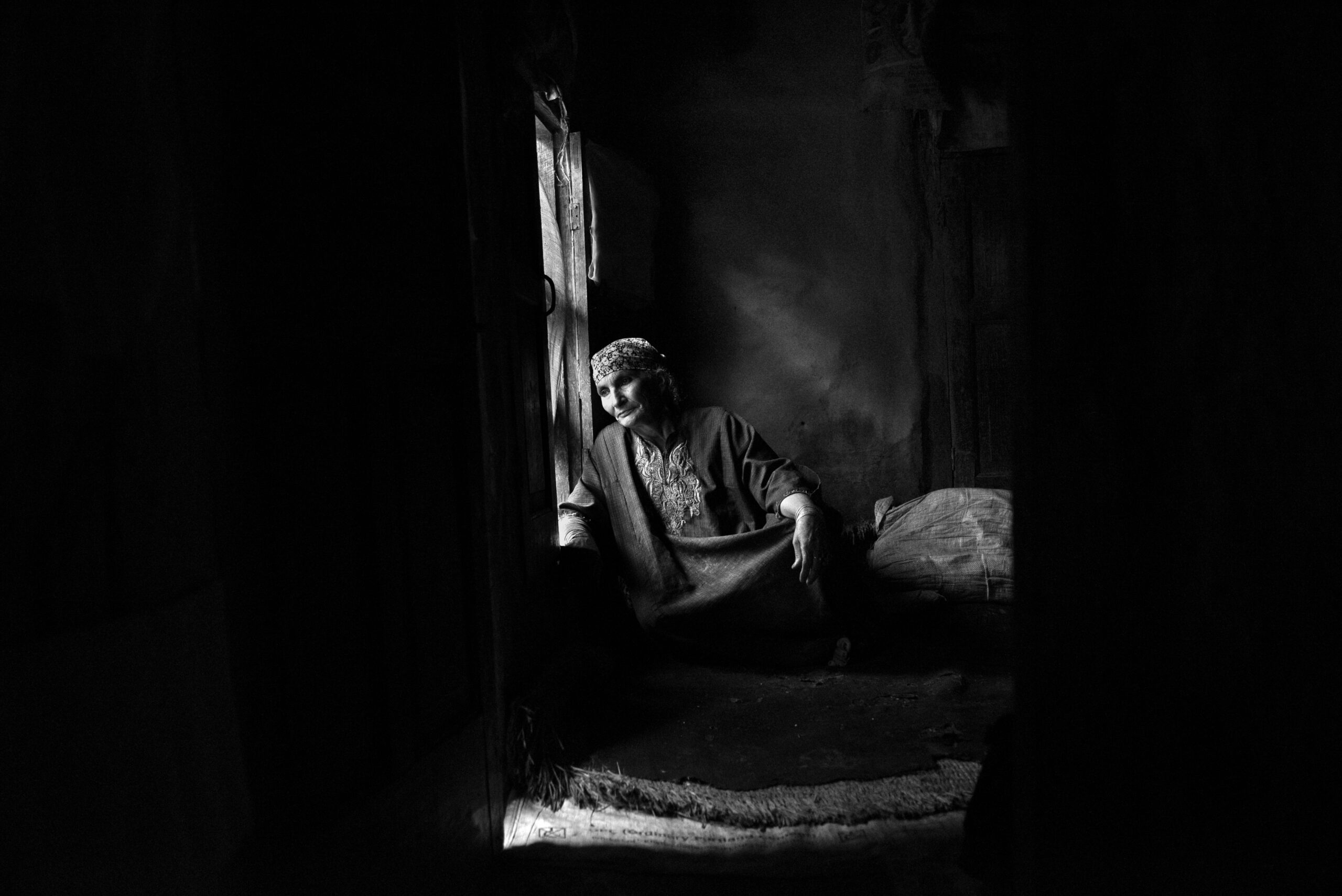
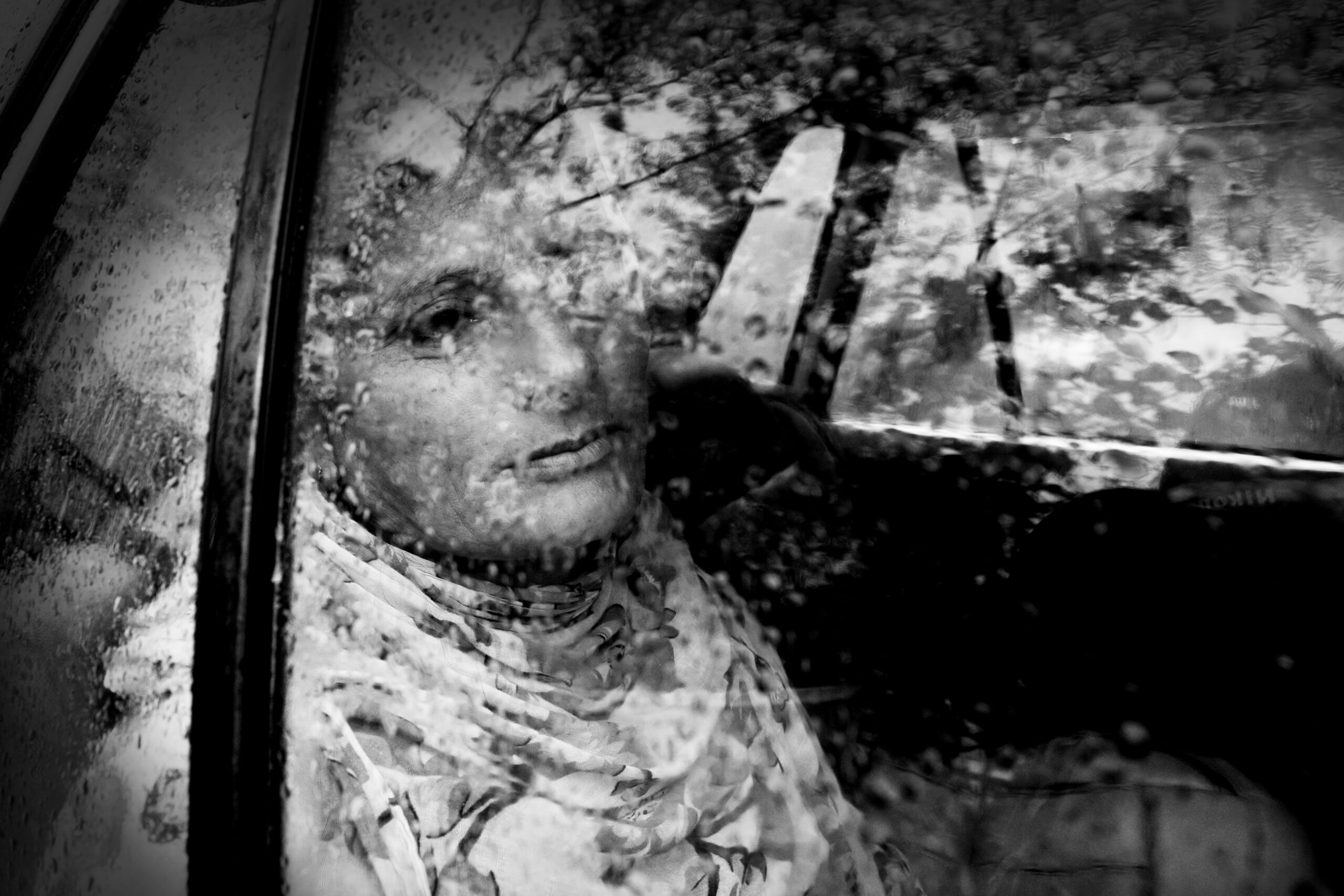
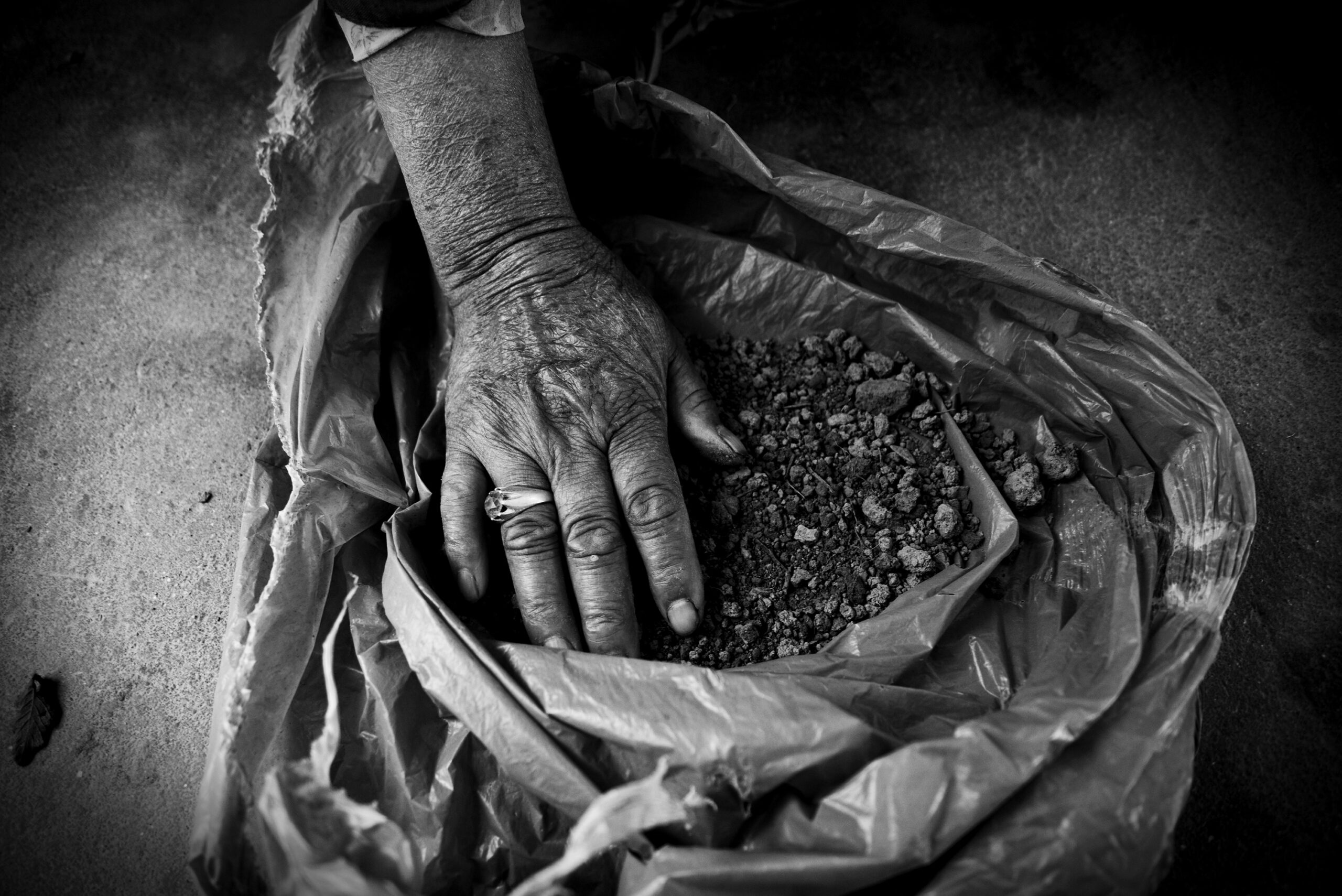
Youmna M. Chamieh: These are deeply intimate photographs, far removed from the kind of parachute journalism we so often see in international coverage of conflict zones, where foreign reporters briefly descend upon a place during moments of crisis, then vanish along with much of the world’s attention.
Showkat Nanda: For me, these photographs are never only about documentation. They are bound up with my own family history and memories. One of them is an image of an elderly mother, her hand pressing gently into the soil of a grave. Her son disappeared in the 1990s, and for decades that earth was the only physical connection she had left to him. This image is not a professional record for me; it is a piece of my autobiography.
Every time I stand before these mothers in Kashmir, documenting their wait and their “living through” the pain of disappearance, I feel as if I am photographing my own mother, and the grief she carried each day for my brother. Their faces are her face; their patience is her patience. I realize now that my work with these women isn’t just about collective testimony—it is an act of sons honoring mothers. I am a son who knows exactly what that soil smells like, and exactly how much a mother’s hand can carry when there is nothing else left to hold.
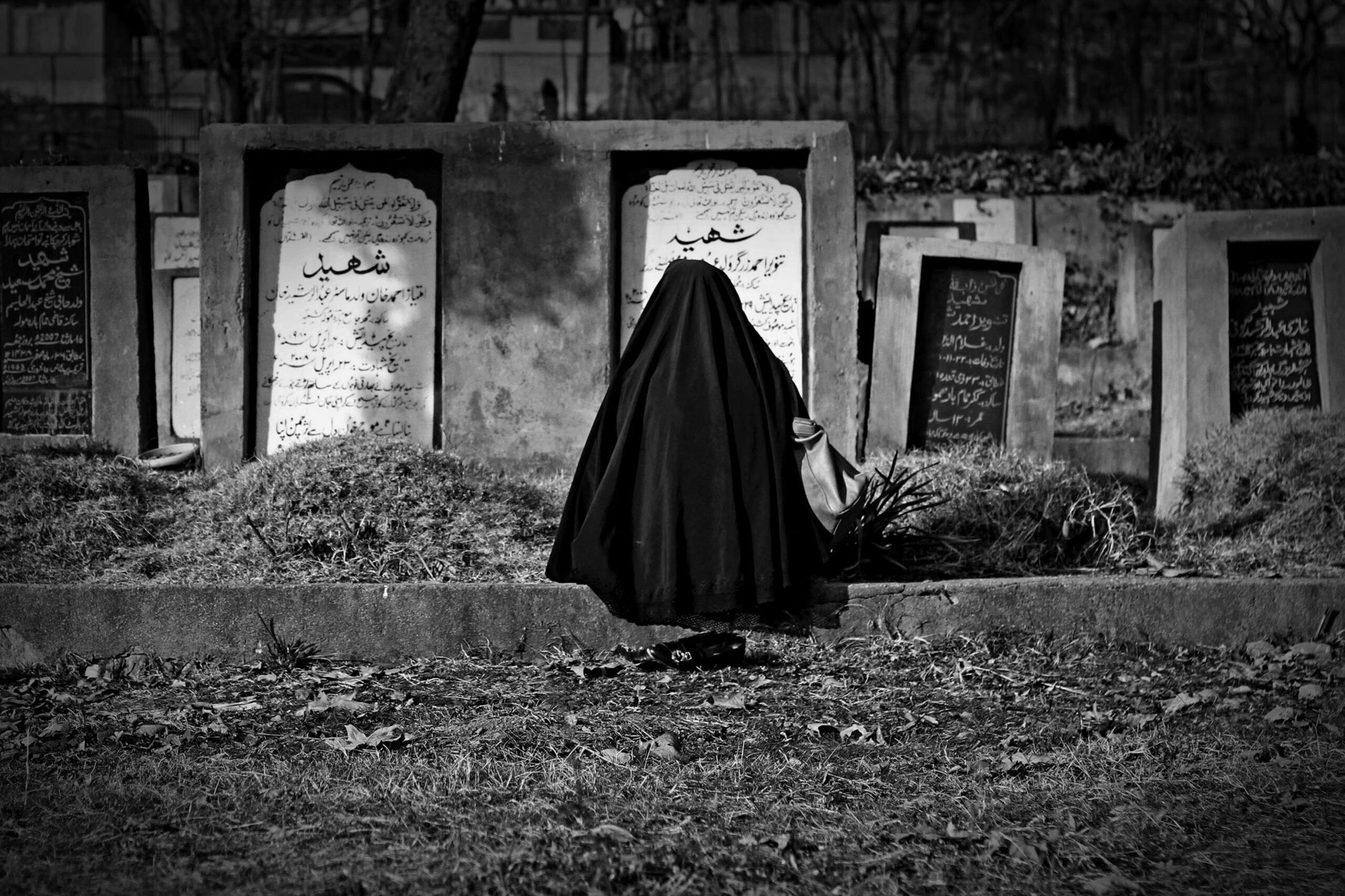
Youmna M. Chamieh: Another of your photographs from this series shows a veiled woman sitting before a grave, the white gravestones rising behind her like fragments of text. After you first shared it with me, you told me, “Remind me to tell you something about the woman’s bag.”
Showkat Nanda: Ah, Ruksi Didi’s photograph. I was in that graveyard documenting a group of young boys who were living on the run, hiding from arrest after participating in protests. The graveyard, where I myself spent much of my childhood, had become their sanctuary. While photographing them, I noticed this silent black figure seated before a grave. Even before I walked closer, something in the geography of the space told me she was sitting at the grave of my best friend.
Rukhsana, or Ruksi Didi, as we call her, has been like a sister to me my entire life. Her husband is one of my closest friends, and she is deeply connected to my own family. But under the folds of her traditional burka I could not be completely certain it was her, and there was a strange silence between us, as though we both understood I was returning as a witness into a very private grief. Later, when I showed the photograph to my wife, she identified her instantly—not from the veil or the grave, but from the handbag resting in the grass beside her. “That’s Ruksi Didi,” she said. “I know that bag.” That realization struck me. In Kashmir, these stories are so lived-in that people can recognize one another through a mundane detail as small as a handbag.
Startling flashes of truth like this one are everywhere in my work. The final image in the sequence I shot that day, in fact, takes us back to the group of boys I was documenting—the ones evading arrest, living in the shadows of the stones. In the frame, a young boy stands in the foreground, his eyes fixed on the camera. Only later, while editing the photograph, did I notice the single word stretched across the boy’s shirt: “WANTED.” In the world of commercial fashion, that word is a meaningless trend. But in this graveyard, on this boy, it was a profound coincidence of truth.
What makes this image even more haunting is the timing. I captured this “Wanted” boy at the exact same moment, in the exact same graveyard, where my friend’s sister sat veiled in front of his grave. One image captures the beginning of the cycle—the young boy marked as “Wanted,” looking out towards an uncertain future, preparing for a life of resistance. The other captures the end of that cycle—the sister, decades later, sitting in the silence of a loss that never heals. Between the boy’s “Wanted” shirt and the sister’s handbag lies the entire history of Kashmir.
To document them both in the same hour is to see the past and the future sitting side-by-side. It is the perfect example of why I cannot be a “neutral” witness. When I look at that boy, I don’t just see a boy on the run; I see my dead friend twenty years ago. And when I look at the sister, I see what will happen to the boy’s family twenty years from now. As for the graveyard, it becomes a painfully literal landscape for a story condemned to recur.
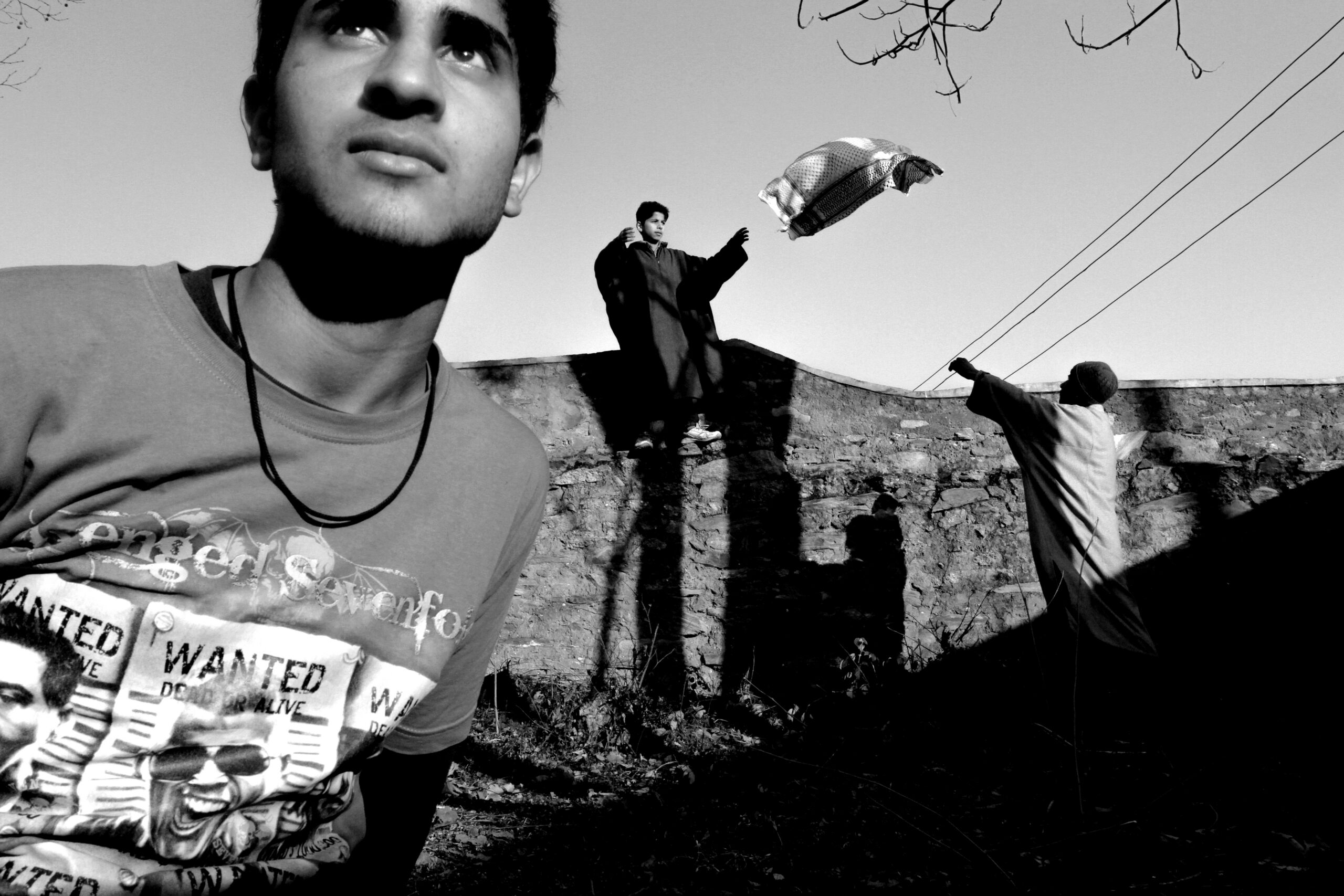
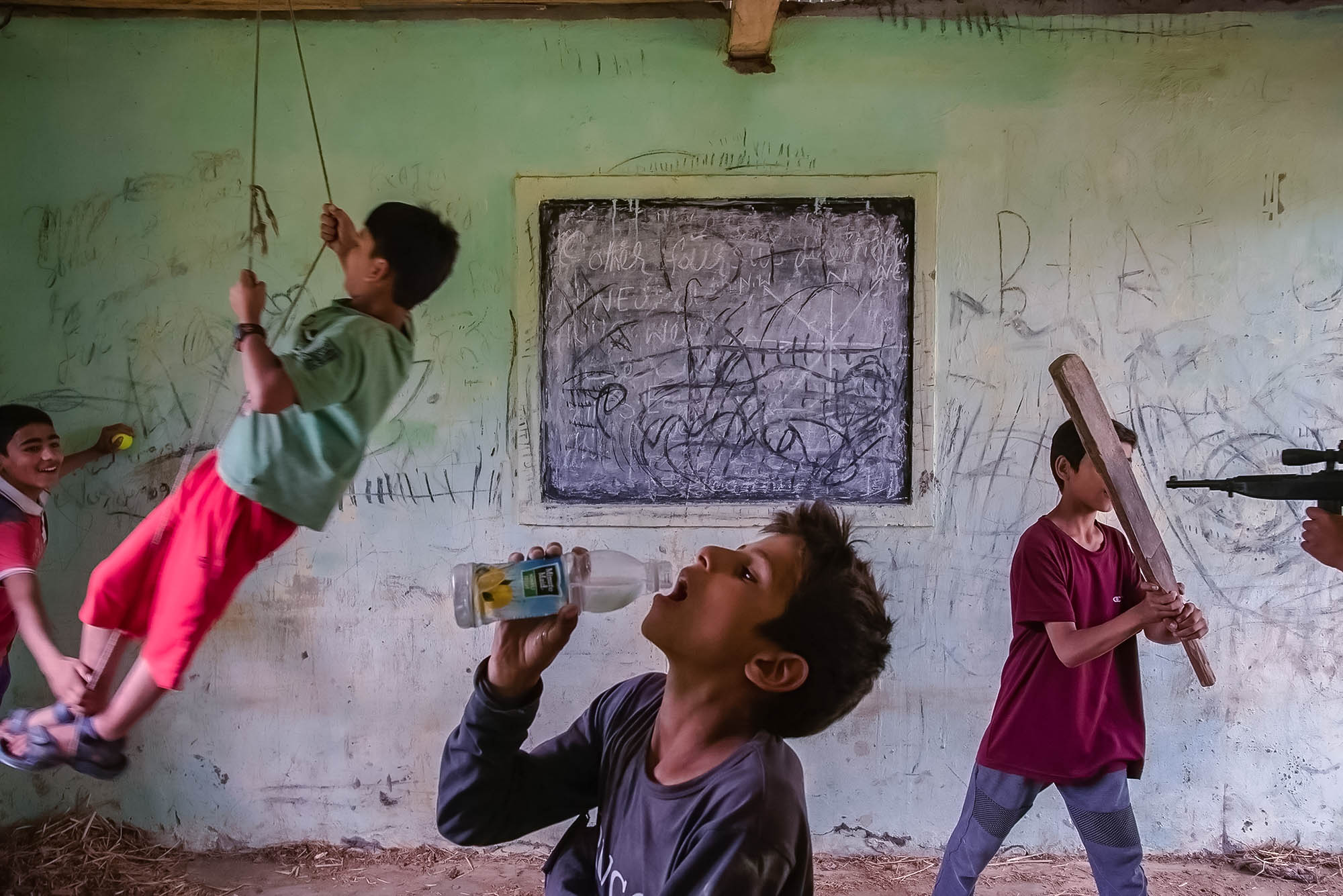
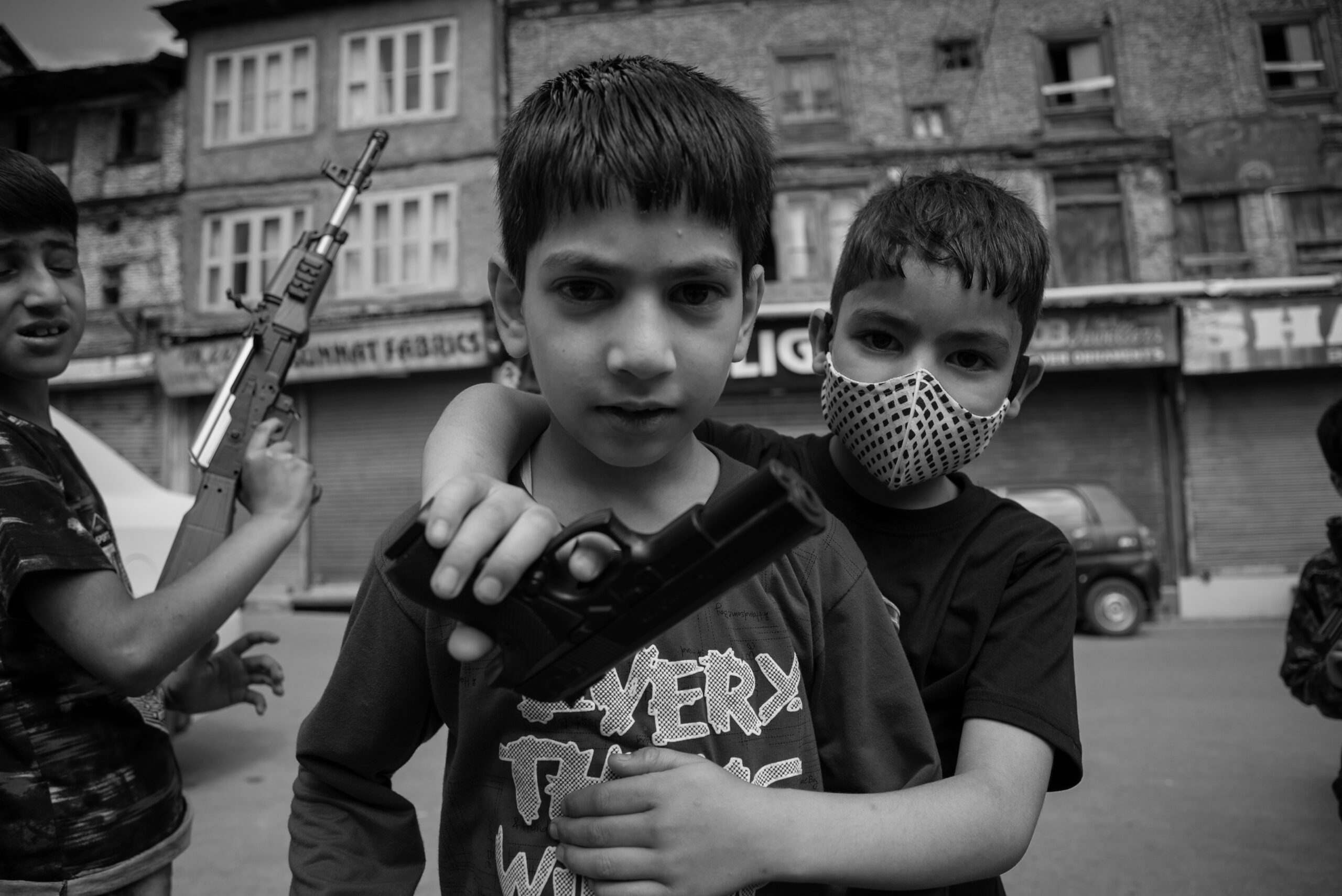
Youmna M. Chamieh: The “Wanted” boy is one of many children who appear throughout your work. You once told me that children in Kashmir “imbibe” the war before they are even given a chance to register what they are inheriting—the way your son could not know what sharp vision looked like until he first wore glasses. A child may not even be old enough to understand what “India” or “Pakistan” means, and yet military presence and explosions become absorbed into the texture of their world. Your metaphor of eyesight makes me think not only about how one perceives the present, but also how one might imagine alternative futures. Has working so extensively with children revealed anything to you about how different futures might still be imagined for a generation that has never known peacetime?
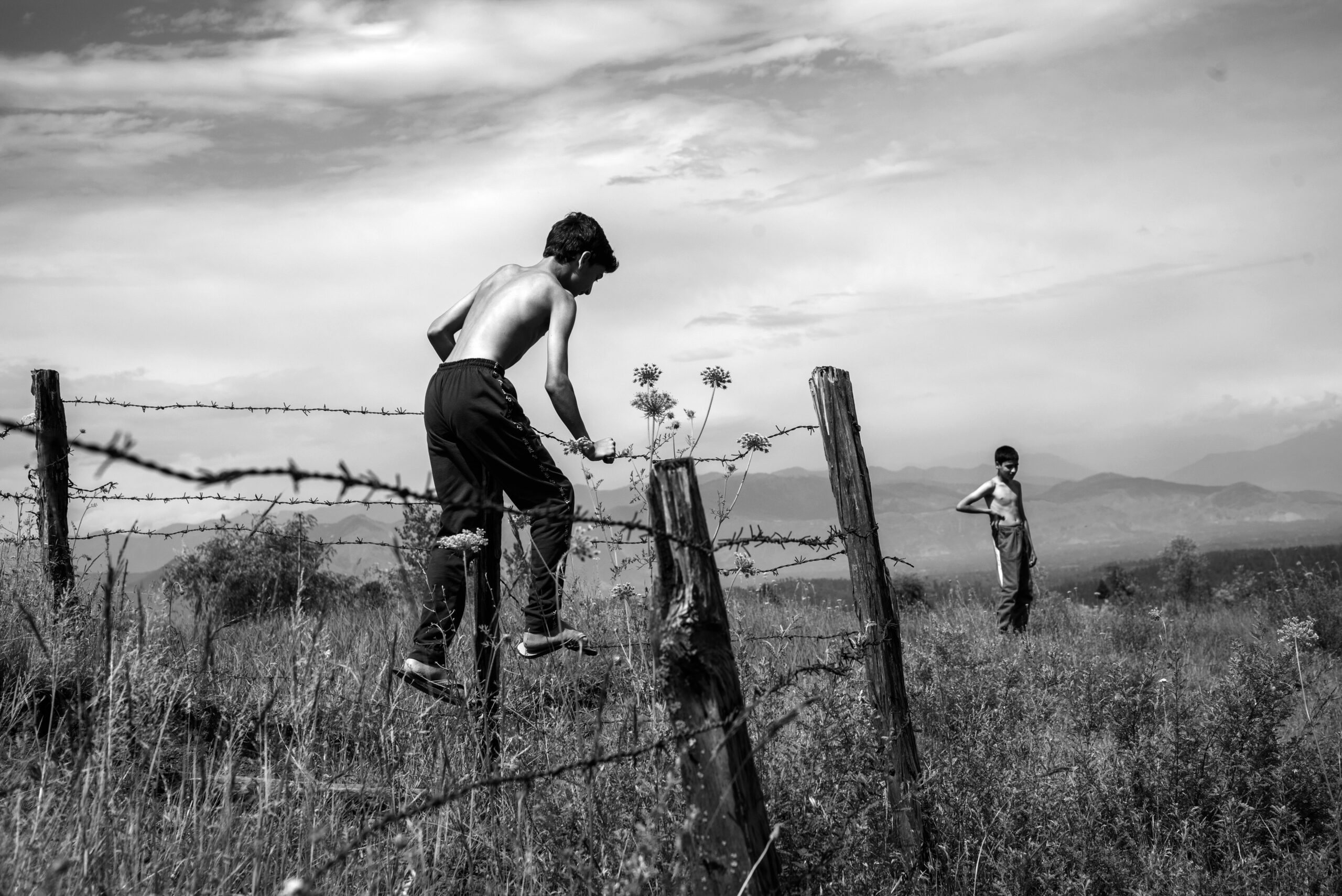
Showkat Nanda: This is a very interesting question. For children of my generation, those born in the 1980s and then the 1990s, the reality on the ground was deeply normalised. Conflict, fear, and restriction were not interruptions to life; they were life. As children, we did not have anything to compare this with, so it became our idea of normal.
It was only later, when some of us travelled to other parts of India for studies, that this normalisation began to crack. We started comparing our lives against the everyday freedoms others took for granted. More recently, social media has made that contrast even starker. Young people now see, in real time, how differently life is lived elsewhere, and many of them say it openly: they have been living in hell.
I can say with some certainty that many boys and girls of my generation, now men and women, have largely given up. We rarely speak of the future with hope. Instead, we talk about the life that was never lived, the possibilities that were quietly taken away before we could even imagine them. That resignation is something I recognise deeply.
At the same time, I see something shifting among younger children. Through the internet, through new encounters and exposure to the wider world, they are beginning to seek a different future. Even if that future is still vague and fragile, the very act of comparing, of questioning what they were told was “normal,” is a form of imagination taking root.
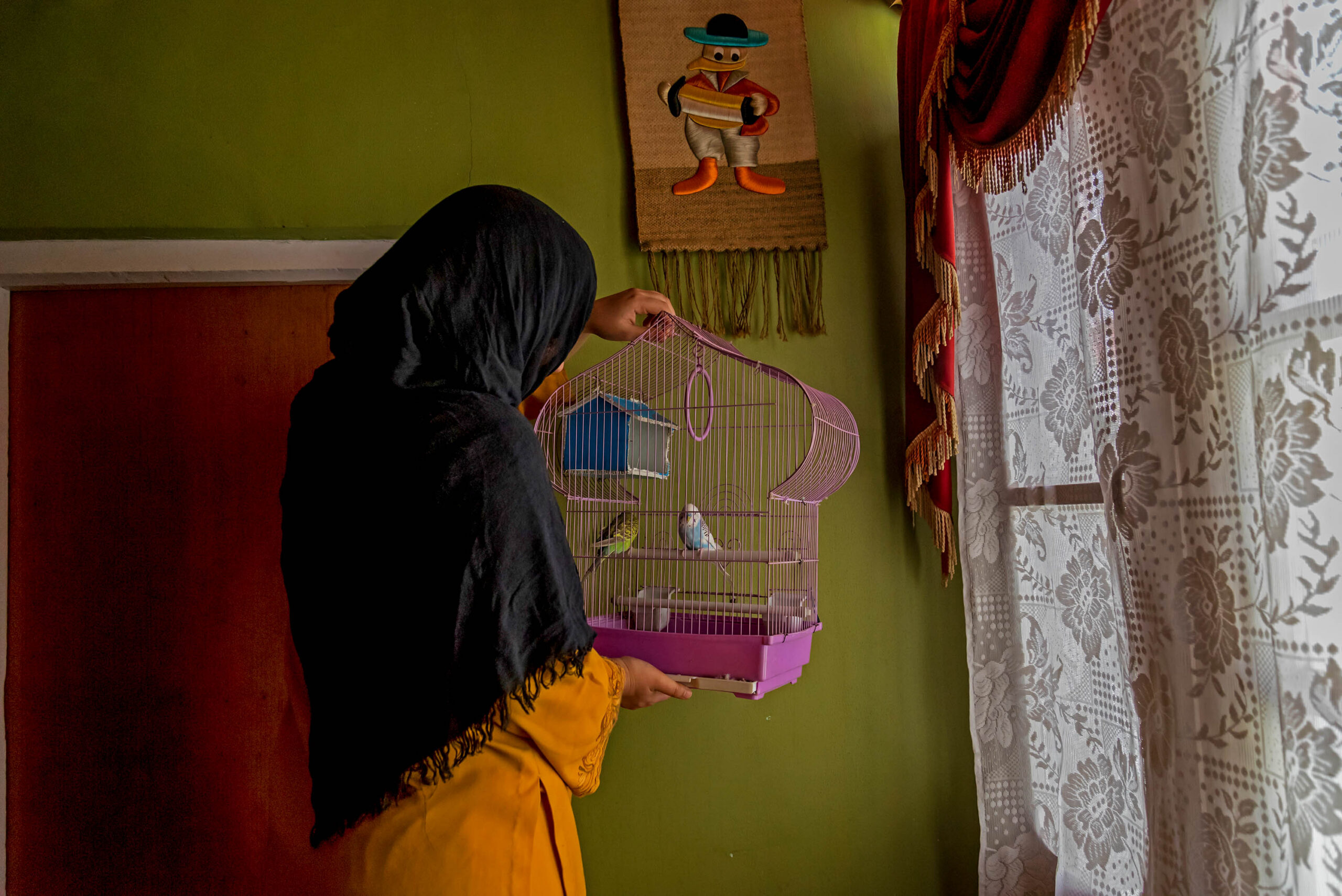
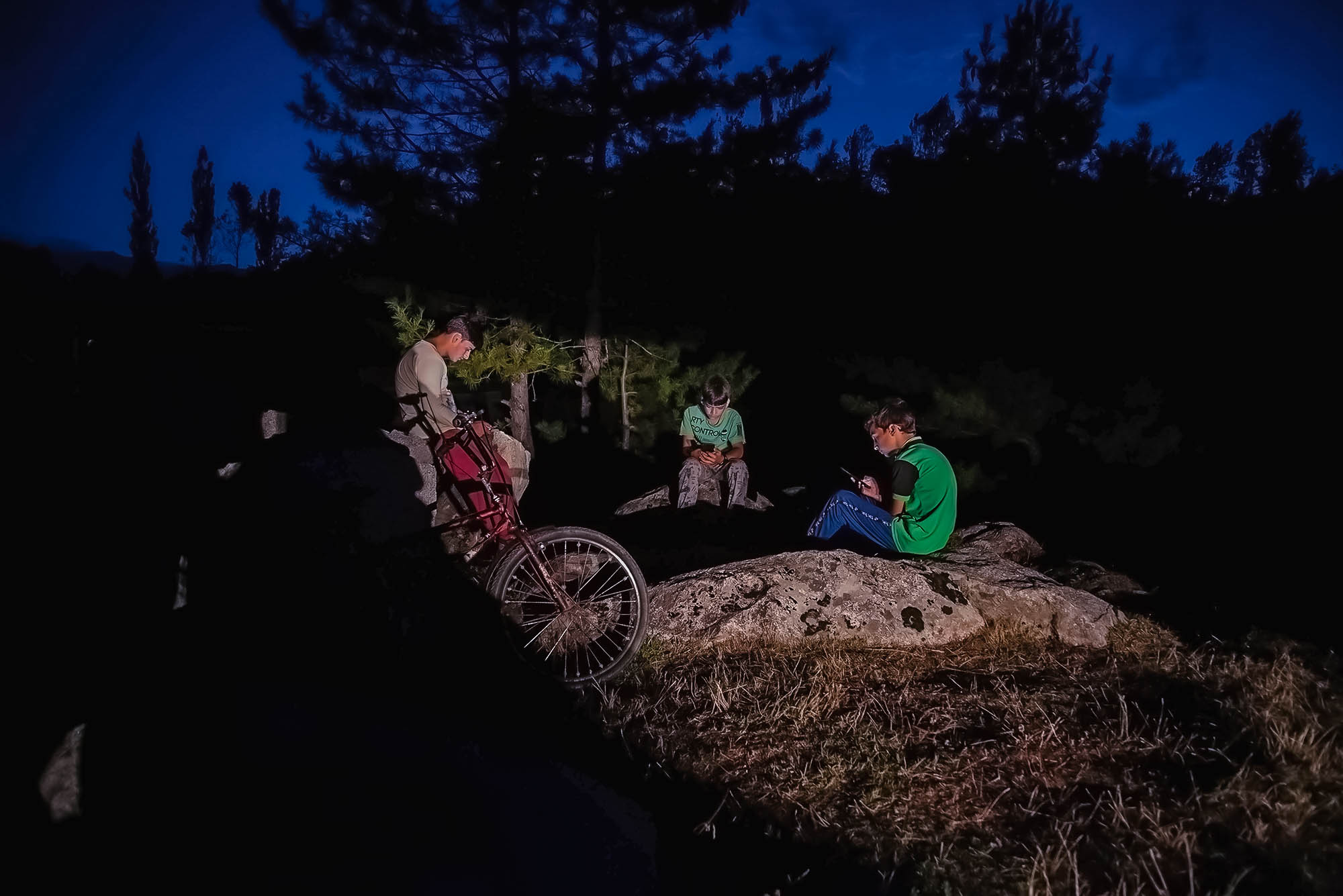
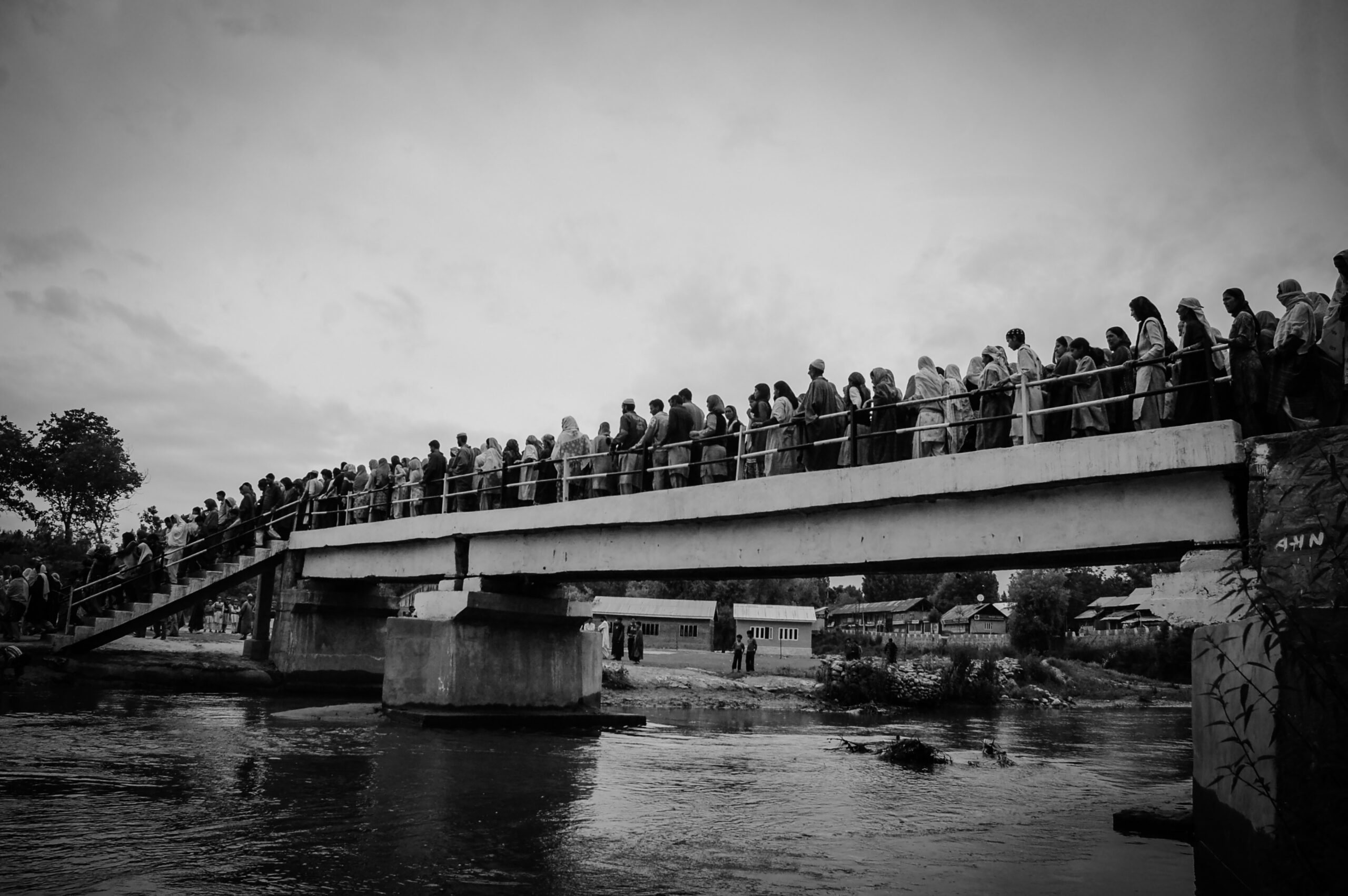
Youmna M. Chamieh: This gets to the question of what time itself becomes in landscapes of violence—the way recurring trauma can produce uncanny temporalities and sidelong worlds, more surreal than any fiction. In your photographs, it often feels as though you are in dialogue as much with your younger self as with the children now inhabiting the same spaces you once did. Bursts of color live alongside haunting black-and-white, but both feel at once timeless and devastatingly actual. Could you tell me more about those two visual realms and the different ways they hold time?
Showkat Nanda: After my brother died, I began spending a lot of time in the martyrs’ graveyard near our neighborhood. As children, we already played there because there was no real playground for us; we made cricket pitches between the graves, beside the prayer ground nearby. Before that, I had naturally been very scared of death. Whenever a funeral passed through our street, we would turn our faces away because we believed children should never look at a coffin or they would have nightmares. But once the insurgency began and people started dying around us, death slowly became more familiar. Alongside fear came this idea of martyrdom that I had first encountered through my mother and Quran teachers. Suddenly death no longer felt like a complete disappearance. The graveyard took on an intimate, almost comforting quality; it became a place where I could connect to my brother.
I think that place shaped the way I understand time even now. In Kashmir, the past never feels fully past. Every photograph I make, even of a cloud or an apple tree, somehow carries that early graveyard inside it. When I photograph children today in the same spaces where I once stood, it feels like encountering echoes of myself moving through another cycle of history.
In that sense, while most of my work for newspapers and international outlets is in color, which feels like the language of the present, my personal projects almost always move into black-and-white. In Kashmir, certain histories keep returning in different forms, and black-and-white helps me see that continuity more clearly. Yet it does so without flattening the specificity of each cycle of violence: the particular date, order, or decision behind it. I sometimes think of it like this: color is like a calendar, it tells you exactly when something is; black and white is more like a clock, it shows you the patterns, rhythms, repetitions that continue stirring underneath.
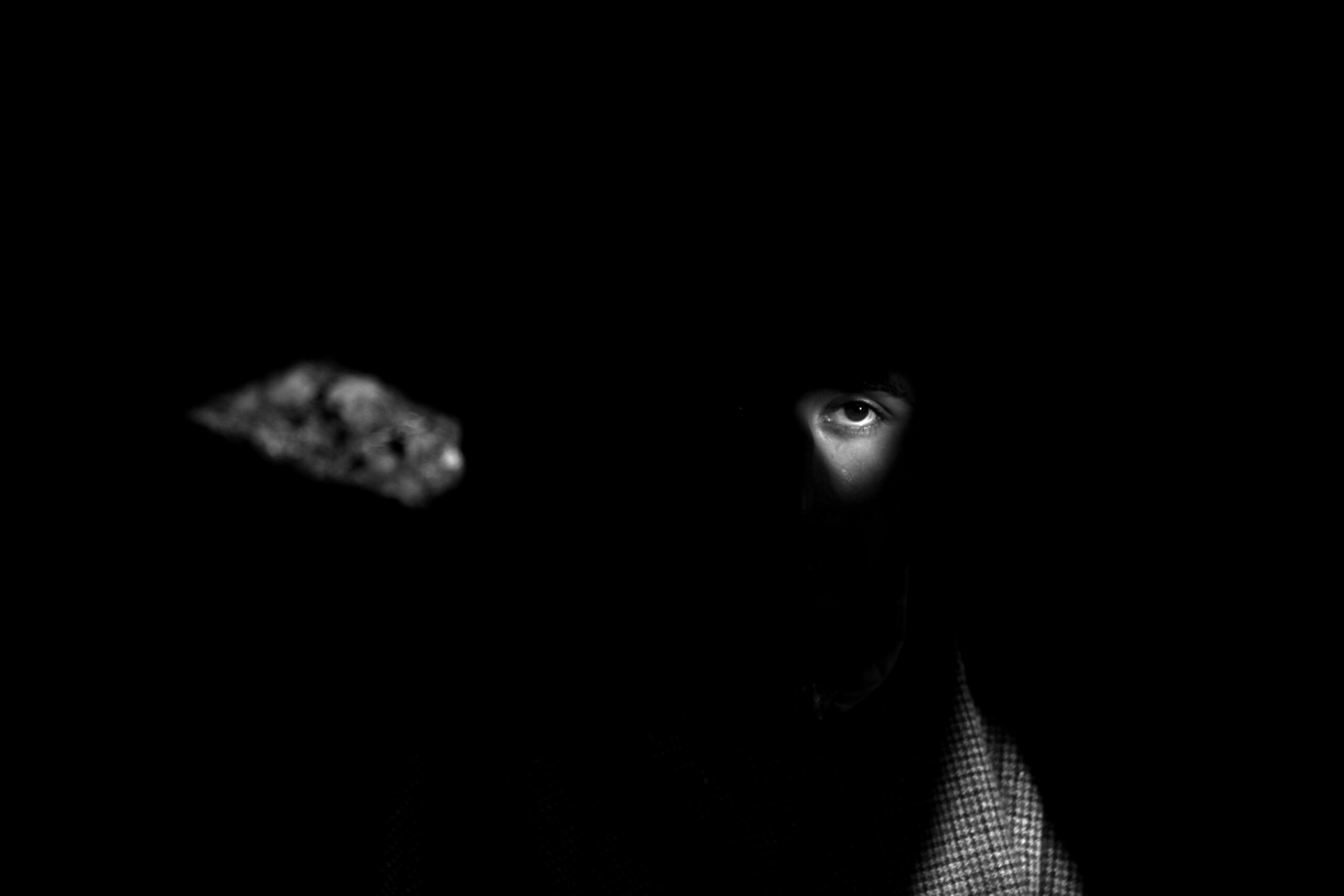
The reality is that when I look through my viewfinder at a child today, I don’t feel like a witness returning from the outside. I feel like I am standing inside a recurring dream. I don’t believe objective distance is possible when you are documenting your own home. I once wrote somewhere that “it’s hard to be neutral when your kitchen turns into a battlefield.” In that sense, my memories guide my ethics as much as my aesthetics. There is an image in my archive of a young boy evading arrest whose face disappears completely into shadow. That was not simply an aesthetic choice; it was protection. In a conflict zone, a clear face in a photograph can become a death warrant or a reason for a raid.
When, today, any of the many children I’ve photographed, now grown up, come up to me and greet me with a humble hug and a brotherly warmth, calling me Showkat Bhaya—the big brother—it is the ultimate affirmation of the journey from the graveyard of my childhood to the children now standing before my camera. It reminds me that my work isn’t just an archive of “unrest”; it is a family album of a people who have survived.

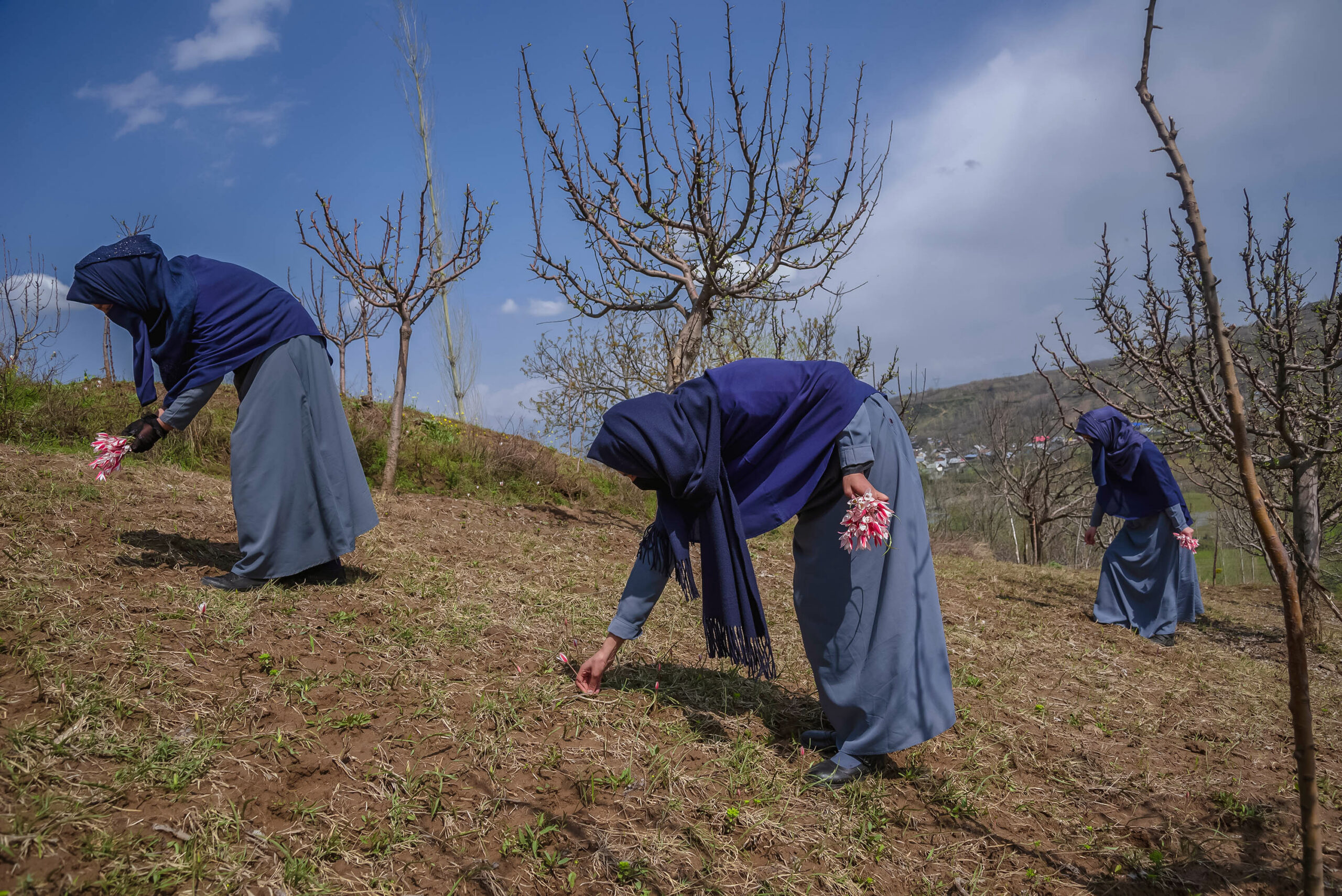
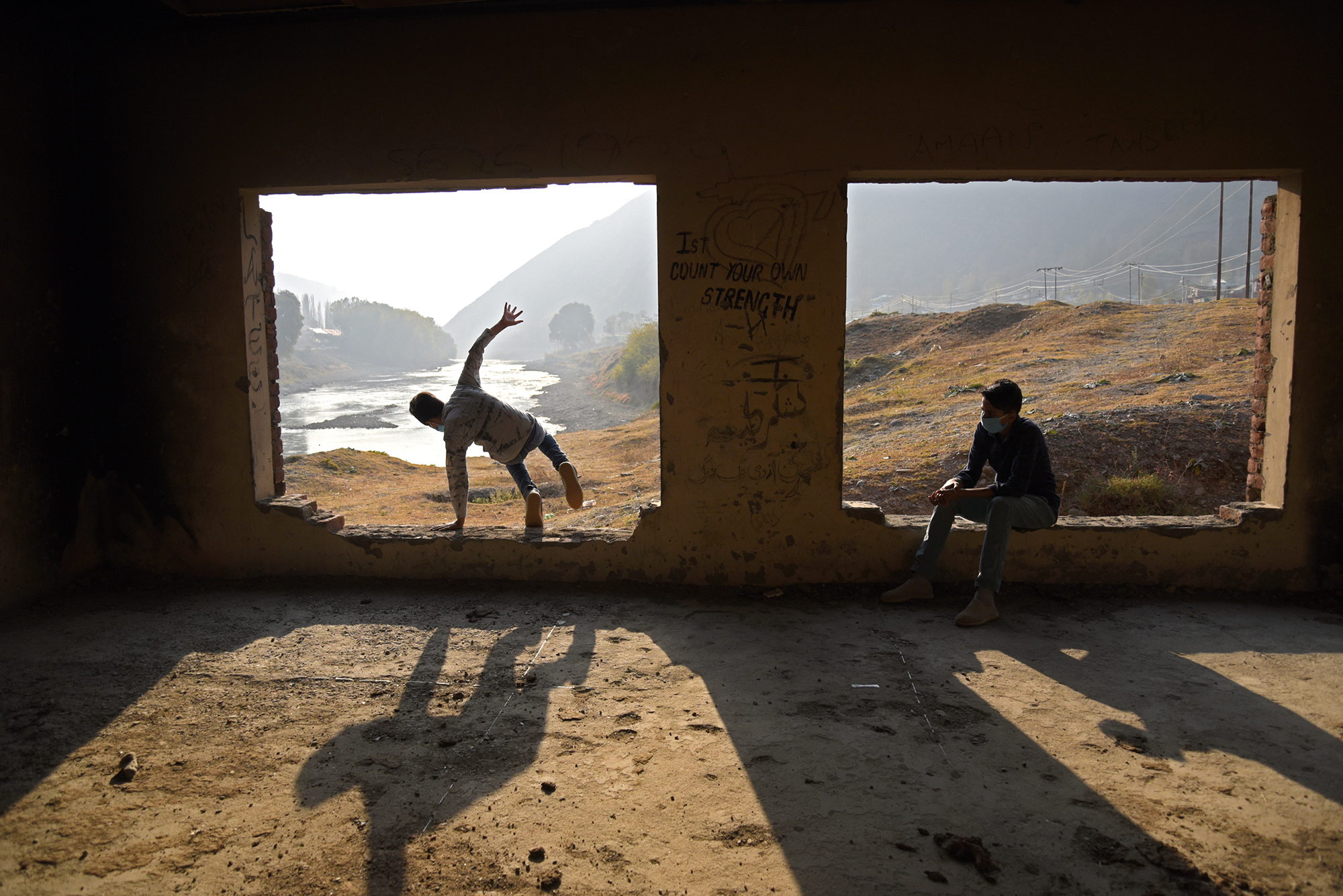
Youmna M. Chamieh: In one incredibly delicate yet gorgeously playful series, titled “The Breath of the Wild Tulip,” you photograph eleven girls—best friends since childhood—reuniting during the brief interval between two COVID lockdowns. They are gathering wild tulips in an orchard, just before being separated once again. Why the “breath” of the wild tulip?
Showkat Nanda: The series emerged from a larger preoccupation in my work with the emotional lives of Kashmiri children growing up in the shadow of conflict. These eleven girls had been together since they were toddlers, so for them the pandemic felt like another layer of separation added onto lives already shaped by lockdowns, curfews, and restricted movement. When the first wave eased, they were reunited for only a very short time before another struck. During those days, I followed them to a small hill where they began gathering wild tulips. Something about that moment stayed with me.
In Kashmir, the tulip is not an innocent symbol. We have one of the largest tulip gardens in Srinagar, and it is undeniably beautiful, but tourism here has often been used politically, as proof that everything is “normal” again. That narrative is part of a much longer neo-colonial gaze through which Kashmir has historically been represented: as a beautiful, exotic landscape emptied of its people. The Kashmiri people themselves are often strikingly absent from the image. So when I saw these girls gathering wild tulips—not cultivated ones from the official garden, but indigenous, freely growing tulips—it felt emotionally important. I remember thinking, “Oh, this is our tulip garden.” It felt like reclaiming the flower from its momentary capture.
The word “breath” came to me in opposition to that sense of suffocation. The girls’ movements, their joy, the way they seemed to breathe through the landscape, slowly guided me toward a more poetic and dreamlike space in my practice. I was no longer just looking at the “now”; I was looking at the “ever.” The “Breath” of that tulip represents the survival of a spirit that refuses to be defined only by its wounds or its restrictions. It is about the interior worlds we build when the exterior world is closed off. It is the quiet, persistent pulse of life that continues to beat, stubbornly and beautifully, in the heart of a child—even in the middle of a war.
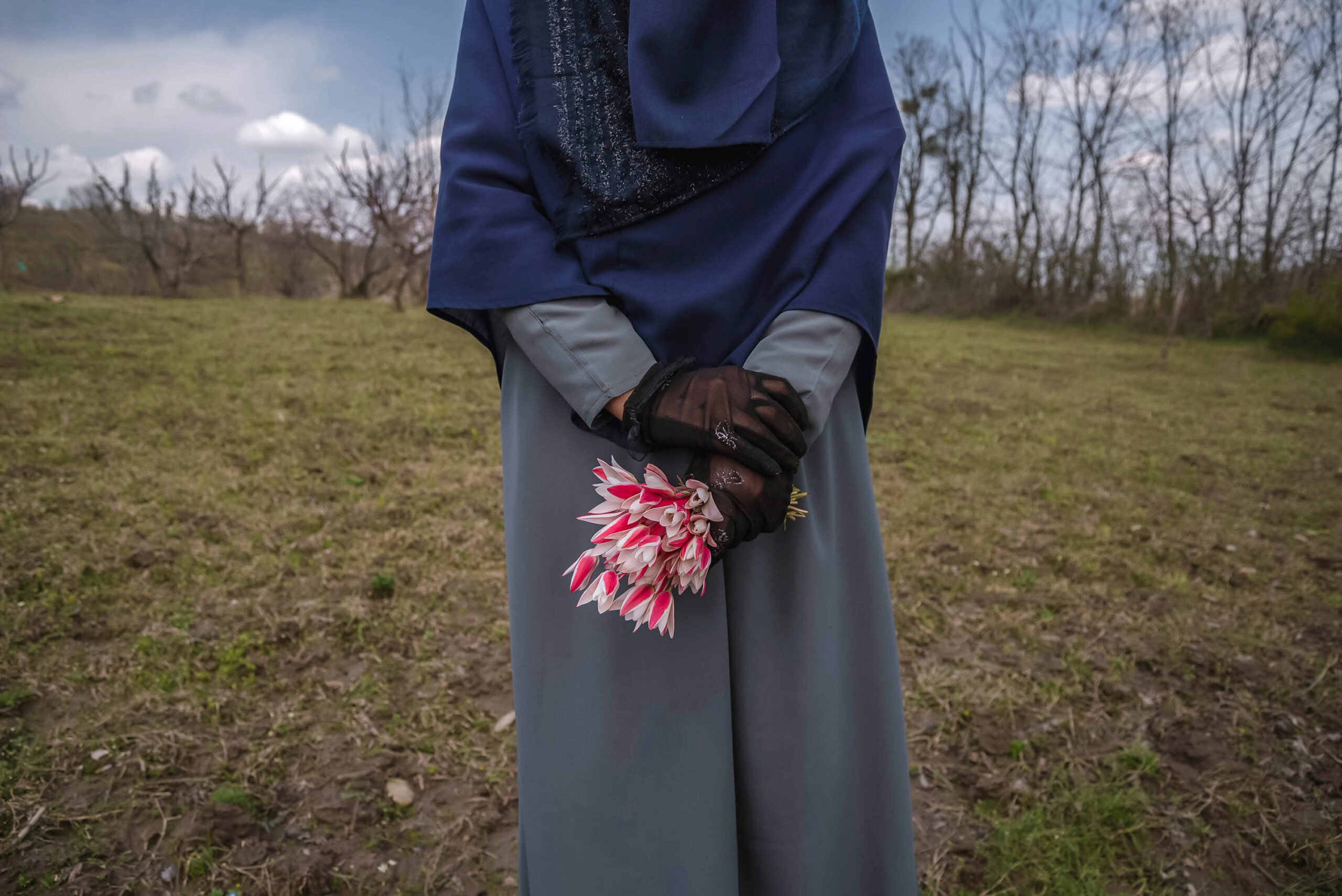
Youmna M. Chamieh: Images like these become all the more bittersweet alongside archival traces like the one you once shared with me, from the family albums project: the young women who, out of fear of sexual violence, deliberately cut their own faces out of family photographs. Some families were left with these mutilated images; others with empty albums, waiting for a return that never came. What was your process of working with these families, of returning with them to memories kept so long underground?
Showkat Nanda: As albums became dangerous objects in the 1990s, people buried them wherever they could: in orchards, graveyards, hollow streams, abandoned places. In November, I was able to witness people digging up these images, hidden twenty or twenty-five years earlier. One man took me from house to house near the Line of Control with the names of dead people written across his hand, because he wanted to make sure we visited every family. From the hills there, you could see the mountains across the border. Many young men lost their lives in these mountains; looking out, I felt intensely the closeness between me and what I was documenting.
I remember one evening during this project, a friend called me after work and said he wanted to take me up to his apple orchard in the hills. When we got there, he started digging into the ground in front of me. I was photographing the whole time as he slowly pulled out photographs that had been buried there for decades. It was a strange moment. I realised I was no longer just an observer. I had asked people to return to these buried pieces of their pasts; so I was part of that act. Maybe that was also why I always wanted to bring these albums back—not just my own family’s, but the thousands that were lost during that time. The scars on the photographs became a way of speaking about wounds otherwise very difficult to name.
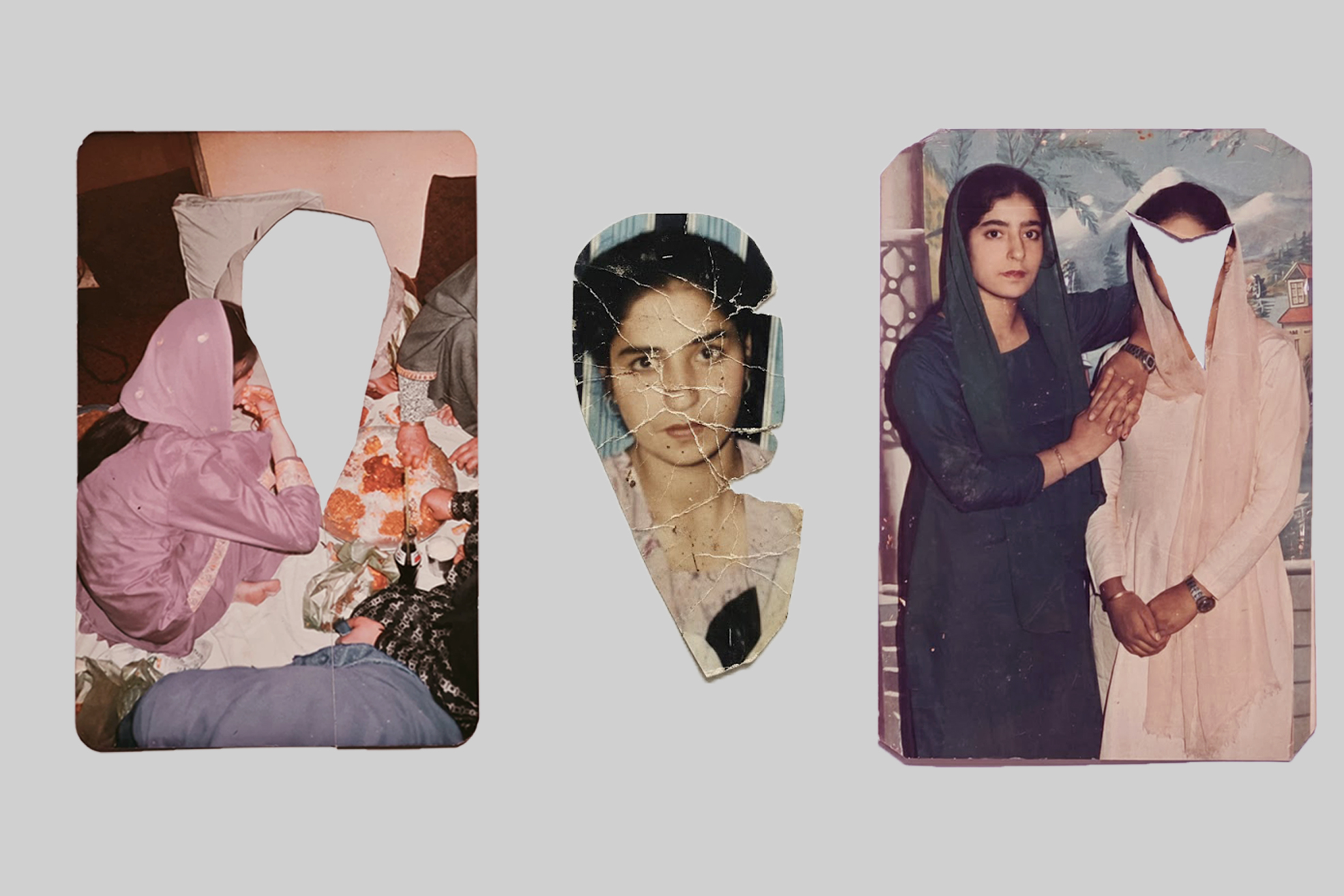
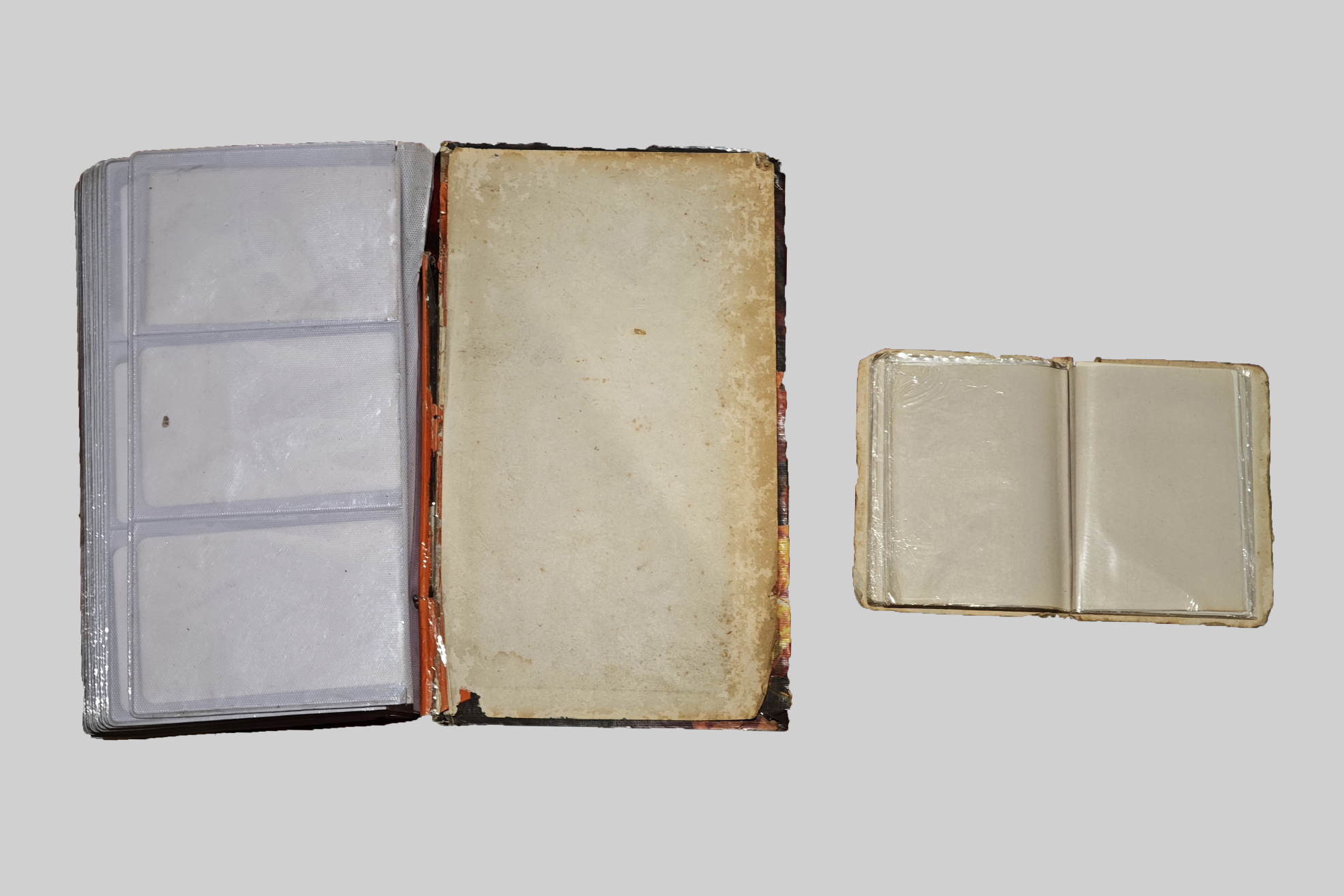

Youmna M. Chamieh: You’ve spoken about wanting to trace the journey of these photographs—their taking, hiding, retrieval, the marks left on them by time and fear. There’s something strangely liberating in that gesture, as though by reading the damage in a physical object the pain might become momentarily more legible. When you work with these damaged or buried objects, how does their sensory dimension come into play? Does looking at a photograph’s wounds open a kind of softer aperture for talking about the harm done to human lives, human bodies?
Showkat Nanda: When I hold a buried photograph, it almost feels like I’m holding a piece of skin. The sensory part of it is everything: the soil still stuck to the edges, the way the colors have shifted and bled into each other over time. You called them “wounds,” and that’s exactly what they feel like. In Kashmir, when families bury photographs, it comes from fear. And when you see them again, battered like that after twenty years, the damage still carries that original fear within it.
But what moves me equally is that some of the photographs resisted. In many cases, the plastic wrapping protected them; the damage happened, but they survived it. I think that is why they feel so deeply connected to the people of Kashmir themselves: subjected to continual erasure, and yet still resisting. One of the things we recovered was a strip of film, hidden in haste. Upon retrieving it all these years later, the film could no longer straighten; it curled like a strand of DNA. And indeed I began thinking of it as a kind of DNA of memory—because from that strip, in its new form, it was still possible to create new photographs, new life within the archive. That is why I feel this project has not ended but actually just begun. The archive is still growing through recovery, through return, through continued engagement with these materials.

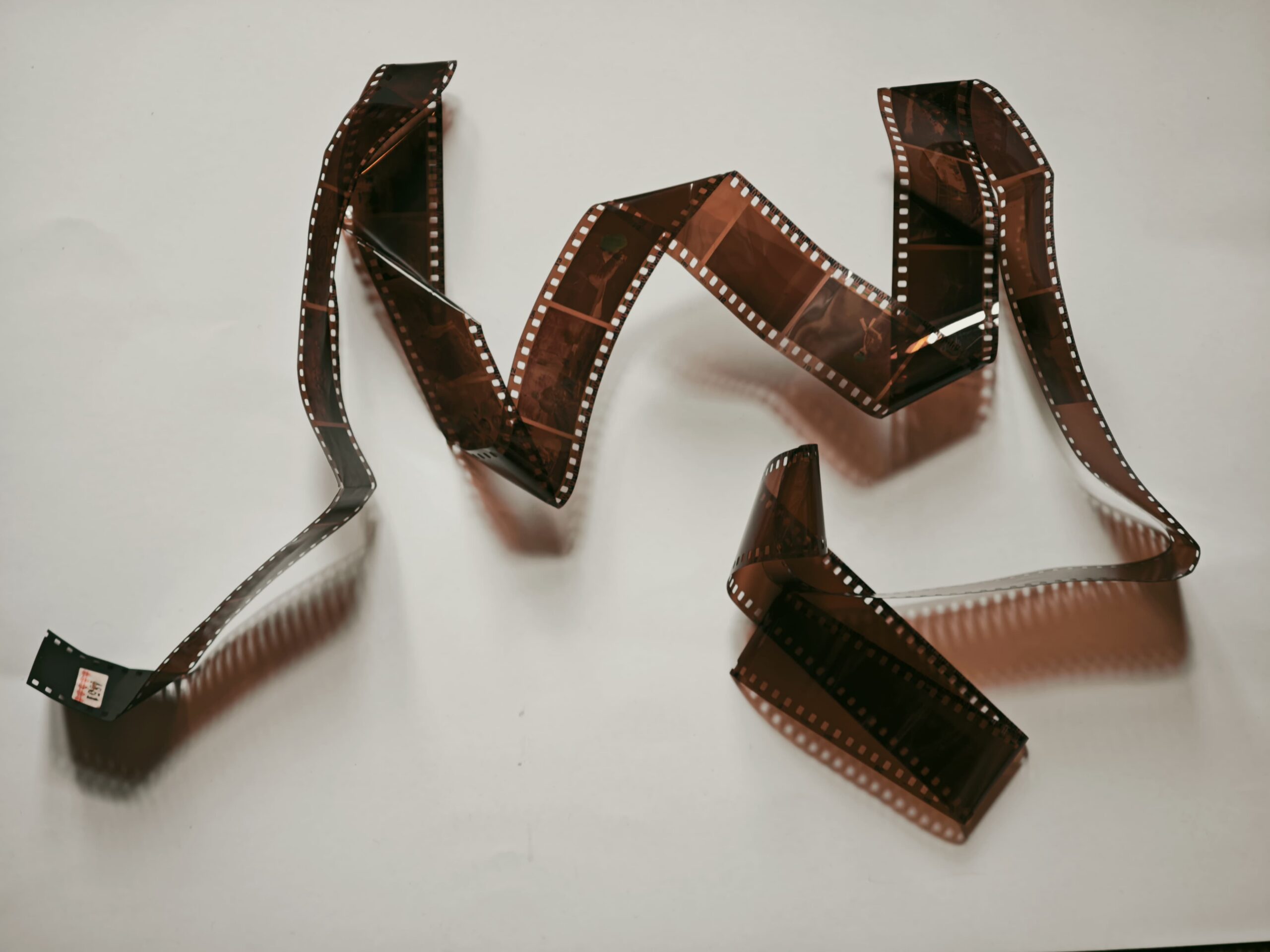
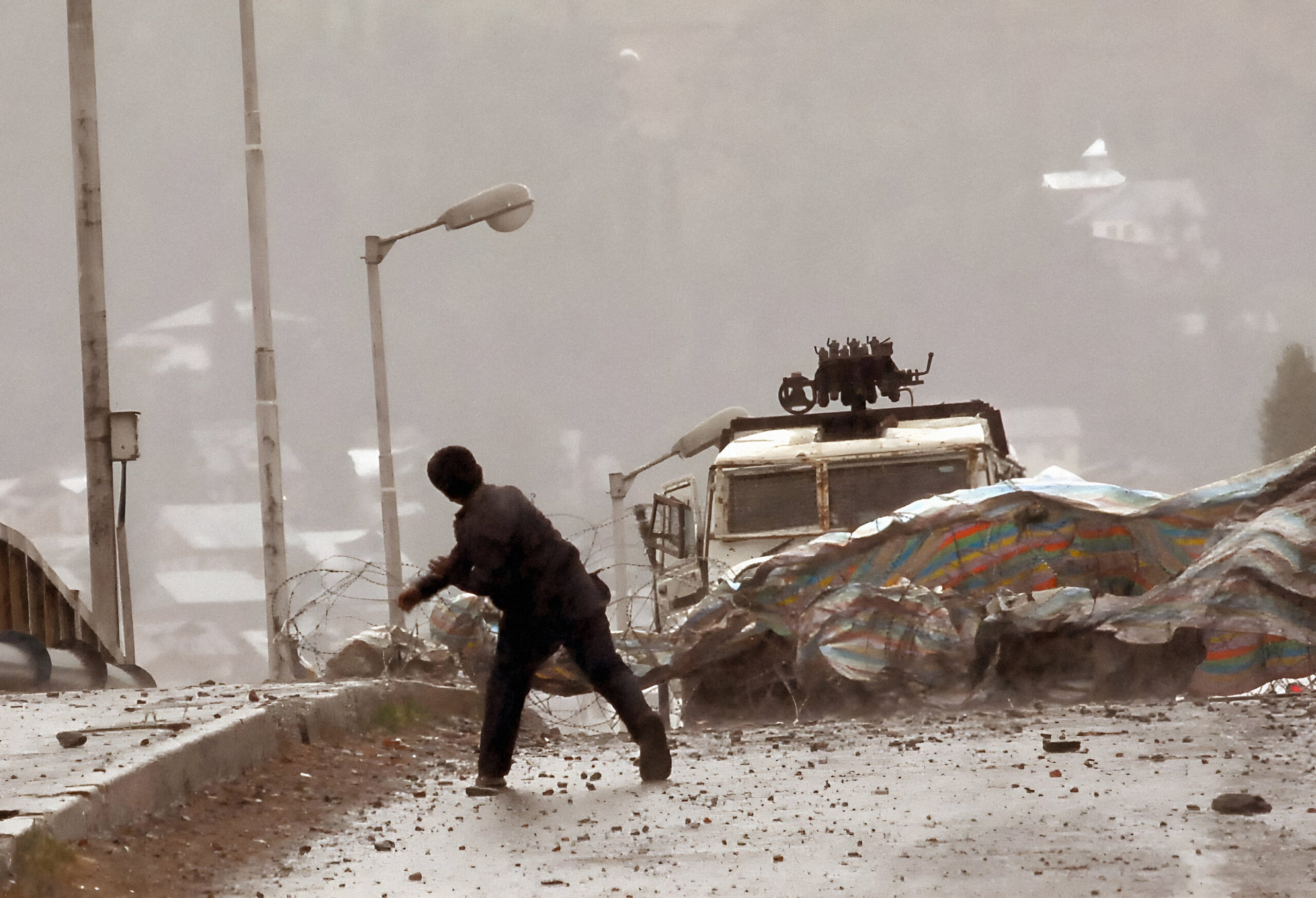
Youmna M. Chamieh: Your use of the metaphor of DNA reminds me of one of the less immediately visible dimensions of your practice, which is language. The associative life of words can restore an image to meanings beyond its visible frame. In 2009, for instance, you photographed a young Kashmiri boy throwing stones at an armored vehicle moments after his classmate was shot, writing of the other boy: “I did not know him or his name. But before he was taken away, he was able to rest in peace in my arms for a moment.” You then turn that word, “peace,” back onto the empty rhetoric of peace and normalcy so often applied to Kashmir even as it continues being subjected to violence. Can you tell me more about how captions, textual annotations, and first-person narratives work to deepen your photographs’ connection with their emotional and political context?
Showkat Nanda: I have felt the urge to write the context of every single photo I’ve ever taken. In 2009, for example, two young boys were killed near an army camp. A few months later, I went back there and found a huge open field beside the ruins of the bunker, with young boys playing soccer. There were exactly eleven players, and one very small boy standing near the ball making a victory sign. For me, it was one of the most optimistic photographs I have ever taken, because after twenty years the army camp had finally been vacated. But without the context, you cannot understand the emotional weight of the image. It just looks like children playing soccer.
When, that same year, in 2009, I photographed that lone boy throwing stones at the armored vehicle, the world saw a “pearl” of a certain kind. Depending on who held the string, he was a rebel, a criminal, or a symbol of mindless unrest. Those are the “ready-made necklaces” the media and other custodians of public narrative have waiting in their drawers. They are eager to slot his image into a story that has already been written.
But I was the only one there who held the actual thread: namely, that moments before I’d pressed the shutter, that boy’s classmate had been killed by the forces in that vehicle. The boy wasn’t just “throwing stones”; he was reacting to the sudden, violent emptying of the desk next to him. That is the thread. Without it, the photograph is just a beautiful, gritty “pearl” of conflict. With it, the image becomes a heavy burden. This is where the “burden of journalism” hangs around my neck. The value of the story isn’t for the editors in distant cities or for the archives of history books. The value is for the boy in the frame. By providing the thread, I am refusing to let his grief be hijacked. I am insisting that his anger has a genealogy: a beginning, a middle, and a tragic cause.
When people come with their “preconceived stories,” they are trying to steal the pearls and throw away the thread. My job is to knot them so tightly together that they cannot be separated. If earlier I described the thread as “one-dollar,” it is because it is humble and often invisible; but in fact, it is the only thing that keeps the truth from scattering into the dark. By doing this, I am not just connecting photographs, but protecting the “why” behind a human life. To me, that is what justifies the act of taking the picture in the first place.
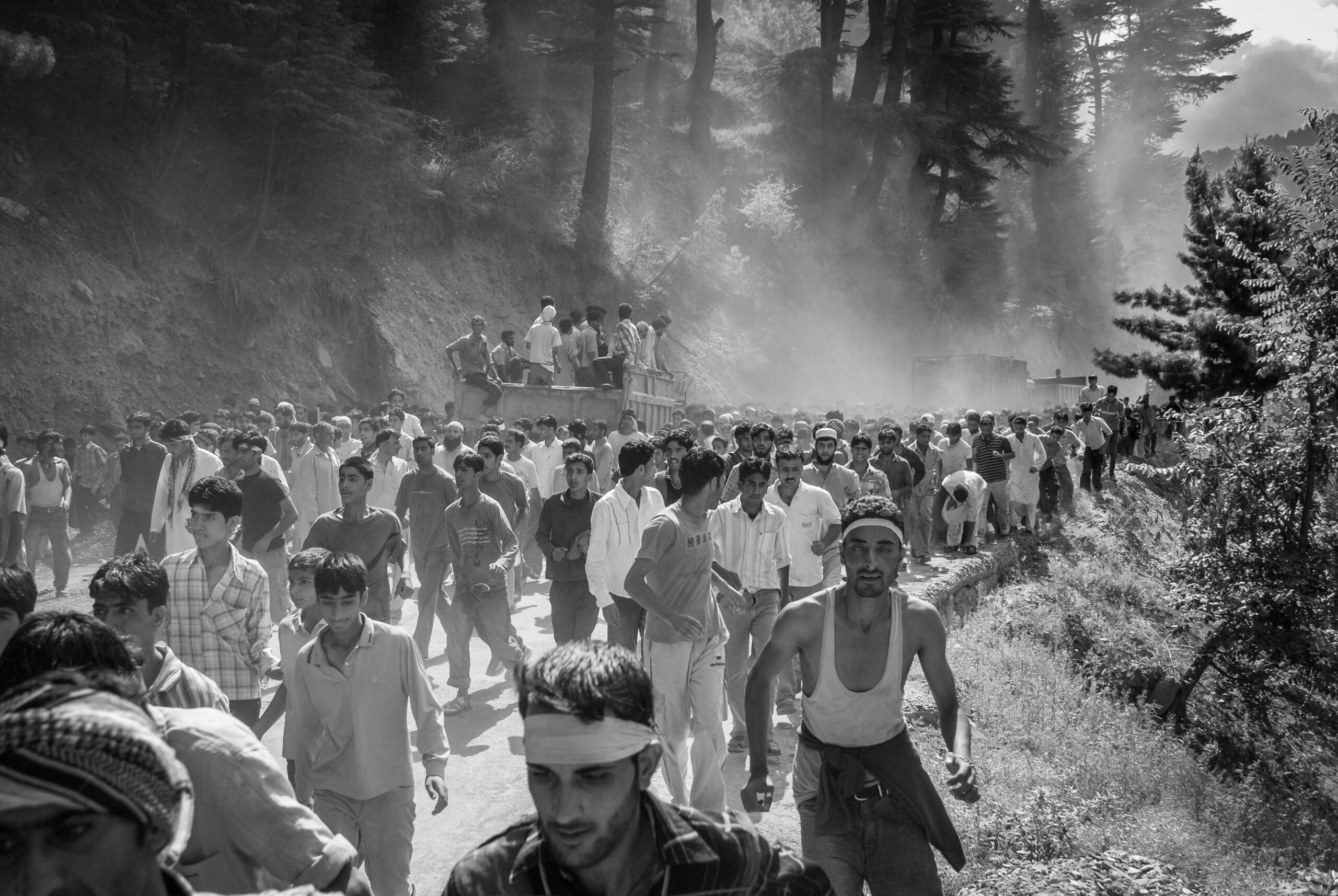
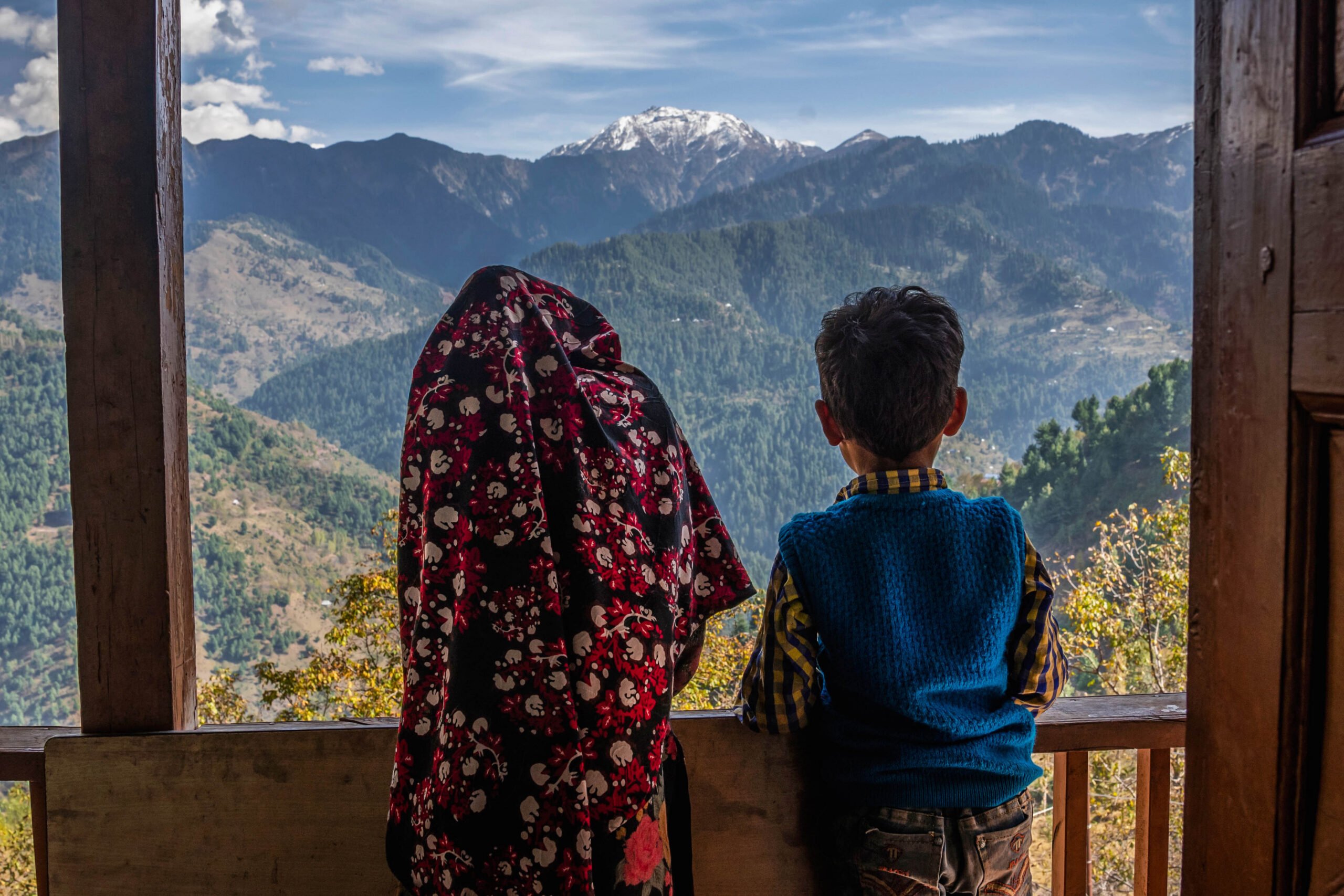
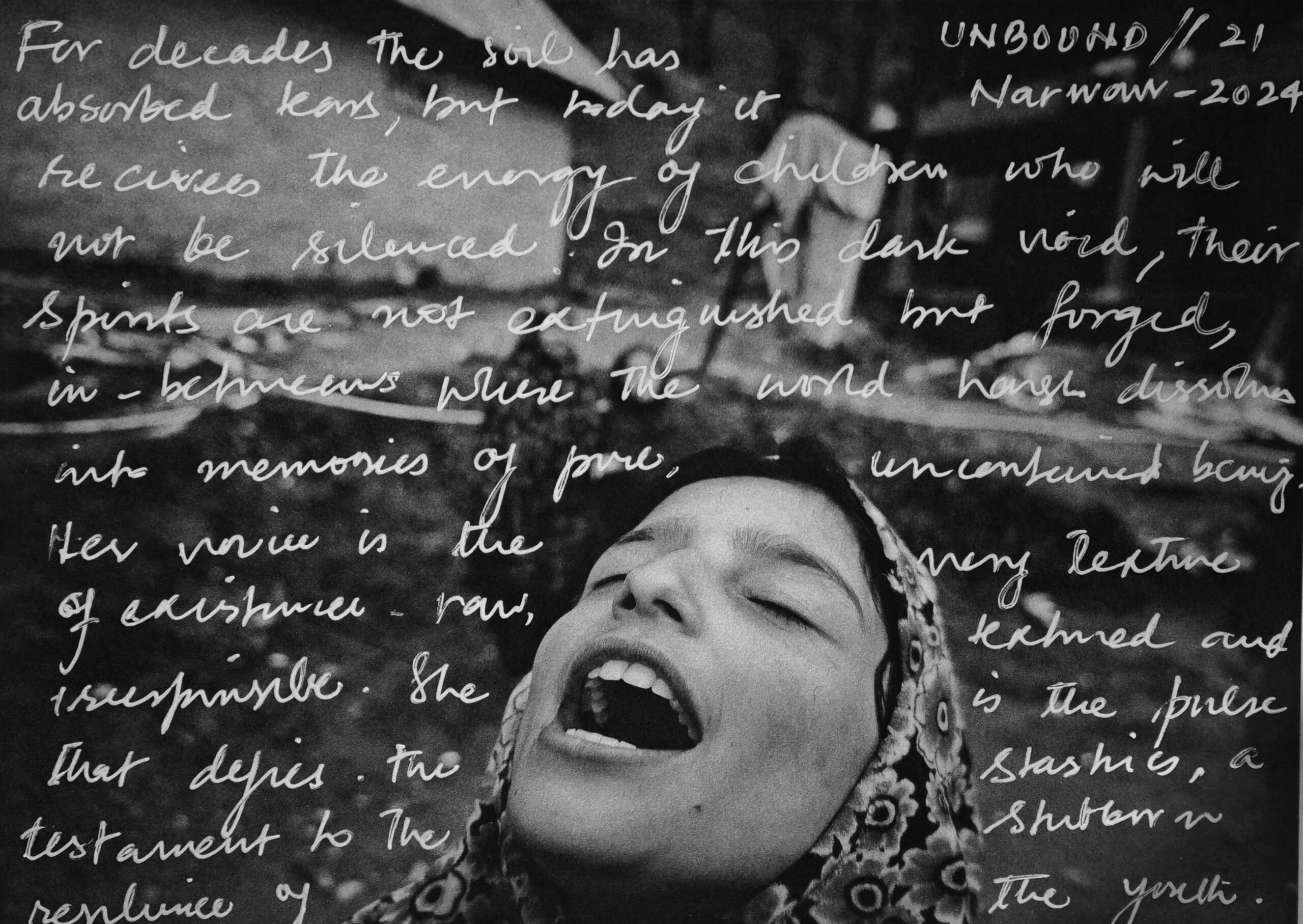
Youmna M. Chamieh: The urge not to uproot the image from its context has recently become even more acute in your work. You’ve begun using the negative space within the photographs themselves to write in white ink around the image. How did they occur to you, these counter-captions that refuse the margins?
Showkat Nanda: When people look at photographs, many never read the caption. And even when they do, a caption often contains only a hard fact about the photo. I wanted to use the negative space inside the image itself to register the emotional and human context that only I, as the photographer, carry from that moment. I began writing on the surface of the photograph because I didn’t want the viewer to escape this text.
The idea partly came from my student days, when I used to scribble with a white pen across my journals and photographs. Later, because so much of my work took the form of dark black-and-white images with large shadowed spaces, I began to feel those spaces could hold something more.
The texts are written in the first person because I want people to enter the moment as I experienced it. There have been times when I have cried while photographing families after hearing their stories, but none of that ever appears in a conventional caption. You’ll write two, three lines, and no mention of the crying. But I want to tell people that I cried when I took that picture. I want to narrate the situation that made me cry. And maybe that will make them cry too. If I can communicate what I felt when making the photograph—if that feeling reaches another person—then communication has actually happened.
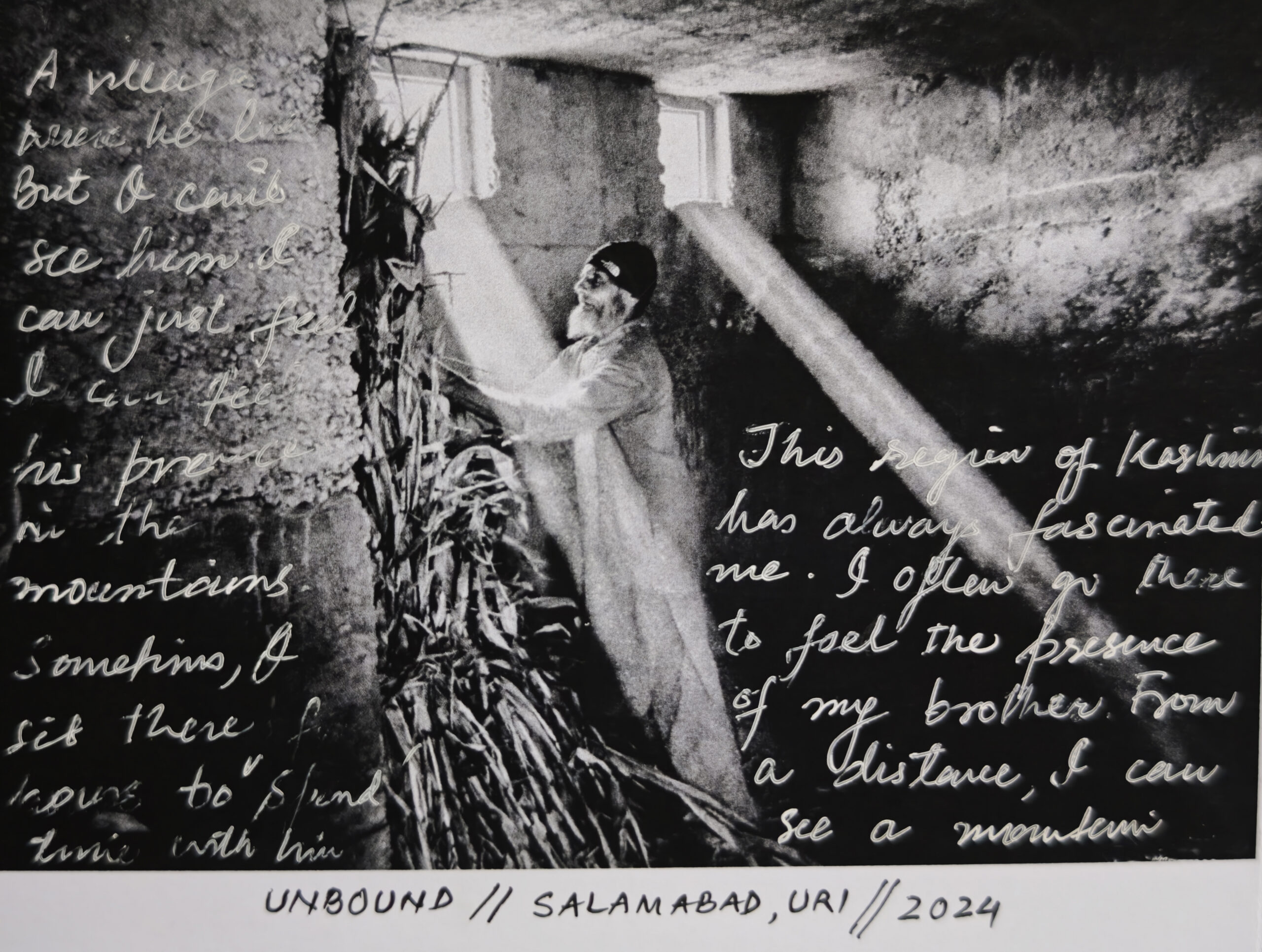
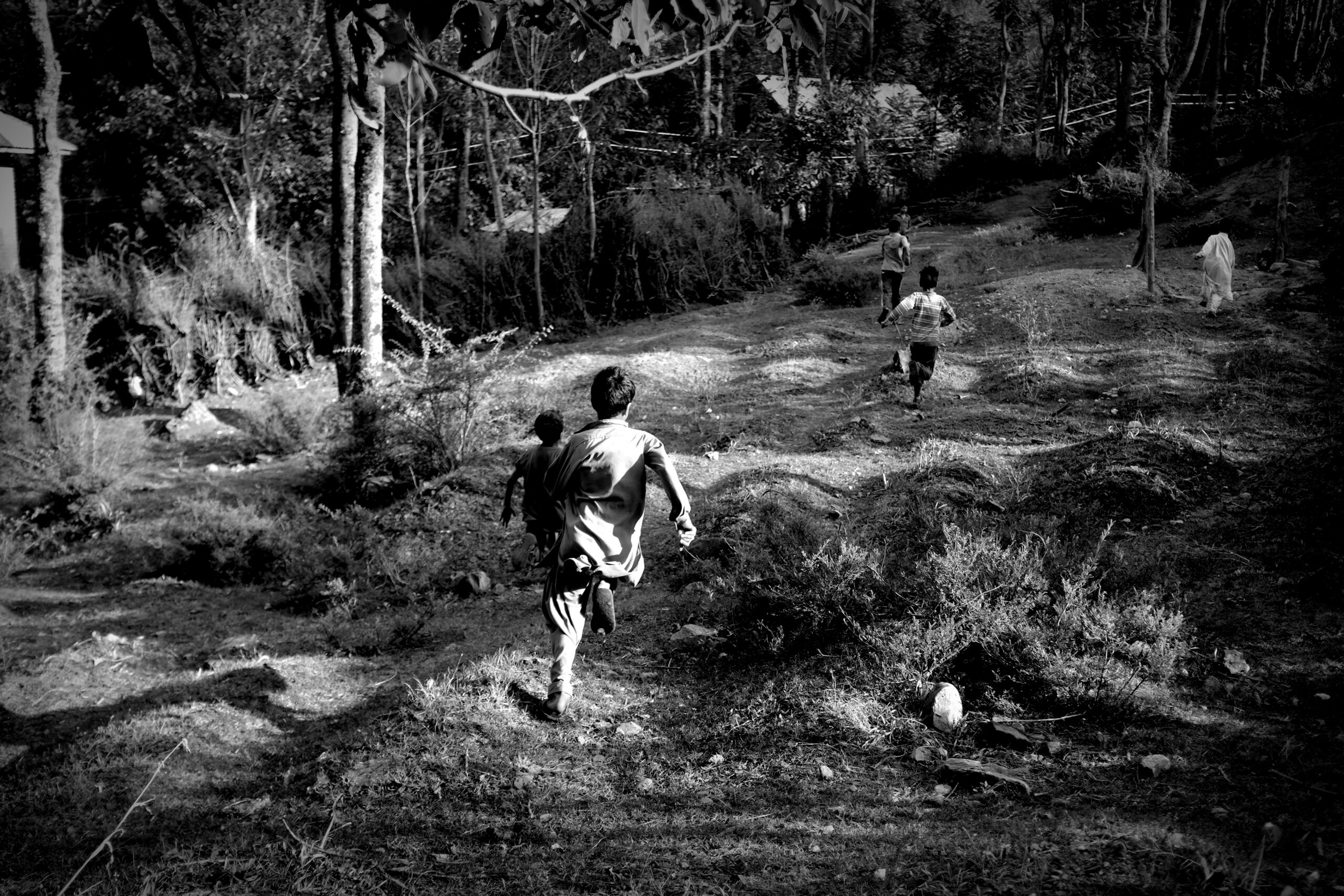
Youmna M. Chamieh: Negative space, in your work, exists not only around the subject within the photograph, but around the photograph itself. The image we opened with was one of children playing near a graveyard in Kitchama village, one of Kashmir’s largest known unmarked gravesites. It’s an image that holds several realities at once: burial ground, childhood landscape, political wound, ordinary place of play. The other graveyard you mentioned earlier, where you yourself spent so much time as a child—was it a kind of point zero in your sensibility?
Showkat Nanda: That graveyard was my first intimate experience of conflict beyond the loudness of bombs or protests. In many ways, it is my starting point as a photographer. One particular thing I am still waiting to do is a dreamy project, anchored, visually and emotionally, in that specific spot. For me, photography did not begin with journalism. It began in childhood; and abstract, dreamlike images of those years will still sometimes come into my mind. The color of my house, for instance: a very particular green that I sometimes encounter again in Alex Webb’s work, which might be why I always want to spend more time with it. But for many years I could not find the approach through which to translate my dreams and nightmares.
Then, a few years ago, I accidentally broke a thick glass bottle. I noticed that the bottom of the bottle distorted whatever was behind it, and I started placing that piece of glass in front of my phone camera. I went back to the same graveyard where I spent much of my childhood, and began taking pictures through it. Suddenly, the images came closer to what I had been carrying in my mind all these years. They were blurry, distorted, unclear—exactly the way memory feels to me. For I was not trying to photograph any particular object. I was trying to photograph a feeling.
The images are all black-and-white and very dark because those years felt dark to me, both literally and emotionally. In my memories, there is never bright sunlight. I remember heavy clouds, dim evenings, the faint light just after sunset. I remember a neighbor trying to dislodge my kite from an electric pole with a stone, only for the stone to strike his head instead. He still carries the scar to this day. Most of these memories seem to happen around six-thirty or seven in the evening. That atmosphere—the gloom, the softness, the uncertainty—is part of the place itself.
In the end, photography is always about feeling. It is not really about technicalities. It is about how you feel when you make the picture.
Youmna M. Chamieh: “How you feel when you take the picture”: this makes me think of a photograph that, in some ways, stands apart within your body of work. On January 23, 2008, you photographed something astonishing in Baramulla: clouds drifting into the unmistakable shape of the word Allah in Arabic. The sight felt so improbable that you deliberately preserved the original straight-out-of-camera RAW files as proof that it was real and could withstand any forensic scrutiny. It’s an image that caused me much emotion upon seeing it for the first time—as much for the cloud itself, perhaps, as for the human finger pointing so instinctively towards it. As someone whose work is so often anchored in the realities of the ground of your community in Kashmir—its histories, its losses and hopes—do you ever still find yourself, almost two decades after this strange rupture in the ordinary, searching the sky for what eludes us down below?

Showkat Nanda: That day is still very clear to me. I was outside in the lawn, just playing with my six-year-old niece, nothing unusual, when I noticed the clouds forming a pattern. At first it simply felt beautiful, but then slowly I realized it was shaping into the word “Allah” in Arabic. Formed in such a neat and clean way, as if it was made by an artist. It caught me off guard. I felt a mix of shock, excitement, and something deeper that’s hard to put into words.
I remember running inside to grab my camera, calling out to my parents in a way that made them think something was wrong. They rushed out, and when they looked up, they just stood there saying “Subhanallah, Subhanallah” again and again. There was a kind of stillness in that moment. The photograph carries that feeling for me. My father’s hand pointing to the sky almost says everything that needed to be said.
I’ve been religious since I was a child, though like anyone, I’ve had my inconsistencies. But my relationship with God had never been only about prayer or ritual. It also lies in these moments where you feel suddenly aware of something greater than yourself. As if, for a brief moment, the distance between you and God has become smaller.
Living and working in Kashmir, where so much is uncertain and heavy, that sense of faith becomes something you hold onto. Not just belief in God, but a way of continuing, of finding meaning when things don’t make sense. I think my work comes from that space. I’m often photographing very grounded realities—loss, memory, everyday life—but beneath them is also a search for something beyond the visible. Even when my camera is turned toward the ground, part of me is still looking upward, not necessarily for answers, but for some sense of presence.
For me, faith is that instinct: the need to keep looking toward God, even when everything around you feels unresolved.