I was recently invited to the Sydney Writers’ Festival where I had the chance to speak with many writers from around the world, some of them Guernica friends and contributors. Most of our conversations — around language, literature, and the state of the world — circled back to a communal sense of incredulity: how did things get so bad?
At Guernica, we often find ourselves looking beyond the news cycles emerging from our imperiled world, but this month we are especially drawn to the moments before the world spiraled into the brutal shape it now wears. In that spirit, the pieces gathered in our June issue examine the slow accumulation of pressures that make collapse, when it arrives, seem inevitable. The works selected here dust away the scrim of the aftermath to look at the before: the compounding assaults that exhaust a mind, a people, a world; the histories that reveal how aftermath is often only the before, accumulated and made visible.
In the latest installment of our Interviews series, Posthumanitarian, After Hunger: In Conversation with Sean Sherman, Russell Reed speaks with Sherman about Indigenous foodways, survival, and (r)evolution. The conversation is an in-depth look toward a precolonial world as a living force that continues to shape our present. Here, the before takes on the many forms of knowledge, relation, and nourishment that colonial rupture tried, and failed, to erase.
In fiction, Ali Hosseini’s The Sweet Smell of Money, begins with a comic irritation that slowly reveals the many pressures bubbling just beneath the surface of a domestic life — anxiety about money, immigrant wariness before authority, and the humiliations of trying to keep a household intact in the wake of financial collapse. By the story’s end, through the quiet accumulation of need, the line between innocence and transgression has already begun to blur. In Young Lad, by Jamie Guiney, pressures gather in a single brutal summer day: heat bearing down on a house, the oxygen hissing from a sickroom, the empty fridge, the boy, just turned sixteen, sent out to look for work. What first reads like a story of adolescent frustration slowly reveals the long layering of poverty, illness, and care that has made the home almost unlivable.
In Kulsoom Ijaz’s nonfiction piece On Loving Birds, the sediment of before gathers in wings, feathers, scripture, illness, and the small practices of care and kinship that teach the narrator how to live again. John Wall Barger’s The Gateless Gateless Gate of the Poem, moves through Zen, Huineng, Keats, Twichell, Lorca, and Antonioni, and asks what art can teach us by unsettling the stubbornness of literal understanding. Here, the prior becomes perceptual, a liminal space where certainty falls away, and what returns does so, as Barthes writes, “at another turn of the spiral.”
This month’s Spotlights, Intentionally Left Blank (Sin Título), by Joonhee Myung, progresses through a sensory archive of hair salons, earthquakes, cacerolazos, kimchi and marraqueta, and the long shadow of migration that stretches across Seoul’s asphalt veins and the Andes’ high altitudes. Originally published in the Indonesia-based magazine Culterate, the hybrid piece culminates in the impossible image of a rootless tree that captures the paradox at the heart of diasporic life: to be uprooted and still be growing.
Finally, in poetry, Origin Story for Tattoos and Origin Story for War, by Sarah Brockhaus, trace a double archaeology of violence and survival, and explore how the body, even when marked by ash, blood, and war, keeps trying to find an exit for the release of amassed griefs. In “Ṣẹ̀kẹ̀rẹ̀” by Hussain Ahmed, grief is not performed but insured, buried, and returned to in dreams, where song remembers what the waking world has tried to cover in dust. In Old Darkness / Under a New Moon and Still Life with Peach, by Ben Cooper, there is a painstaking sifting through of the moments leading up to violation. The two poems refuse to let violence appear as abstraction. Against that brutality, the poems hold open the smallest counterforce: the wish to begin again, even from inside the seed of what has been broken.
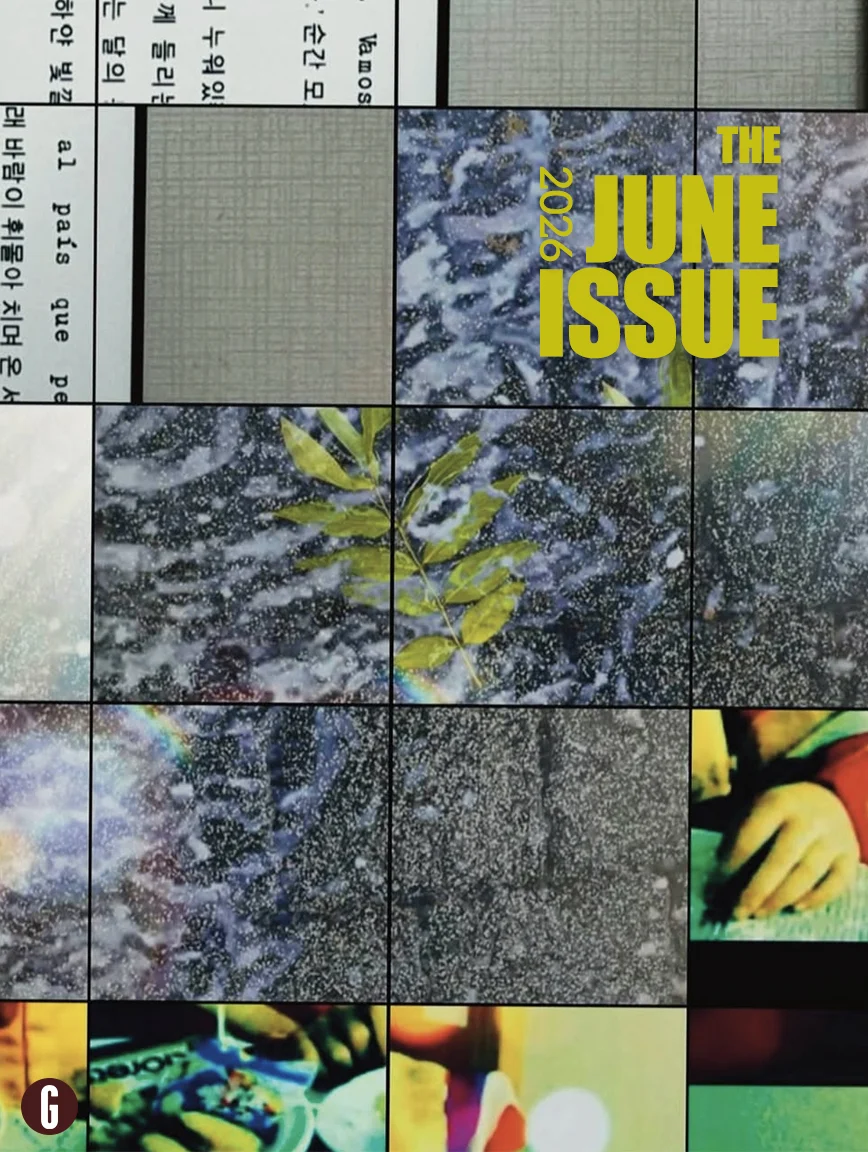
Featuring, courtesy of the artists, striking original artwork by: Ayesha Gamiet, Jérémie Guiguen, Joe Oswald, Erik Hadife, Joonhee Myung (JUNOS), and Emilia Rinaldini.
Raaza Jamshed, Editor-in-Chief